A Heart-Warming Dining Experience to Soothe the Soul
"Child, do not waste the water. To waste is to invite a burden upon your soul."
This is a story from my childhood. I can no longer clearly recall my grandmother's face, but I remember her sitting on the wooden veranda, basking in the sun, calling out to me as I played with the soapy bubbles by the well.
Allow me to share a brief memory of how a manual hand-pump well was built. I feel that if I do not record this now, the opportunity to pass down such quiet dedication may never come again.
First, one must dig deep into the earth until a vein of water is revealed.
If the water is scarce or does not appear, you must fill the hole and move to another spot, repeating the labor of digging and filling.
When fortune smiles and a water vein is found, you create a reservoir lined with gravel and charcoal. A pipe is driven deep, the earth is returned to its place, and finally, the iron pump is stood upright to complete the work.
I remember watching this process several times at my childhood home; it was a task of immense physical toil and patience.
Regardless, my grandmother would always tell me to save the water.
Back then, I would playfully dismiss her, splashing the basin of water across the yard.
In my young mind, I thought it foolish to worry about something as abundant as water.
I was merely a simple country boy then, not yet in elementary school, with sleeves stained by the constant sniffles of childhood.
Looking back, I wonder why we all seemed to have such messy faces in those days.
Children today are so well-groomed, but in my village, we all shared that same disheveled look. When school started, my mother would pin a folded handkerchief to my chest. That was the ritual for first graders. By the second grade, we felt too grown for such things and would argue with our mothers to avoid the embarrassment of the chest-pinned cloth. It was a scene that belonged in a different era.
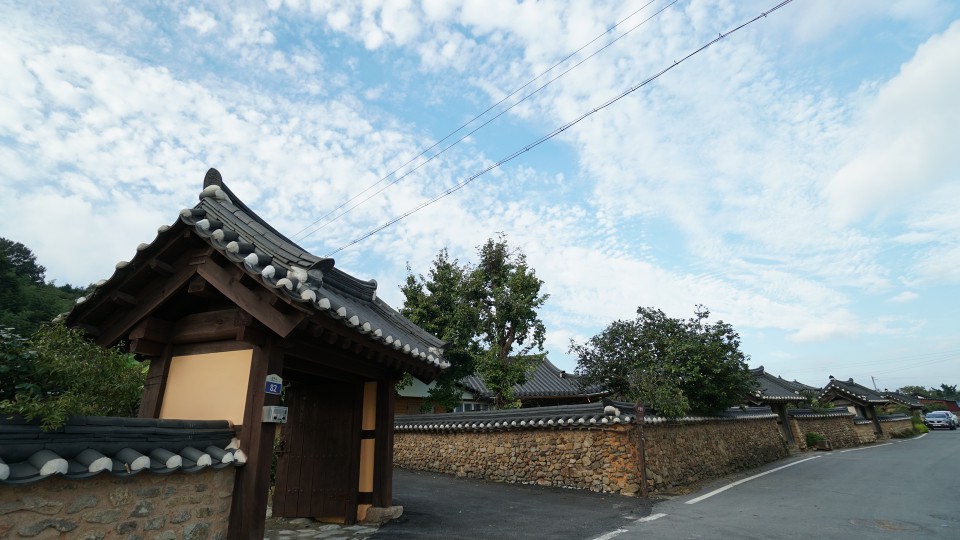
A view of my home village. It is a traditional community of about 100 households, located 20 minutes from the city of Gwangju. It is known as Mopyeong Village.
"Child, save the water. To waste is to sin."
To sin? To carry a burden?
Yes, now I understand.
Only after the long passage of time do I realize that she was speaking of things that are unnatural.
She was a person of profound wisdom who viewed the disruption of nature as a moral weight.
As she sat in the sun, the spirit of the sky lived within her heart.
Nature is that which becomes so of itself.
Living within that rhythm for so long, her heart had become nature itself.
I describe this state as a heart becoming "soft" and "kind."
It is as if the soul becomes as transparent and clean as the sky.
Today is December 20th.
After days of persistent dust and grey haze, this morning brought the clearest sky I have seen in recent memory.
On a day like this, one might even see as far as the distant coast from the heights of the city tower.
It has been months since we had such clarity.
Suddenly, my grandmother’s voice returns to me.
"Save the water," she says, her words overlapping with the deep blue above, bringing a rich smile to my face.
For a brief moment, I feel that same soft and kind heart resting within me.
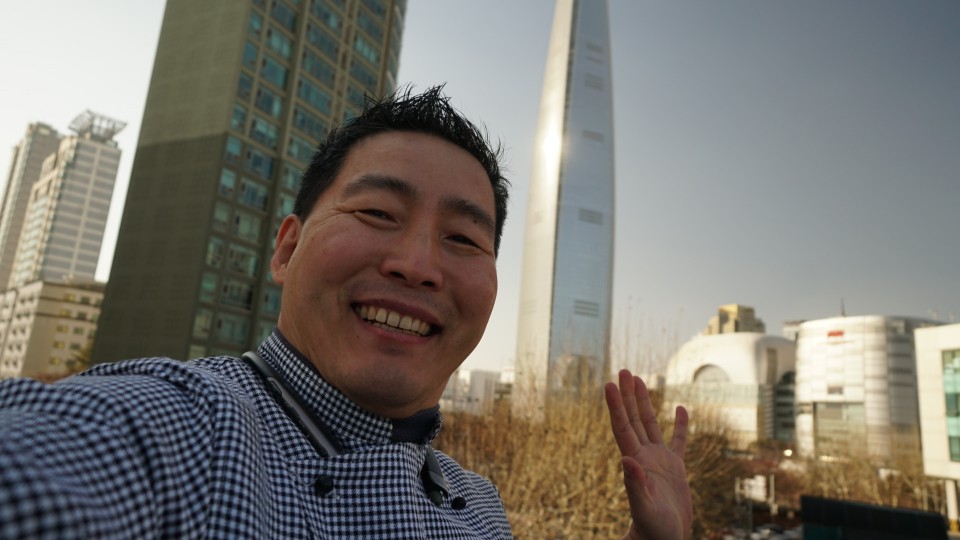
Capturing today's blue sky. This was my first attempt at a wide-angle self-portrait; please excuse the slight lens distortion.
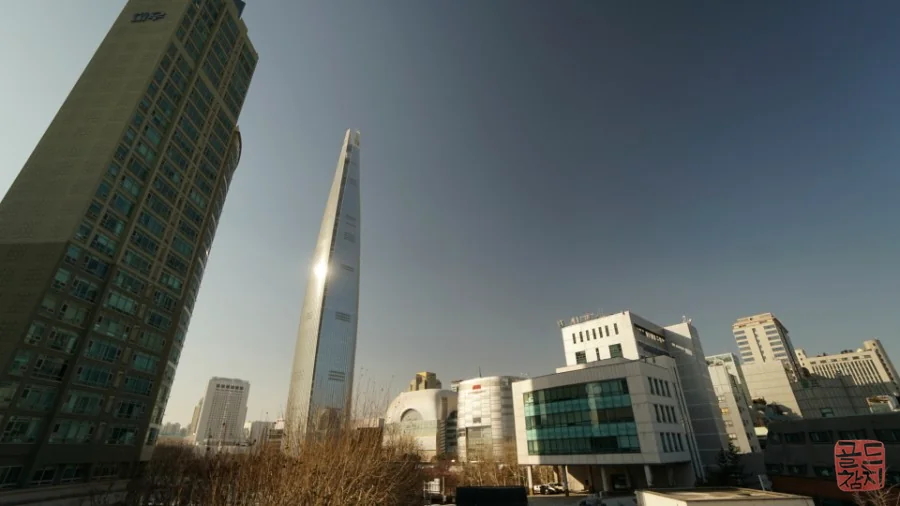
The settings were slightly off, so the blue of the sky isn't as vibrant as it truly was.
I considered going back to the roof for another shot, but I share this one as it is.