
[Unlike fundamental tastes like sweetness or saltiness, spiciness is a sensation closer to pain and heat. Why, then, do we seek out this intensity? We explore the science of sensory stimulation and the profound experience of a meal.]
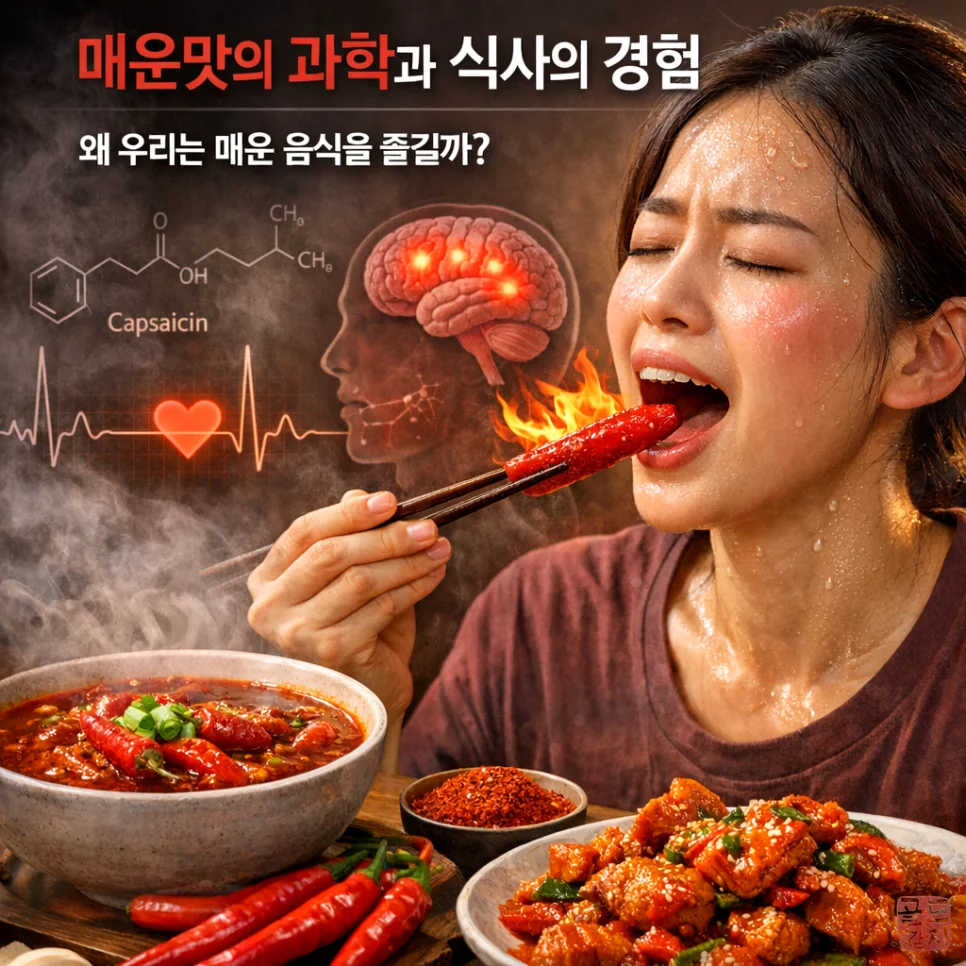
A remarkable result from a first creative collaboration with AI.
When we eat something spicy, the mouth burns,
the tongue numbs, and the brow begins to sweat.
We casually refer to this as a flavor.
Yet, science offers a different perspective.
Spiciness is not a basic taste but a biological signal of heat and distress.
“Sometimes, we do not simply eat for flavor;
we eat for the sensation.”
The Tuna Artisan
Spiciness is a different path for the palate.
Sweet, salty, sour, bitter, and umami
are typically explained through taste receptors.
However, spicy stimulation occupies a different realm.
The capsaicin in peppers triggers the same pathways as physical pain and high temperatures.
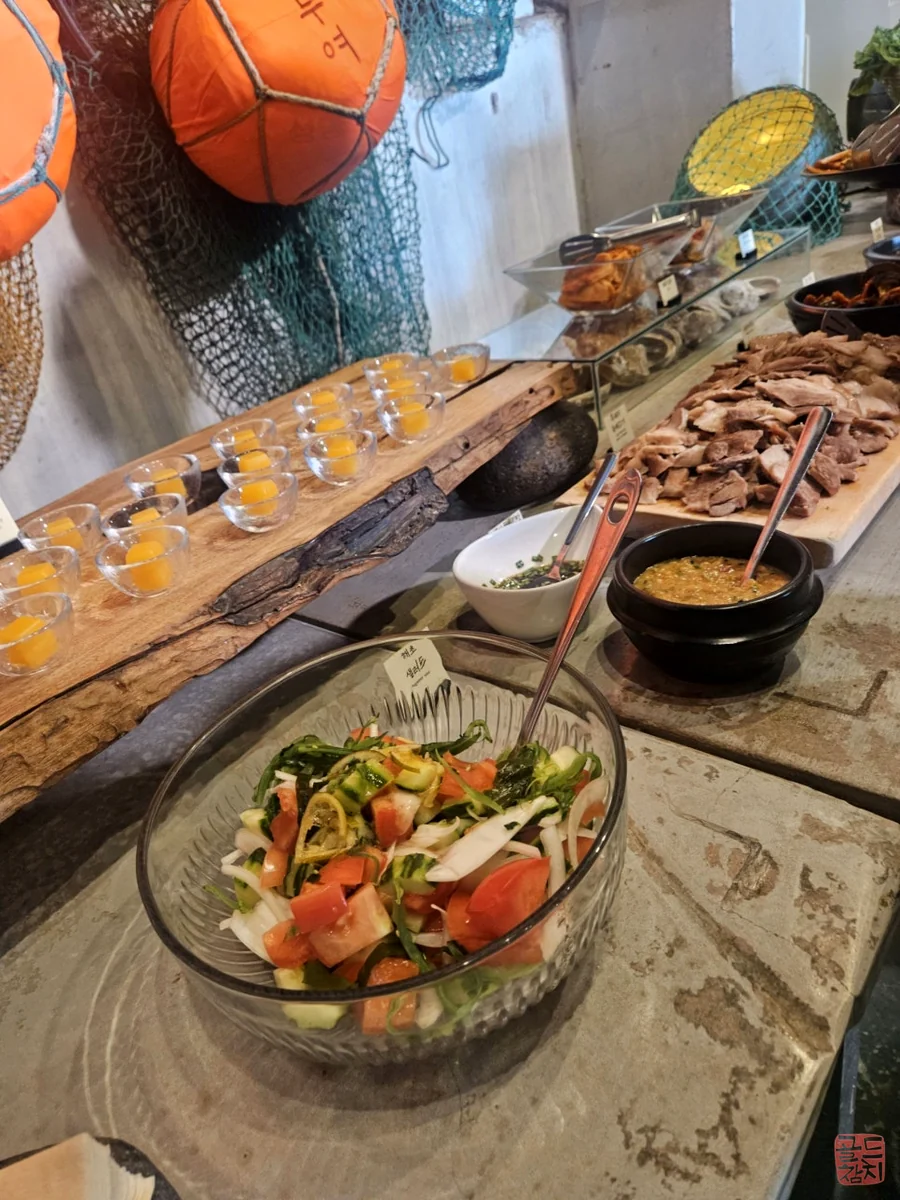
A shared moment at a local kitchen in Jeju.
Spiciness is closer to a chemical irritant than a basic flavor.
Capsaicin induces a searing, stinging sensation.
Therefore, spicy food is an experience of stimulation rather than mere taste.
Why do we learn to enjoy this pain?
This is where the human element becomes fascinating.
Despite the heat and the ache, we return to spicy dishes.
What begins as a struggle often transforms into a sought-after thrill.
Research suggests that our preference for spice is built through repetition and learned behavior.
In essence, we are not just enduring pain; we are reinterpreting stimulation as a form of pleasure.
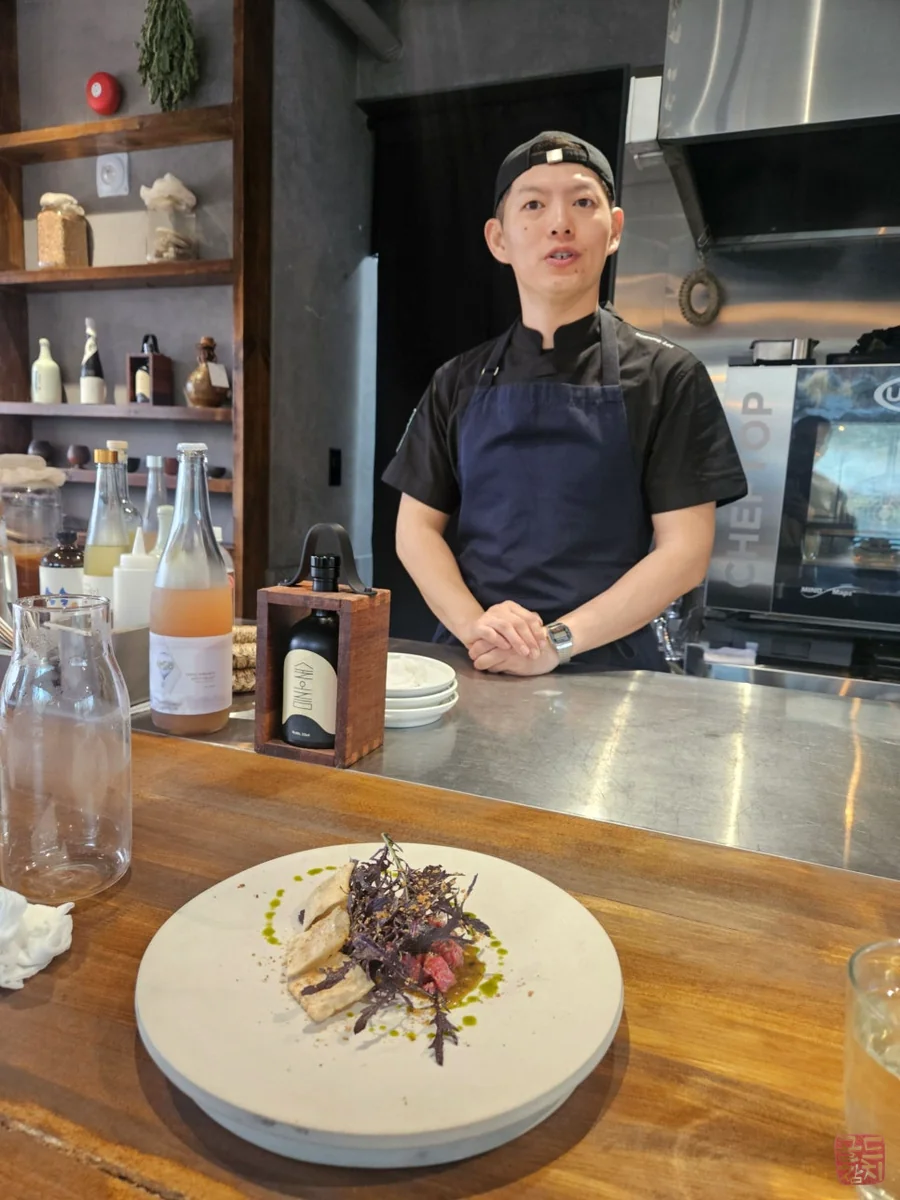
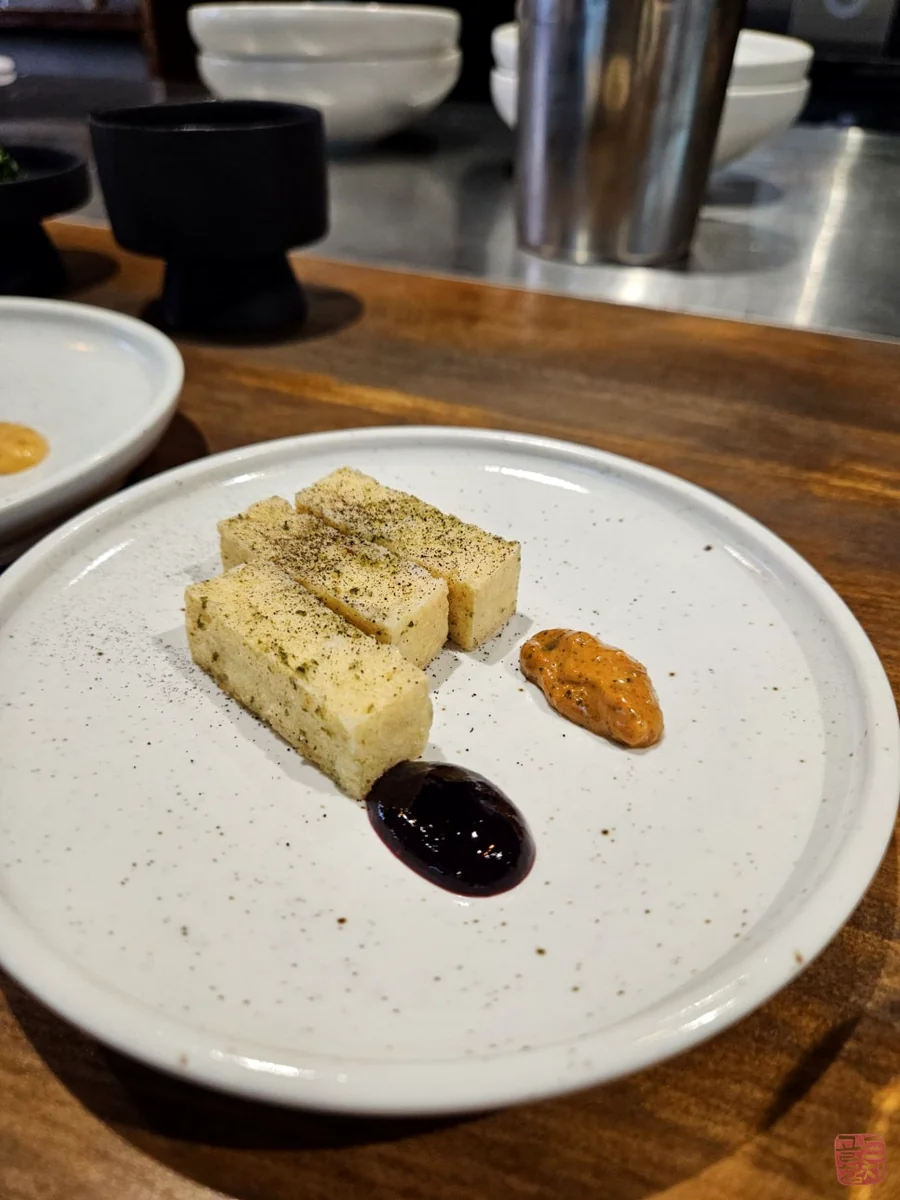
Reflective spaces in Jeju that leave a lasting impression.
The love for heat is both an innate drive and an acquired taste.
Familiarity softens the shock of the sensation.
Ultimately, we remember the alertness and the catharsis the stimulation provides.
Intensity makes a memory, but balance makes a meal.
This is where the philosophy of a restaurant truly emerges.
Strong stimulation creates an immediate, visceral impact.
It is easy to elicit a "wow" with a sudden burst of power.
However, for a meal intended to linger and comfort,
raw intensity is rarely enough.
A strong first impression can lead to sensory fatigue by the final course.
True flavor is an alchemy of taste, aroma, temperature, texture, and stimulation.
High intensity does not guarantee high satisfaction.
Rhythm and equilibrium are the true masters of the dining experience.
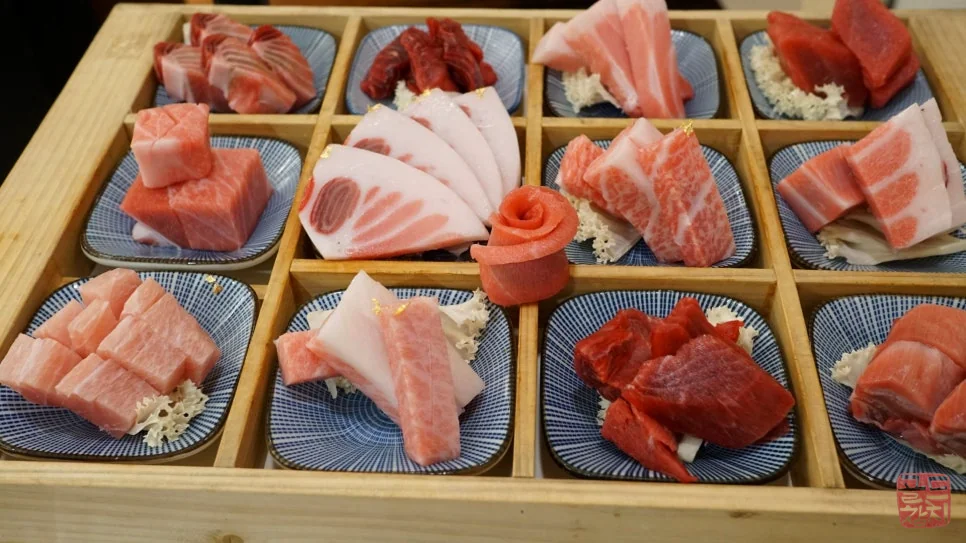
The elegant simplicity of premium tuna.
Sharp stimulation can provoke an instant reaction.
But a meal is judged by its entire narrative, not a single bite.
Lasting contentment is born from harmony, not just strength.
A fine meal persuades gently rather than demanding attention.
There are two kinds of culinary paths.
One relies on a singular, forceful strike of flavor.
The other wins the guest over, piece by patient piece.
Spicy food showcases the power of the spark.
But tuna reveals the power of the resonance.
It is a conversation that doesn't need to shout to be deeply felt.
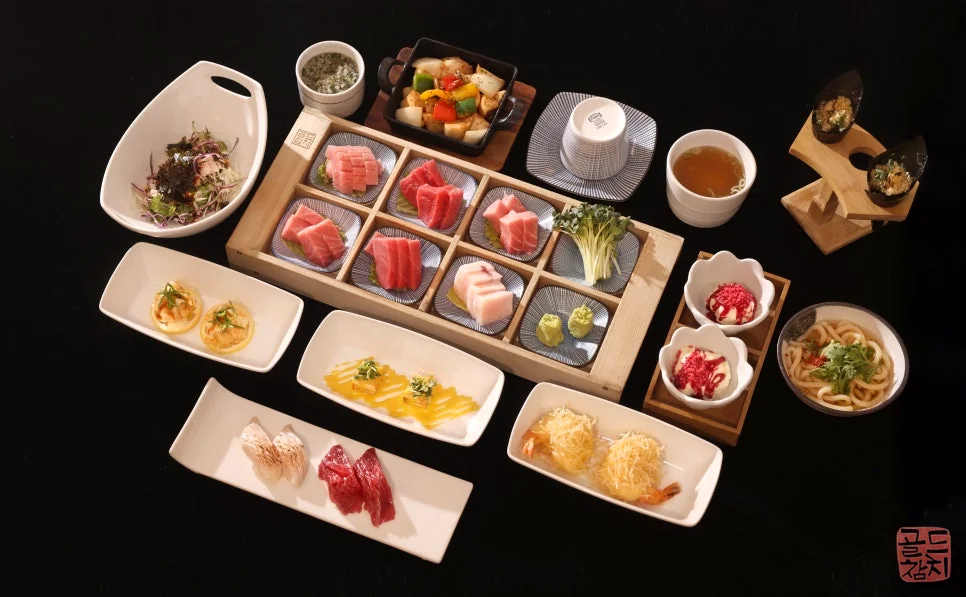
Goldtuna Course B / 35,000
Stimulation is the language of intensity.
Tuna is the language of texture, aroma, and temperature.
Goldtuna strives for flavors that linger long after the meal ends.
Why Goldtuna prioritizes the flow of the experience
At Goldtuna, we do not compete with immediate shocks.
The first bite of tuna is essential,
but the true difference reveals itself in the second and third.
It is a gradual blossoming of aroma and the melting of delicate fats.
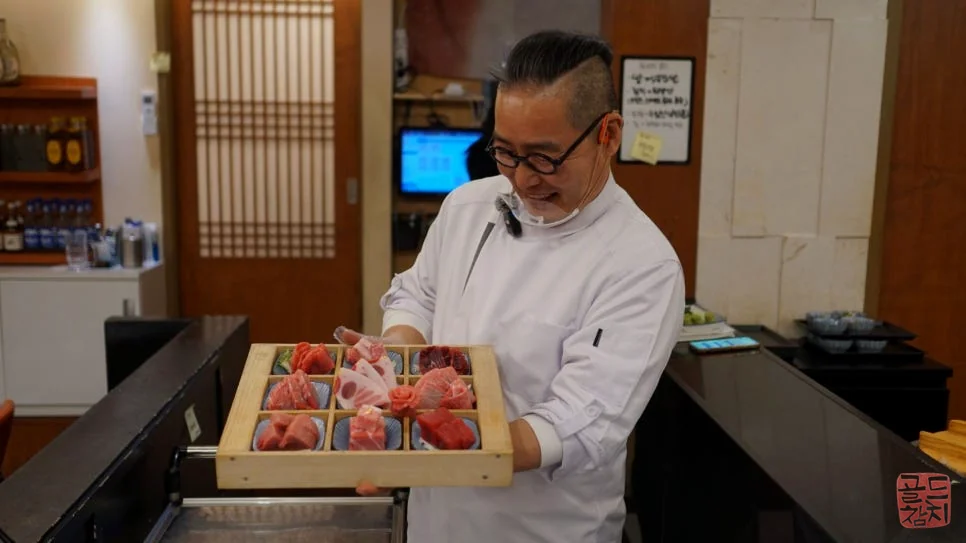
Great food carries a sincere smile.
In designing a meal,
we look toward the rhythm of the entire evening.
A beginning that prepares the palate,
a center that demands focus,
and a conclusion that leaves the guest refreshed.
With this rhythm,
a mere dinner evolves into an experience.
A flavor that stays with you is far more precious
than one that strikes hard and vanishes.
We remember how a meal made us feel.
Dining is not just a recollection of tastes.
It is a memory of how we felt in that space, with that food.
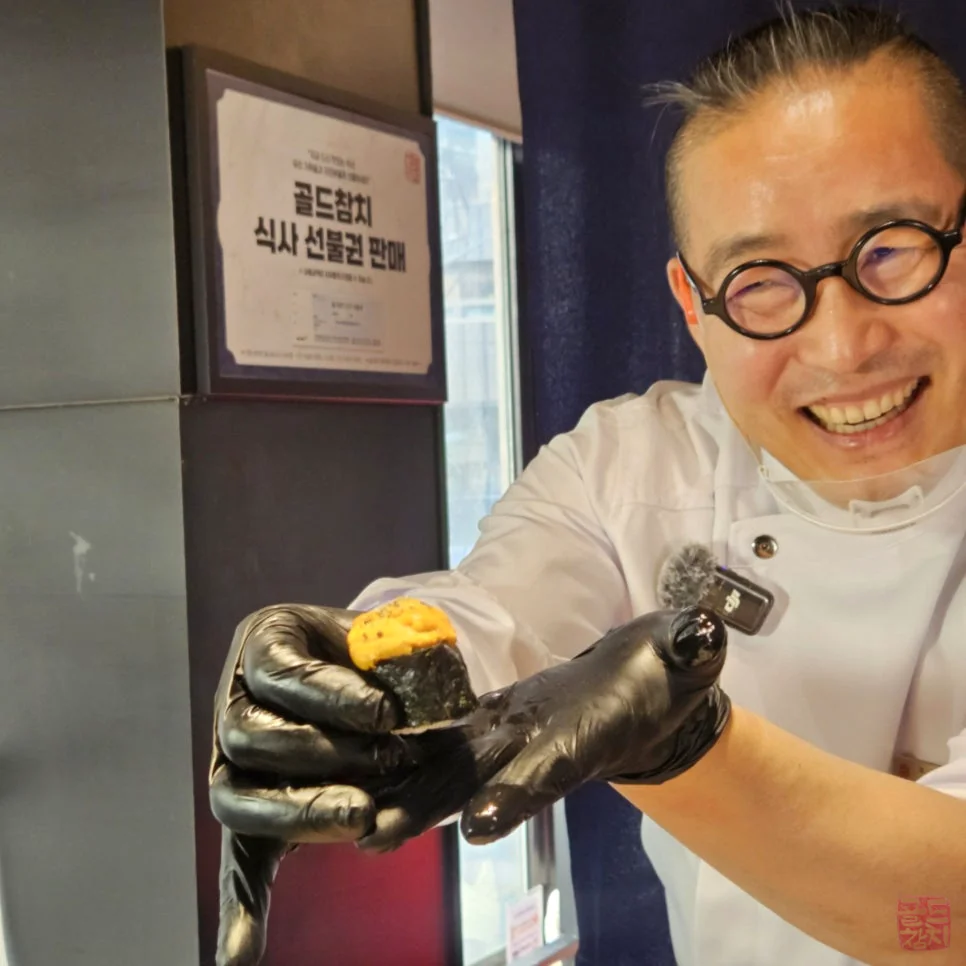
A gift of sea urchin—a moment of unspoken warmth.
Was it overwhelming, or did it gently awaken the senses?
Was the end comfortable? Hospitality is the sum of these sensations.
A thoughtful meal connects these moments without friction.
While intensity can be tiring, quiet elegance is what we yearn for.
The 15-course rhythm is like a piece of music.
Intensity is a part of the sensory palette,
much like heat and spice.
And humans will always seek out experiences that resonate deeply.
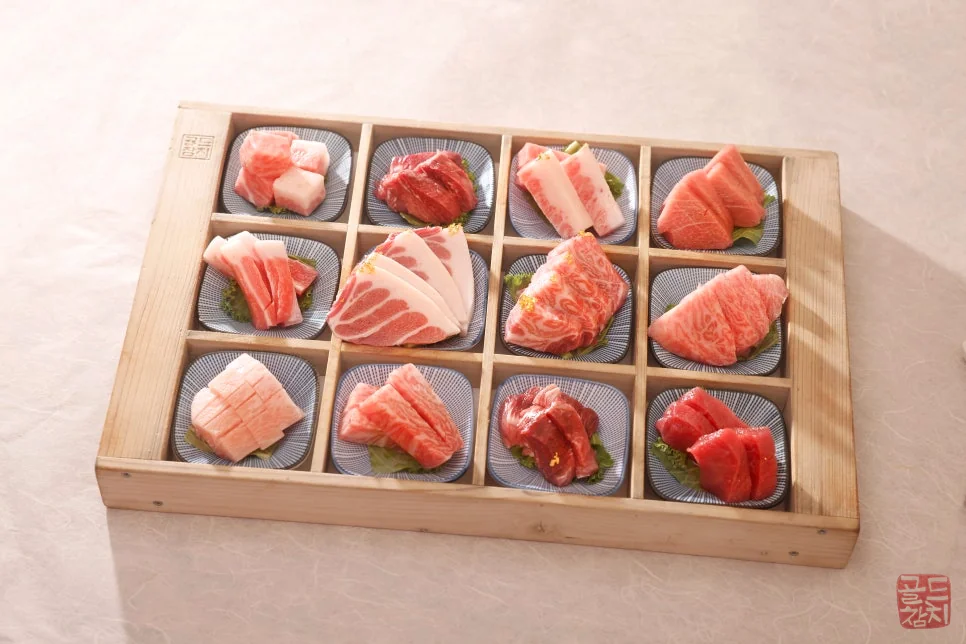
A curated tray of Bluefin tuna.
The truth of the table is simple.
We do not only consume food; we consume the experience of stimulation.
Our role is to design that rhythm meticulously.
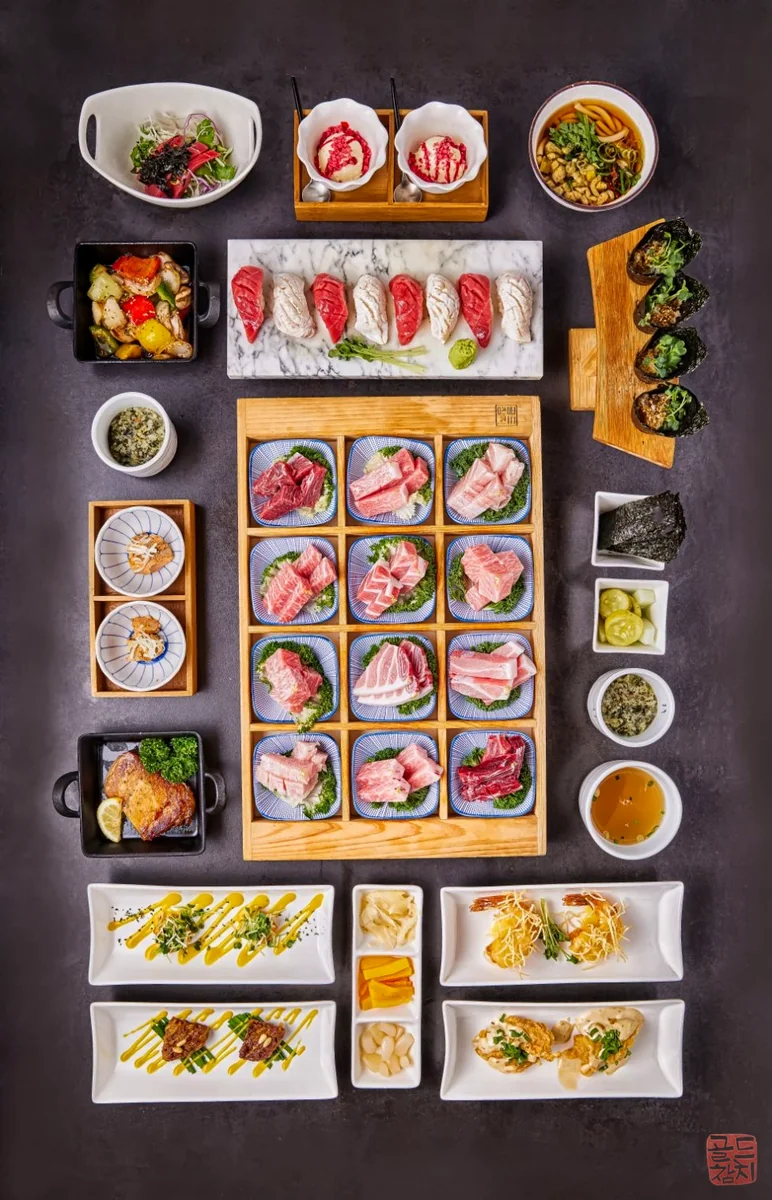
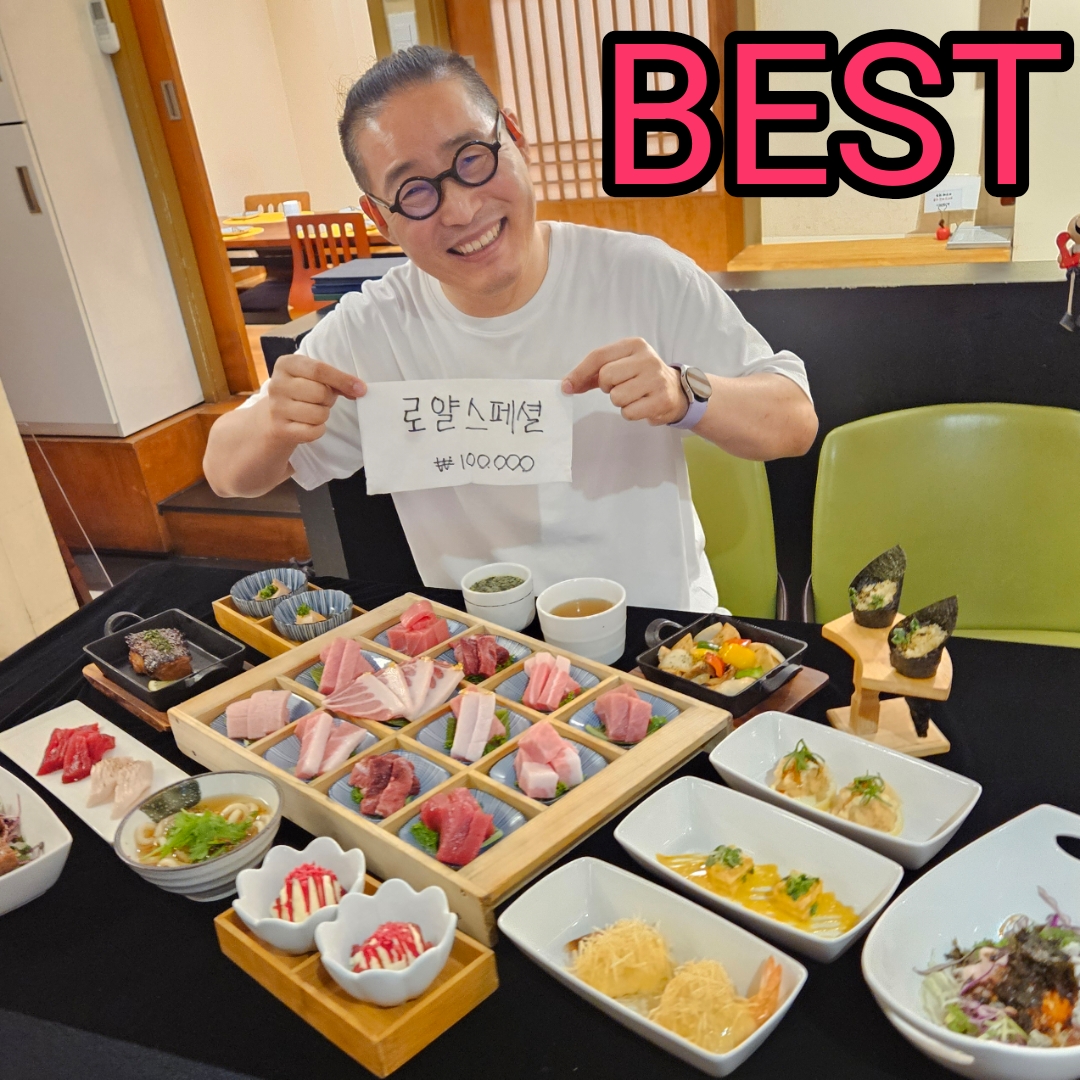
The complete 15-course layout at Goldtuna.
This is why we prioritize flow over force.
A memorable meal does not need to be loud.
One that opens quietly and ends comfortably stays with us much longer.
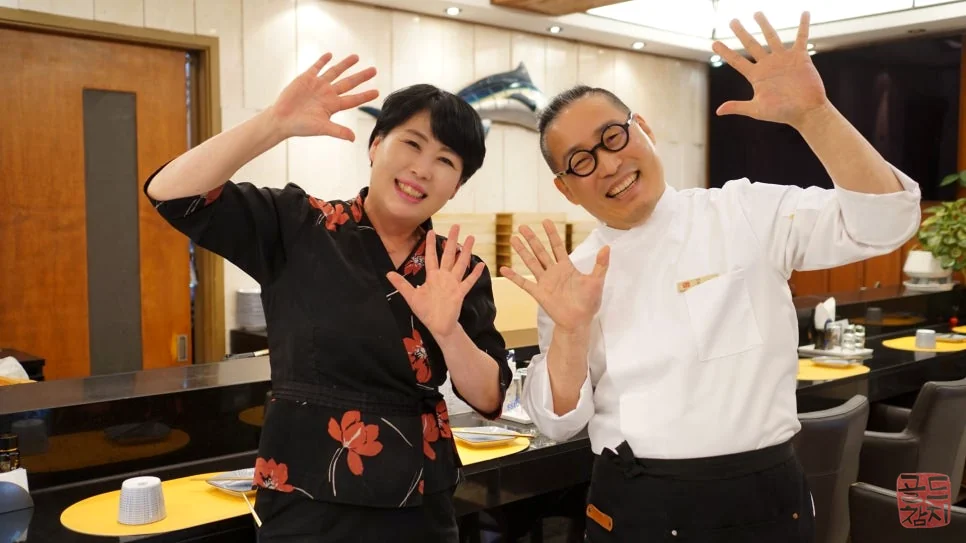
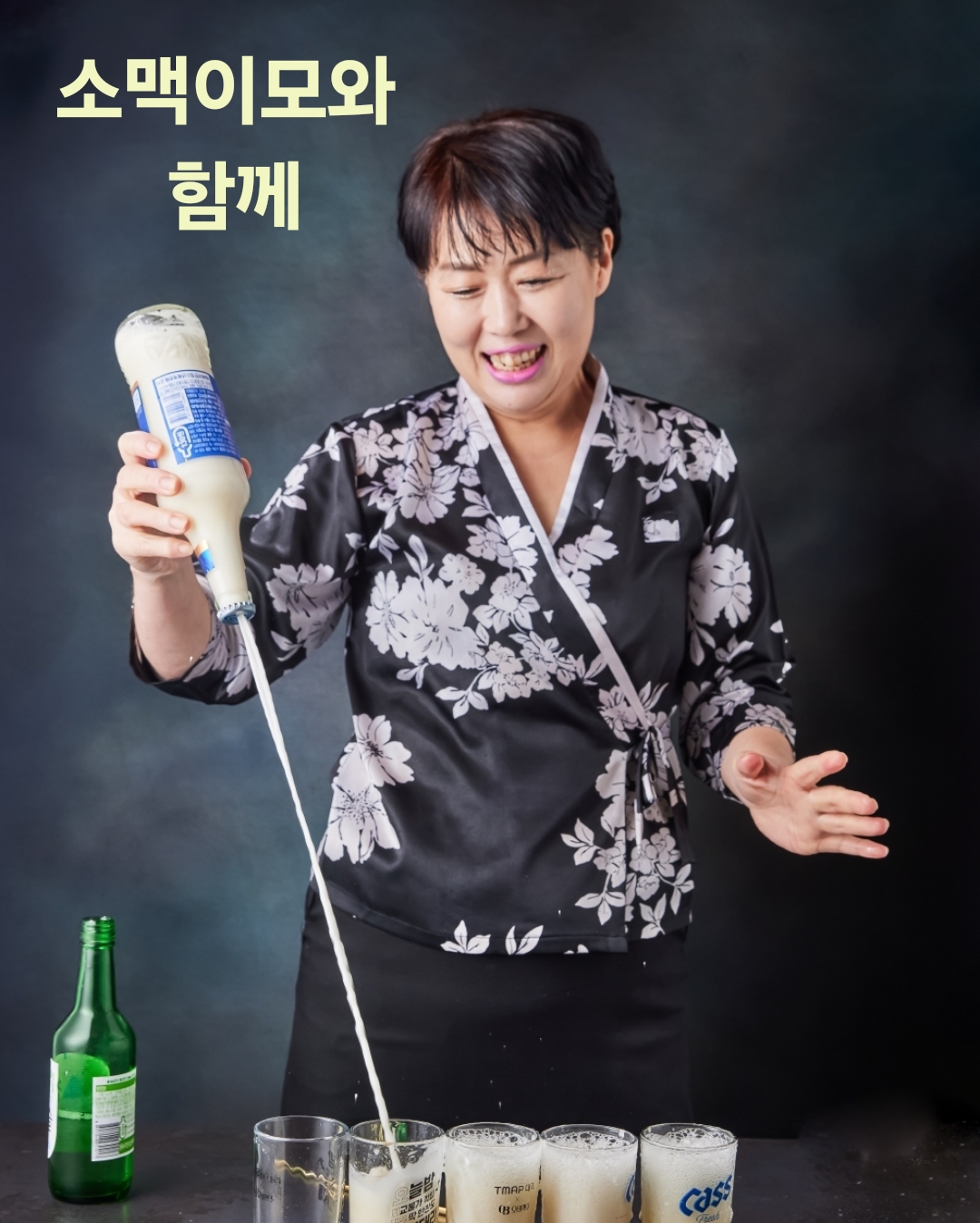
The hospitality team behind the experience.
True satisfaction is found in the way we are moved.
We do not just taste; we feel.
Designing the perfect rhythm for that feeling is the core of our craft.
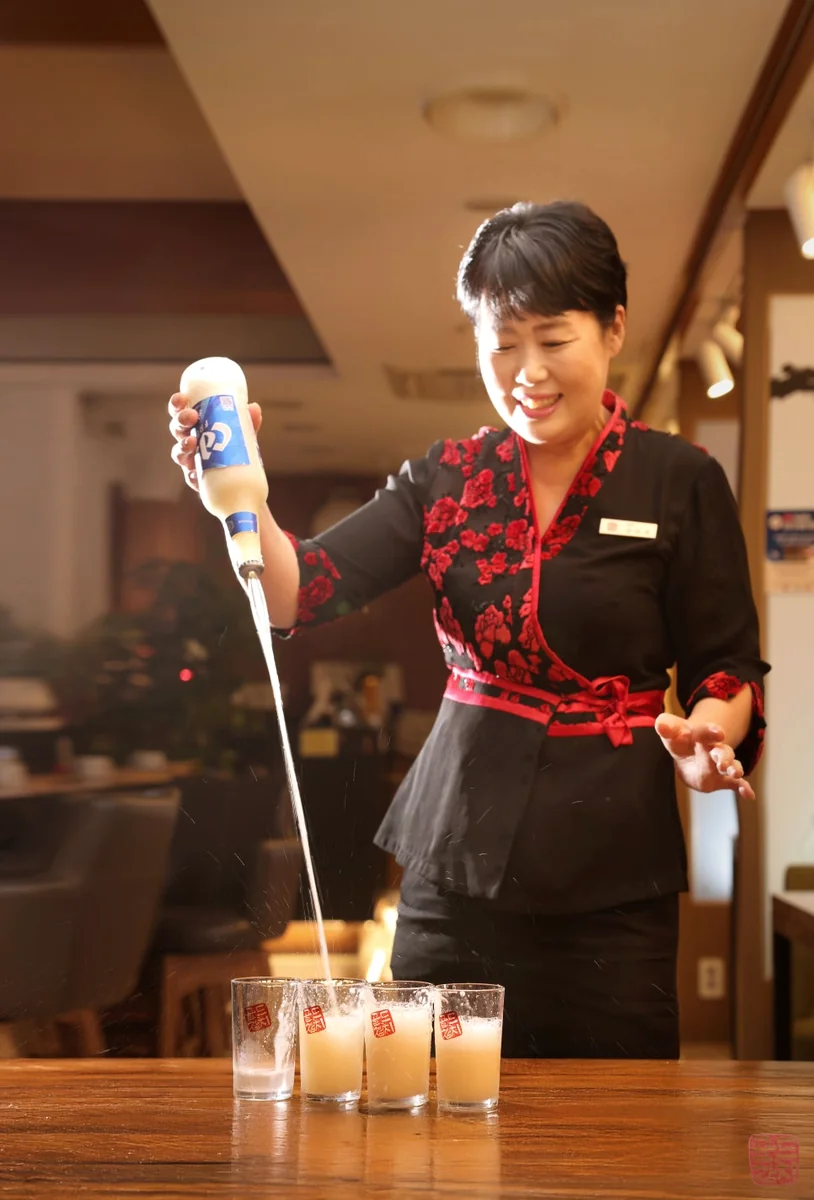
Moments of vibrant service and genuine hospitality.
A beautiful meal lingers without effort.
From the first opening note to the peaceful end, it remains etched in memory.
Menu & Information
Lunch: Lunch Course B (35,000), Lunch Course A (45,000), Lunch Special (60,000)
Dinner: VIP Special (80,000), Royal Special (100,000), Omakase Special (130,000)
Reservations & Inquiries
Goldtuna Bangi: 109-11 Bangi-dong, Songpa-gu, Seoul
Reservations: 0507-1420-7747
Directions: 4 minutes from Songpanaru Station, 10 minutes from Jamsil Station
Valet: Managed through the Jamsil Nolboo Duck booth
Goldtuna Sinsa: 532-2 Sinsa-dong, Gangnam-gu, Seoul
Reservations: 0507-1394-0484
Directions: 10 minutes from Sinsa Station or Apgujeong Station
Valet Parking: Please call upon arrival for parking assistance.