
What Your Customers Really Want
I have always been drawn to spaces with a distinct atmosphere.
The embrace of a comfortable chair in a quiet bistro, the weight of beautiful ceramics, and food that arrives like a thoughtfully composed painting.
I find peace in the delicate aesthetics of Japanese cuisine—often called "flower food" for its visual grace—and the intimate quiet of traditional rooms. These are the places I seek when a moment truly matters.
Bangi-dong is crowded with countless establishments.
Yet, very few align with my sense of hospitality. Most feel restless.
One finds hard, backless stools and tables packed so tightly that privacy is an impossibility.
Without a proper partition, the stranger at the next table becomes an accidental companion to your private conversation. It is difficult to focus on the person across from you. After an hour, the physical and mental discomfort becomes impossible to ignore.
When I see such places, I wonder about the heart of the owner.
A chair should be an invitation to rest.
Would they choose such cold, utilitarian furniture for their own dining room at home?
They likely invest in comfort for themselves, yet they offer indifference to the guests who sustain their livelihood.
It is a disheartening sight. It suggests the guest is viewed merely as a transaction.
There is no quiet dedication, no art of sincere service.
The priority is clearly high turnover and profit.
But guests are perceptive. Eventually, those grid-like dining rooms, designed for efficiency rather than warmth, sit empty. No one wants to return to a place where they felt like a number.
Not long ago, a large traditional restaurant opened with much fanfare.
The crowd was substantial during those first few weeks.
However, the food was served on cheap, disposable-feeling enamelware.
I whispered to my companion that the shop would not see its first anniversary. It closed within a year.
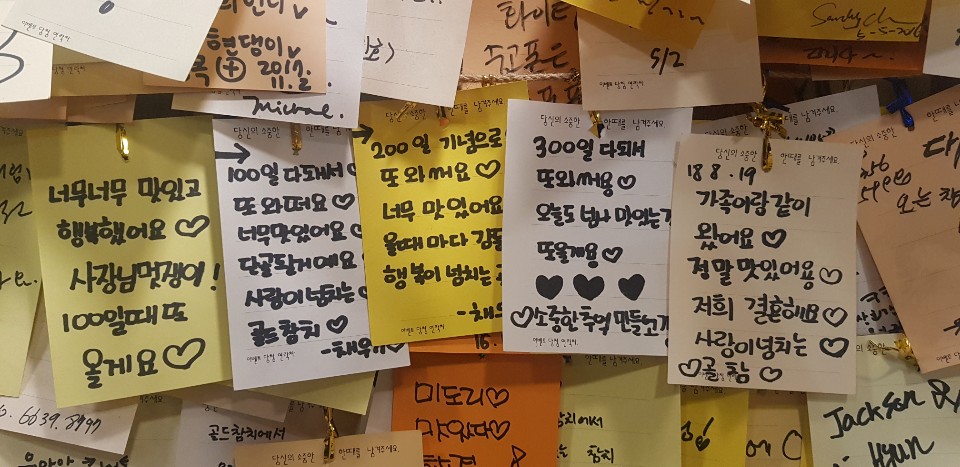
From a child's first milestones to a couple's wedding announcement, we are honored to be part of your story.
At Goldtuna, I believe our core identity is found in the "story."
It is not merely about selling a meal; it is about using tuna as the centerpiece for a festival of connection.
I want to be the host of that celebration.
While quality food is the non-negotiable foundation, the true purpose is to ensure every guest feels the joy of the occasion.
Recipes can be mimicked.
In truth, the difference in pure flavor between a good dish and a great one is often subtle.
If perfection is 100, a standard dish sits near 90. For most palates, that ten-point gap is simply a matter of personal preference.
I, too, recognize that the nuance of taste is only one part of the journey.
What, then, is our true distinction?
It is the human element.
'The character of the host provides the seasoning.'
'True emotion is born from human contact.'
'Sincere warmth cannot be benchmarked or copied.'
'It is from people that stories and lasting memories emerge.'
Goldtuna is a place where these stories live.
We must strive to keep this spirit alive.
We remain sensitive to our guests' unspoken needs, responding with care.
We aim to be humble, yet never lose our dignity.
The coming year may bring economic challenges.
Goldtuna is not immune to the world's tides.
But we will not simply drift. This place was built from nothing but a story and a vision.
I still see guests today who remember me handing out flyers on the street when we first opened. They return to share those old memories with me.
That history is our greatest strength.
As this year draws to a close,
I prepare with quiet dedication.
I offer my best to every moment.
New challenges await in the new year.
To the journey of constant growth—
It is a path I am proud to walk.