
Why 6 Chinese Tourists Braved Gangnam Rush Hour for Our Restaurant
In August 2026, six travelers from China visited the Goldtuna Bangi branch.
They discovered Goldtuna through the ‘Korean Cocktail’ content that went viral in China. The fact that they sought out the actual restaurant from the video during their trip to Korea makes this a clear case of online content leading to a real-world restaurant choice.
The success of viral marketing is not measured by views,
but when the person who watched the video actually takes action.
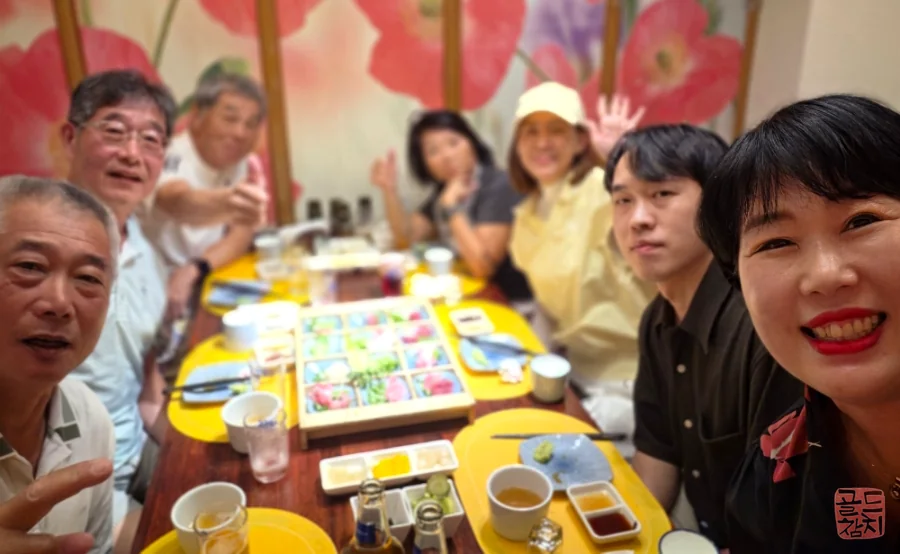
Six Chinese travelers dining at the Goldtuna Bangi branch in August 2026. They sat together at one table and took a group photo.
The Moment a Restaurant Becomes a Destination, Not Just a Meal on a Route
When traveling, restaurants are usually chosen based on their proximity to accommodations or sightseeing schedules.
It is especially difficult to change an existing route for a single meal when traveling in a large group.
However, some restaurants are not just places stumbled upon by chance; they are remembered as destinations to visit from the very beginning.
This case perfectly illustrates this point.
They remembered the scenes and the people from the video they saw in China and sought out that specific location during their trip to Seoul.
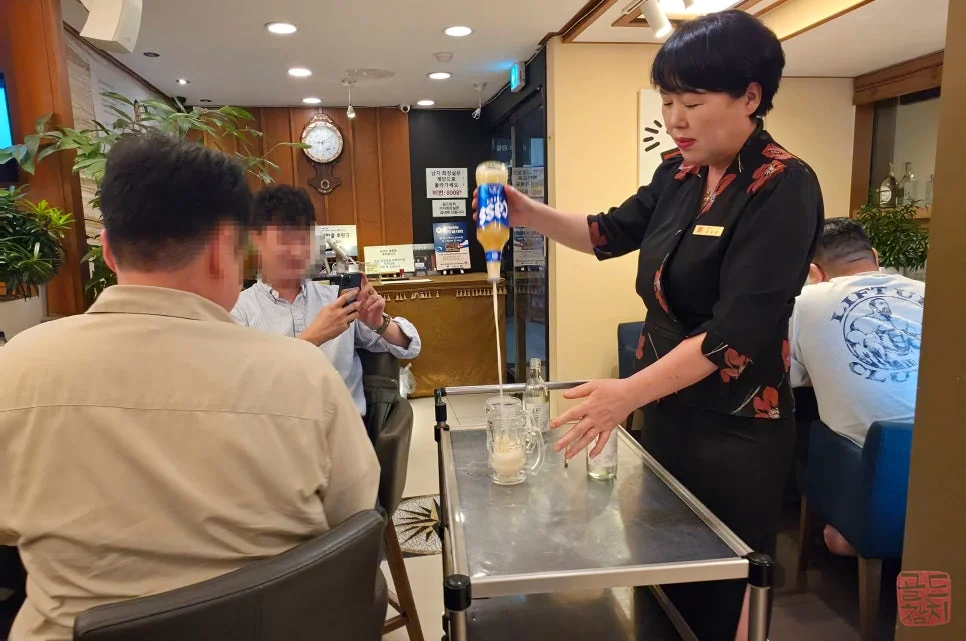
A group of Chinese travelers posing for a photo with Somaek-imo (소맥이모) at the Goldtuna Bangi branch. They explained that the ‘Korean Cocktail’ content they saw in China was the reason for their visit.
‘K-Cocktail’ Remembered Before the Menu
What they remembered wasn't the names of the dishes on the menu.
It was the scene of Somaek-imo making somaek (beer and soju cocktail) together with customers at the Goldtuna Bangi branch. At Goldtuna, we call this customer-participatory service ‘Jumakase’ (주마카세).
The important thing here isn't just the drink itself.
It's the fact that people appear, there is movement, and the customers participate in that scene.
It is difficult to explain food ingredients and cooking methods in detail to international users who speak a different language. On the other hand, actions and scenes in a short video can be remembered even without much explanation.
The previously recorded Douyin content from China showed how far the video spread.
This visit represents the next stage.
People who remembered the scenes they saw on screen have actually visited the restaurant.
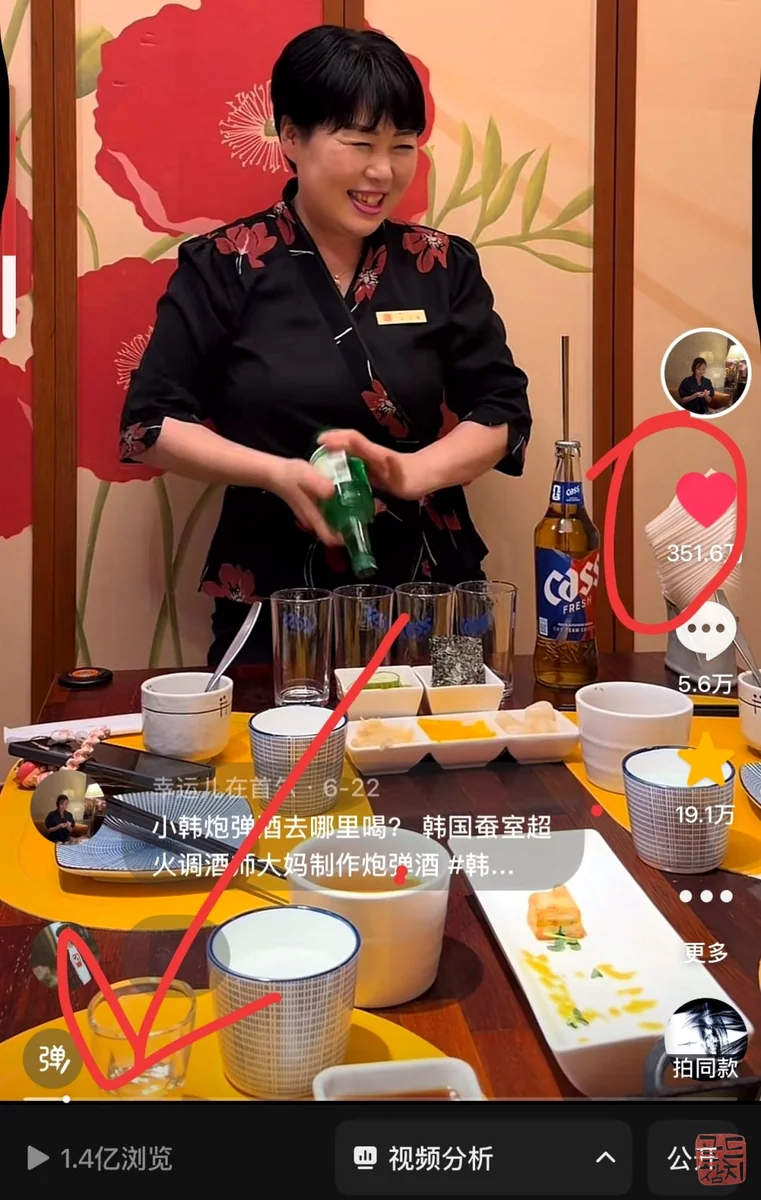
The ‘Korean Cocktail’ video of Goldtuna Bangi branch posted on the Chinese short-form platform Douyin. It captures Somaek-imo making somaek at a table.
Six Chinese Travelers Who Took a Taxi Again Even After Going to the Wrong Place
The travelers did not arrive at the Goldtuna Bangi branch accurately from the start.
After realizing they had gone to another restaurant thinking it was Goldtuna, they left without eating there. While it can be awkward to leave a place once you've entered, taking a taxi again during rush hour to move to the correct location was a significant decision.
Although we didn't check their exact travel time, what we can confirm is their action of moving to the restaurant they were originally looking for, even after arriving somewhere else.
After arriving at the Bangi branch, they enjoyed their meal and took photos with Somaek-imo, whom they had seen in the video in China. The scene they first saw online was finally connected to the actual location.
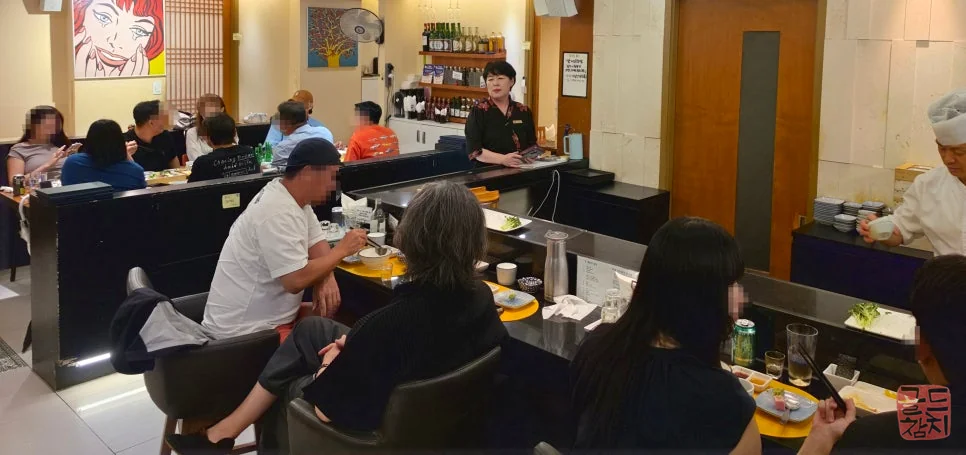
Customers dining at the Goldtuna Bangi branch. Dinner is underway at several tables.
What to Check After Views is Actual Behavior
When evaluating viral content, the first number you see is the view count.
Views show how widely the content was exposed. However, from a restaurant's perspective, the next steps are more important.
Was the content remembered?
Did that memory lead to choosing the restaurant?
Was it converted into the action of an actual visit?
This case is a record that confirms that process.
However, content bringing people to the restaurant and their evaluation of the actual meal are two different matters.
From the moment a customer opens the door, it is the food and service, not the video, that become the subjects of judgment.
Content can create a reason to visit, but it cannot replace the essence of the restaurant.
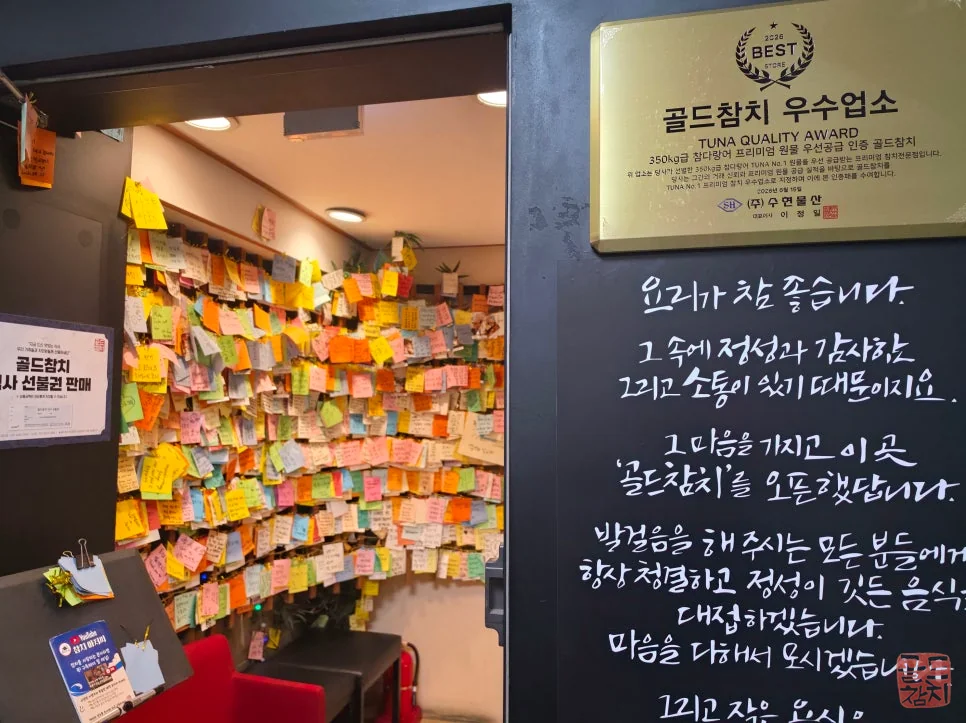
Handwritten notes from customers and a store information board at the entrance of the Goldtuna Bangi branch. Records left by visitors over several years fill the wall.
Views are just numbers on a screen, but taking a taxi again after going to the wrong place is a real action.
Watching the six people who remembered a scene they saw in China and traveled all the way to the Bangi branch, we once again confirmed the process of content leading to real-world visits.
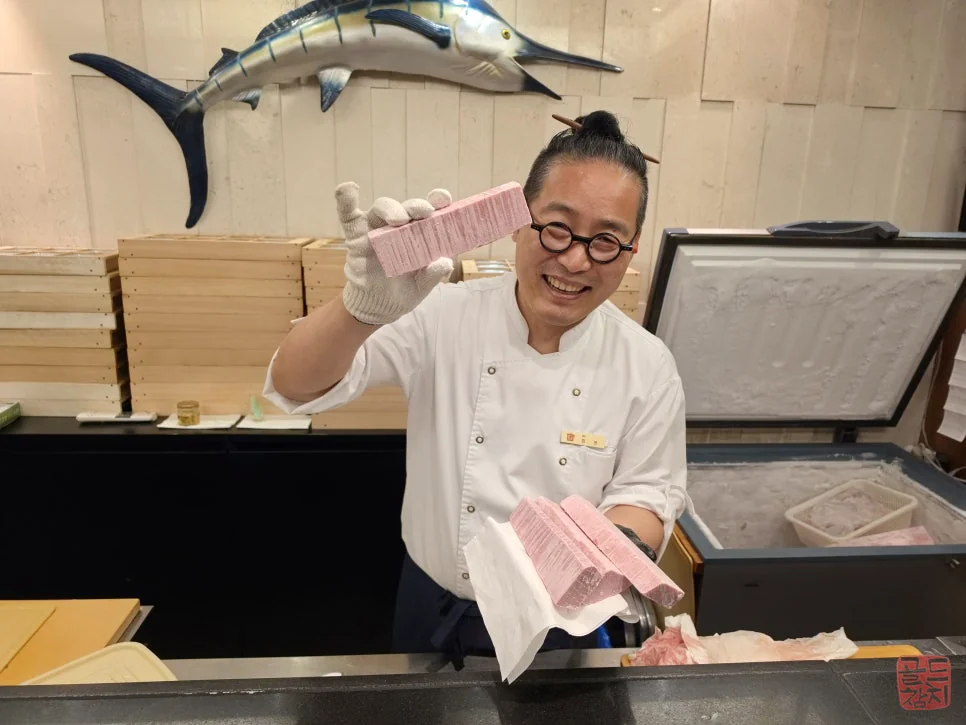
Tuna Uncle (참치아저씨) showing a tuna block before preparation at the Goldtuna Bangi branch. This is a scene where he directly explains the raw tuna and cuts used at Goldtuna.
※ Branch Information
The location where this case occurred is the Goldtuna Bangi branch.
Somaek-imo's Jumakase, featured in the ‘Korean Cocktail’ video that went viral in China, is available at both the Bangi and Sinsa branches.
Jumakase is not a separate menu item for sale; you can request it from your server after ordering alcoholic beverages. However, availability may vary depending on the store's operating conditions.
Related Records Worth Reading
China's short-form 'Douyin' surpasses 140 million views in 51 days, a record set by Goldtuna
This record helps explain the background of how these Chinese travelers discovered Goldtuna. While the previous document covered the scale of the video's spread, this article records the actual visit behavior that followed.
A customer review saying they found us because of Somaek-imo, but while the drinks are great, the tuna is 'insane'
This is a customer review where Somaek-imo content was the reason for the visit, but after the actual visit, the evaluation focused on the taste of the tuna and the food. You can see both the content-driven influx and the actual dining evaluation.
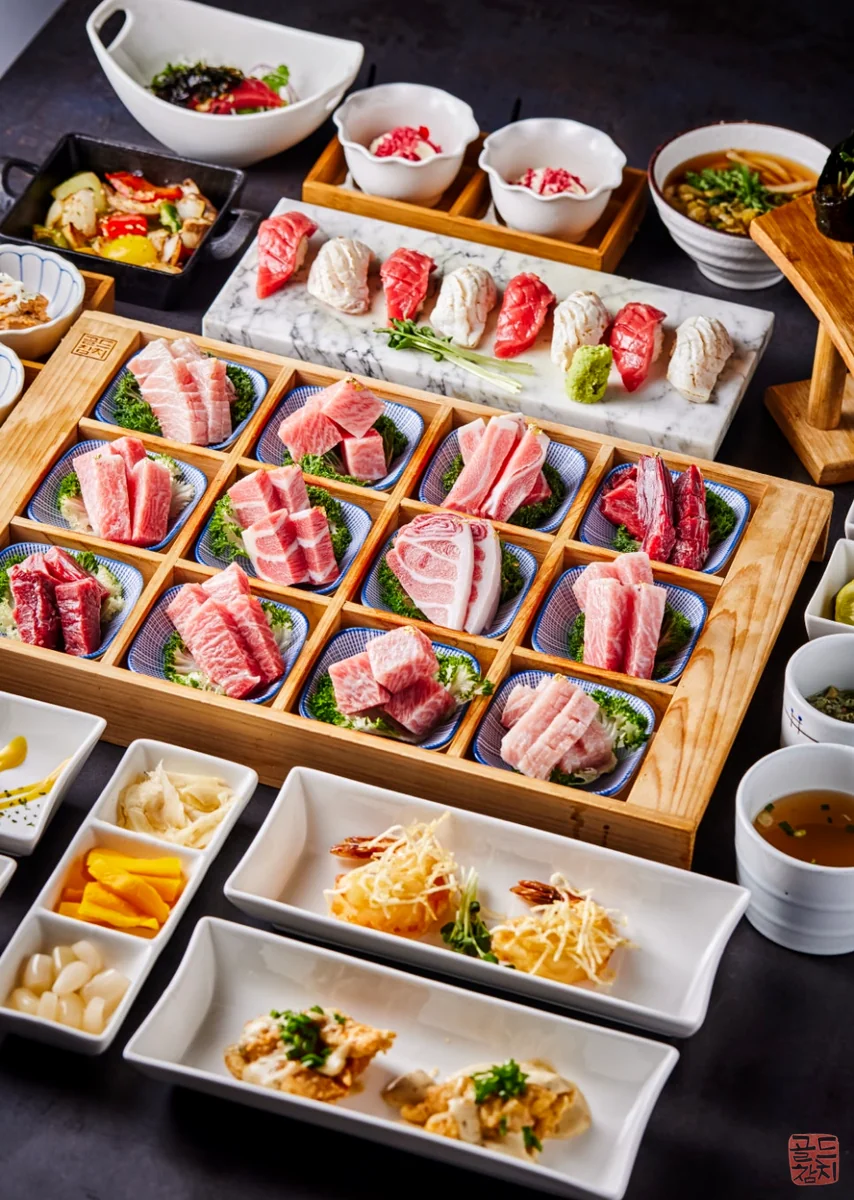
Not just a plate of tuna, but an entire meal prepared as a Goldtuna course
We prepared an entire meal, not just a plate of tuna
Goldtuna's 15-course dinner is not a meal where you only eat tuna.
Centering on tuna sashimi and sushi, it composes different tastes and textures in one place, including grilled dishes, fried dishes, Chinese-style cuisine, a main meal, and dessert.
The reason there is so much food in a single photo is the same.
To ensure that those who came for good tuna leave having experienced a full banquet.
Whether it's a dinner with someone important, a family meal, a company dinner, or a place where you want to have a long conversation, a course prepared from the beginning to the end of the meal is more convenient than choosing individual dishes.
Goldtuna prepares that one complete meal.