
Restaurant Staff Training: Growth Through Monthly Benchmarking Meals
While general restaurant training often focuses on service manuals or memorizing menus, Goldtuna (골드참치) conducts field-oriented, practical experiential training alongside these basics.
Every month, all staff members take time during lunch hours to visit and dine at external restaurants. This process allows them to step out of their roles as providers and experience food quality, service processes, and spatial configurations from a customer's perspective.
To accurately understand customer needs, employees must experience sitting in the customer's seat themselves.
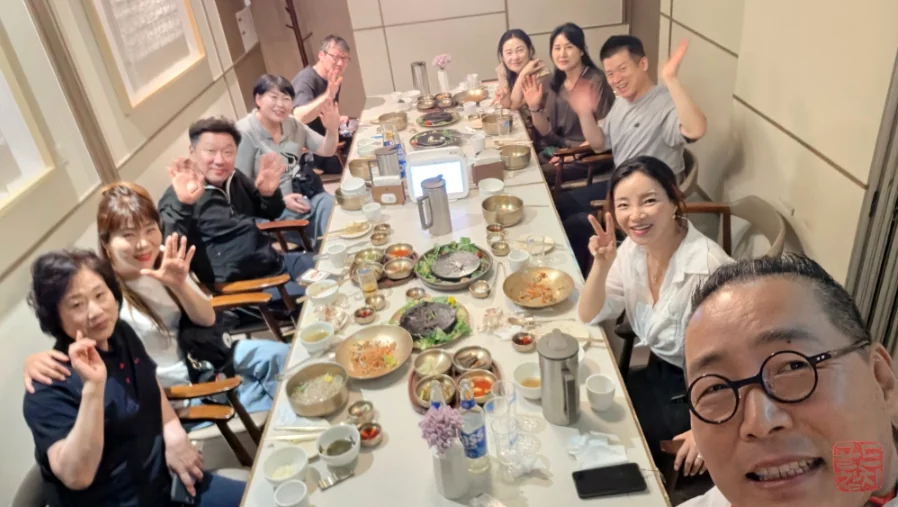
This is a benchmarking session held at a restaurant in Jamsil (잠실) Lotte World Mall. Goldtuna (골드참치) regularly experiences the operations of other establishments once a month to evaluate and improve its own service capabilities.
Shifting from a Provider-Centric to a Customer-Centric View
Movement paths and facilities that are familiar to staff performing repetitive daily tasks can feel like a completely different experience to a first-time customer.
When visiting an external restaurant, the employee's position shifts from the one providing food to the one receiving service. They experience the entire process, from ordering via the menu to waiting at the table, the staff's explanation style, and the use of convenience facilities.
They rediscover detailed elements that are easy to overlook from a provider's standpoint by sitting in the customer's place. Therefore, Goldtuna's (골드참치) benchmarking meals differ in purpose from simple company dinners; they are part of practical education to analyze and learn from the operating systems and customer response methods of other restaurants.
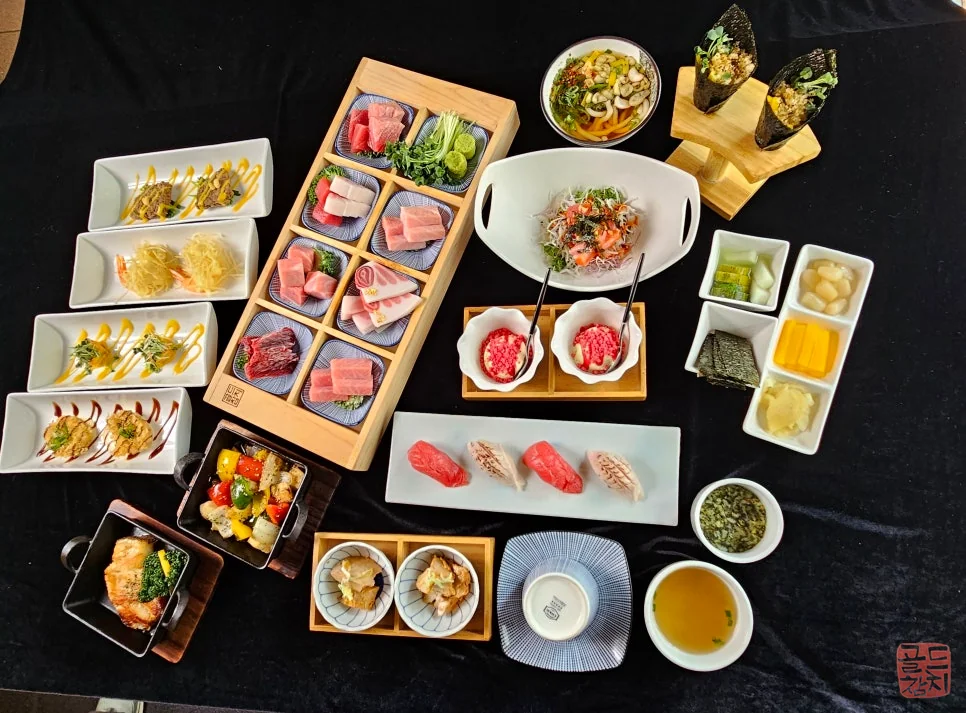
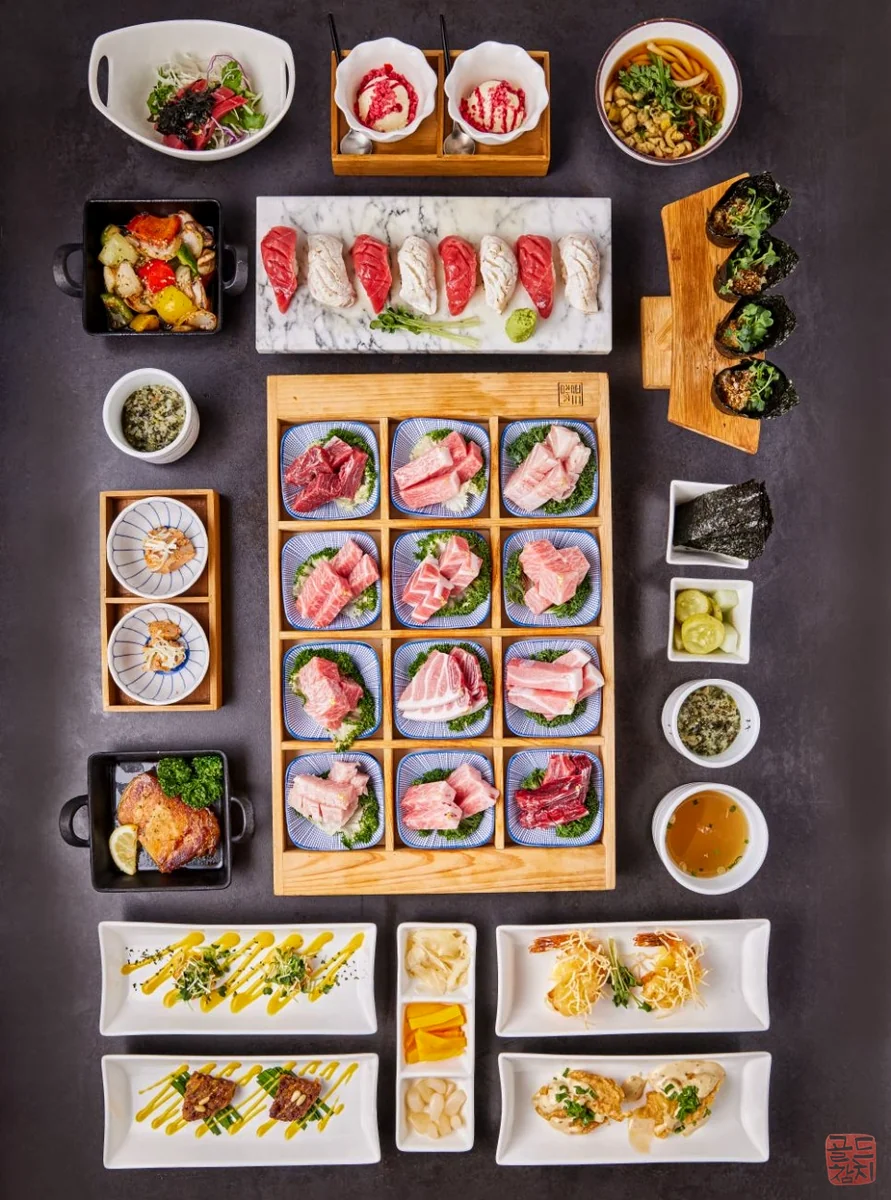
A full course meal configuration centered on Goldtuna's (골드참치) main menu
Practical Considerations for Facility and Environment Improvement
A restaurant's competitiveness is determined by a combination of factors, including not only the taste of the food but also the comfort of the seats, lighting, the condition of utensils, hygiene facilities, and the professional response of the staff.
Recently, we visited a restaurant located in Jamsil (잠실) Lotte World Mall (priced at 68,000 KRW per person). While some aspects of the food quality did not meet Goldtuna's (골드참치) standards, there were many points to reference regarding spatial configuration and facilities.
The evaluation derived after the meal was specific.
“The food composition left something to be desired, but the convenience of the facilities and chairs was outstanding.
If we improve the chairs at Table 5 in our restaurant, the customer experience will be further enhanced.”
Benchmarking is not about blindly following every element, but a process of objectively analyzing the strengths and weaknesses of each store to find improvements suitable for our own environment.
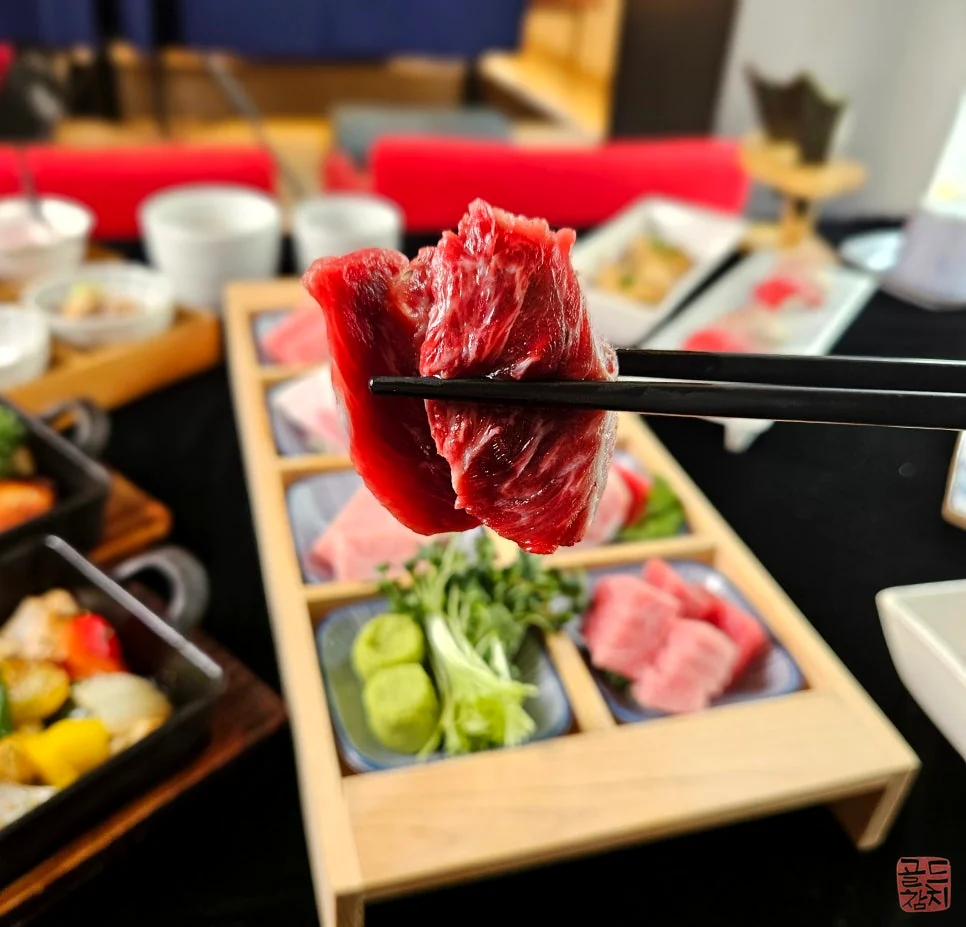
Bluefin tuna wing meat section
Advancing Service Through Regular Field R&D
When staying in the same space, familiarity can easily become the standard for judgment. By directly experiencing the equipment, utensil placement, and spatial presentation of other stores, we gain the opportunity to re-examine internal elements that we had taken for granted.
As the Goldtuna Bangi branch (골드참치 방이점) has been operating for a long time, there may be physical limitations to the facility. However, food and service are areas where constant improvement is always possible.
The core goal of Goldtuna's (골드참치) benchmarking education is to attempt the best changes within current conditions based on ideas acquired from new spaces.
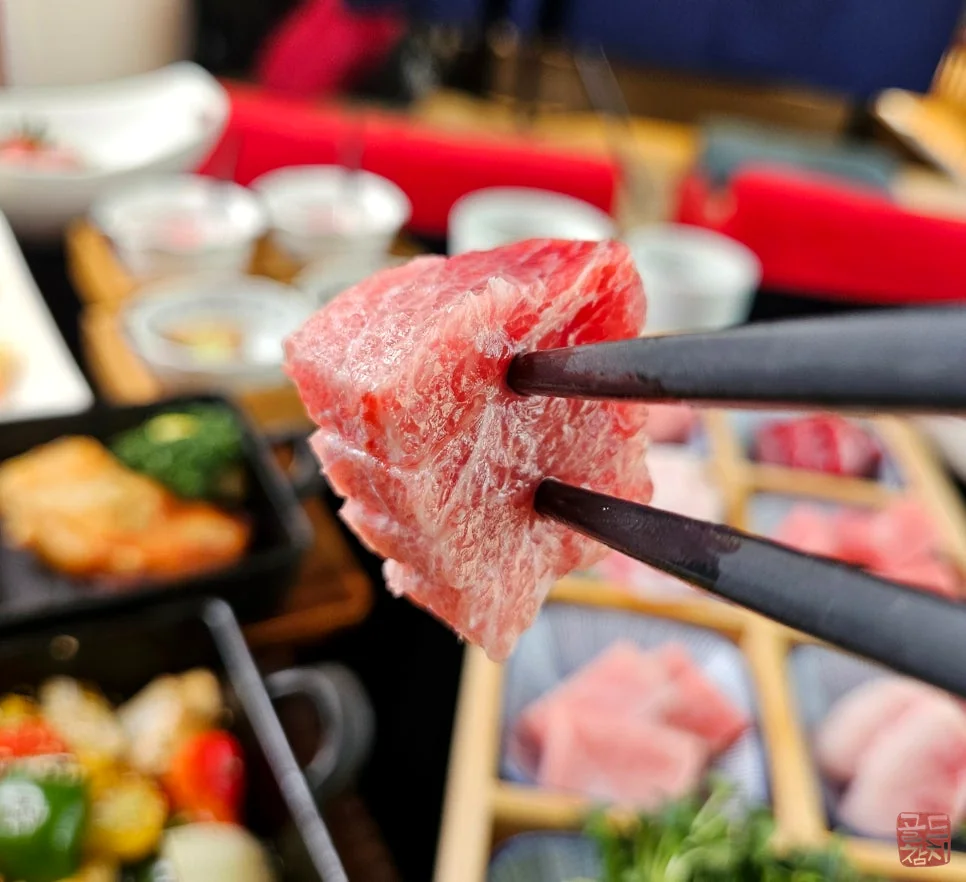
Southern bluefin tuna collar belly (Kama-toro) section
An Organizational Culture That Establishes Autonomous Judgment Standards
In the food service industry, where various customer expectations and variables exist, there are limits to manualizing every situation. This is because customer satisfaction standards fluctuate based on space, price, and service.
Therefore, what is more important than standardized guidelines is for employees to develop the discernment to judge the standards of a good restaurant themselves.
The act of paying and experiencing other stores directly serves as practical training to establish these judgment standards.
The reason Goldtuna (골드참치) maintains regular benchmarking is not simply to acquire the strengths of other stores. It is to establish a culture where we look back at our own store through the mirror of strengths and weaknesses discovered from another's perspective and supplement them ourselves.
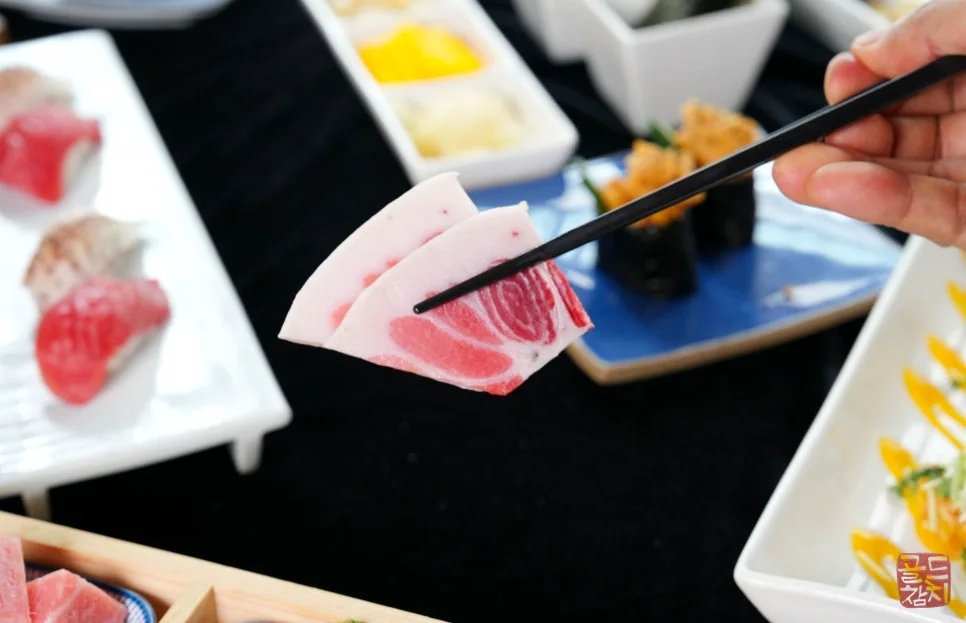
Bluefin tuna belly (Sunazuri) section
Brand History and Customer Reviews
System-Based Store Operation and 12 Years of Records
Goldtuna (골드참치) has aimed for store operation through systems rather than relying solely on experience. The transition to a tuna specialty restaurant, the development of unique trays, and the regular benchmarking tours for all staff are core operational assets of the Goldtuna brand story.
Service Satisfaction Experienced by Actual Visiting Customers
The results of education are proven through the experiences of customers who visit the store. Please check the actual reviews where customers who used the Bangi branch (방이점) directly mentioned the quality of the tuna along with the meticulous response of the staff.
Goldtuna (골드참치) operates the Bangi branch (방이점) and Sinsa branch (신사점).
Led by tuna sashimi, we provide a diverse course configuration including sushi, ankimo, grilled mero, tteokgalbi, tuna karaage, cream shrimp, udon, and dessert.
Beyond the quality of food, we consider service, space, and overall operation methods as the core values of our restaurant. The monthly regular benchmarking is also one of Goldtuna's (골드참치) systematic operation processes to maintain the highest quality.