
Choiyeon’s Kitchen & Conversations
There is a profound joy in the simple act of conversing with a friend.
It happened just yesterday.
I had been meaning to reach out, and by chance, we crossed paths at a gathering. It was a welcome reunion.
When sharing the stories of our lives, a like-minded companion is essential. This is especially true for those lifelong friends who have known you since childhood.
They are the ones who remember the days when we splashed together in the streams, long before the weight of the world took hold.
As the years accumulate, many things seem lighter. Our conversations often dance on the delicate line between irreverent mischief and deep sincerity.
There is a peculiar delight in that boundary—a space where playfulness meets truth, bringing a genuine sense of happiness to those involved.
Whether it is the line between humor and gravity, or truth and happenstance, there must always be a foundation. I choose to call that foundation my principles.
Today, I would like to reflect on those principles of communication.
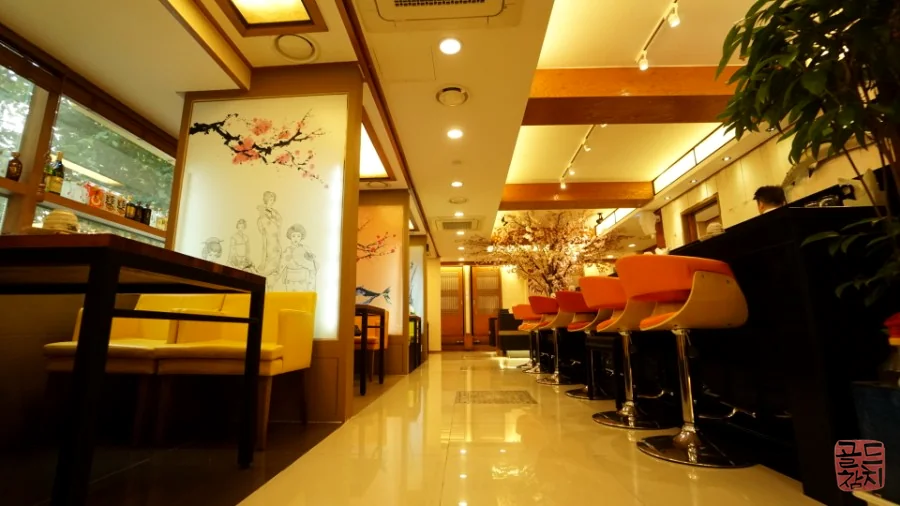
A quiet moment of our interior, capturing the atmosphere where these conversations unfold.
First, speech must possess sincerity.
Words are the outer expression of inner thought.
Just as our thoughts define who we are, they manifest through our voice. Speech is the method by which we express our life and our essence.
No matter how eloquent a phrase may be, if it lacks truth, the listener will feel a sense of unease.
Conversely, even if someone speaks slowly or clumsily, a core of sincerity will naturally draw others toward them.
It is the honesty within the voice that creates a lasting connection.
Second, speech should be an expression of positivity.
The language itself must be healthy.
Positive, constructive words are almost always accompanied by laughter.
In contrast, negative words drain the energy from a room, fostering division and conflict. They force us into a world of "this or that," inviting struggle.
Dale Carnegie, a master of human relations, once famously suggested that the only way to get the best of an argument is to avoid it.
If one has nothing but criticism or negativity to offer, it is often better to remain silent.
Positivity makes our lives pleasant and fills us with vitality. It is a gift of joy.
Third, the act of speaking is not as important as we think.
One might wonder if I have lost my way—after discussing principles of speech, I now claim it isn't paramount.
Yet, this is a fundamental truth.
I see it in myself. People often tell me I am a good conversationalist.
However, I find that I do very little "talking." Instead, I listen deeply and offer small gestures of encouragement.
A nod, a quiet agreement, or a simple "And then what happened?" is enough to facilitate a meaningful exchange.
When you move beyond that to offer true empathy—saying, "I see, that must have been difficult for you"—the connection is complete.
Many struggle to find the perfect logic to defeat an opponent in conversation.
But such victories are hollow. True mastery lies in the quiet art of listening.
I often say that the more precisely and sharply you speak, the more likely you are to sharpen someone's temper.
At my restaurant, I am often visited by younger guests.
When they arrive, I often suggest they sit at the bar counter.
During the dinner rush, while four-person tables are often full, my intention is more about hospitality and a wish for their happiness.
It allows me to offer a bit of gentle guidance or a well-placed word to ensure everyone leaves with a warm heart.
It might be something as simple as this:
"A beautiful guest has arrived today. Her partner is quite lucky," I might say with a smile. "But remember, she isn't only beautiful in your eyes—you'll need to stay attentive, as there are many admirers out there." This usually brings a bright smile to her face, and her partner joins in the laughter.
It creates a moment of shared joy for everyone.
Fourth, speech must have humor.
Witty remarks that bring pleasure to others elevate our relationships. Those who carry humor within them naturally attract people.
The most vital element of humor is timing.
The most truly humorous people are those who catch the perfect moment.
Even an ordinary sentence can become uproarious when delivered at the precise second it is needed.
Humor that feels forced or overly physical can be uncomfortable.
I prefer the kind of wit that lingers—the sort that makes you chuckle quietly upon reflection.
It is a subtle, sophisticated charm.
In the end, it’s about that gentle smile that stays on one's lips.
That is the kind of humor I cherish.
I want to enjoy the play of words with others.
I want to communicate through laughter, share joy, and be remembered long after the meal is over.