
Explore Garak Market: Seoul’s Largest Wholesale Food Market
Is there a hidden treasure waiting for me today?
This is the question I carry as I wander through the stalls of Garak Market.
A few years ago, the modernization of Garak Mall shifted the atmosphere from a traditional market to a more structured distribution center. It reflects a pursuit of cleanliness and convenience. Compared to my early days in the business, the logistics of sourcing have certainly become more efficient.
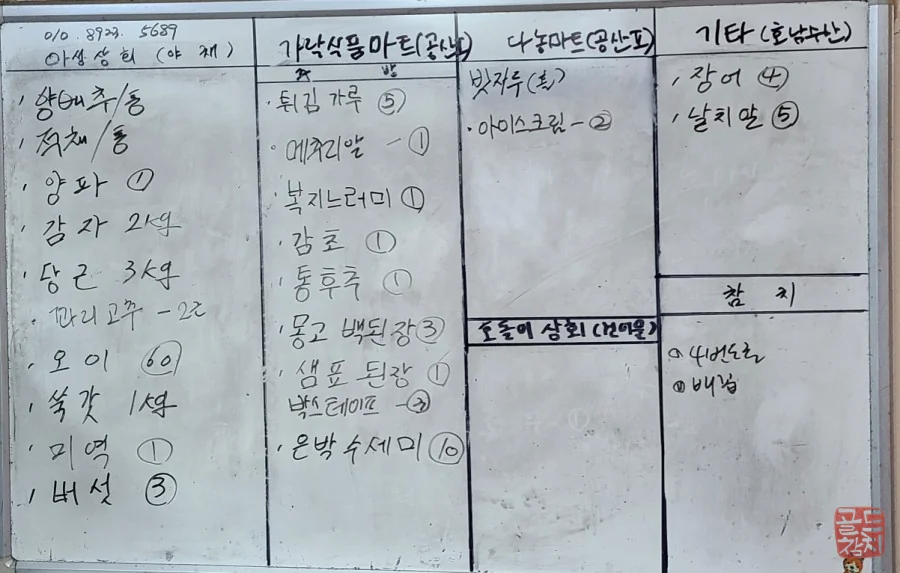
A shopping list for the bi-weekly haul.
While most vendors have moved inside the modern mall, the outdoor vegetable stalls still retain the hum of the old market. The basement level of the mall has its own produce section, but it often lacks the competitive spirit of the open-air vendors. Modernization brings higher management costs, which inevitably find their way to the consumer.
I find myself returning to the outdoor market for my essentials. Mushrooms, kale, bell peppers, onions, and cucumbers are staples I procure regularly. Other ingredients depend entirely on the rhythm of our kitchen’s daily inventory.
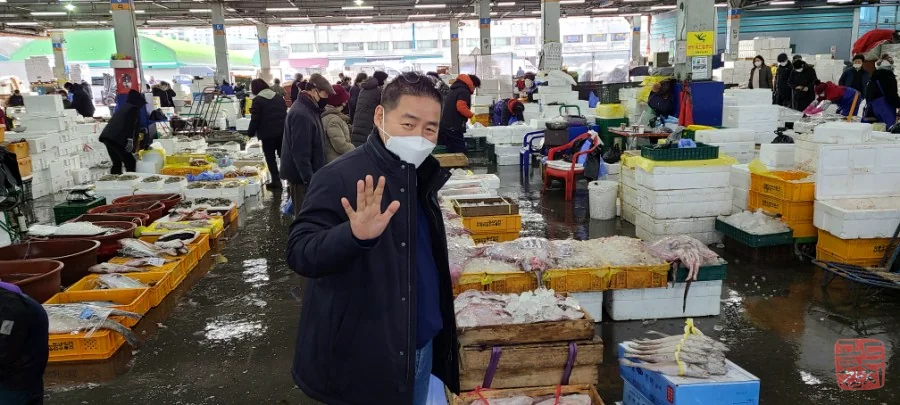
The seafood auction grounds.
This is the heart of the seafood trade.
This space transforms throughout the day. It is an auction house at dawn, a retail hub for merchants in the morning, and a quiet parking lot by the afternoon. To arrive here early is to witness the true quality of the sea’s bounty. The vibrancy of the catch here is far removed from what one finds in a typical grocery store.
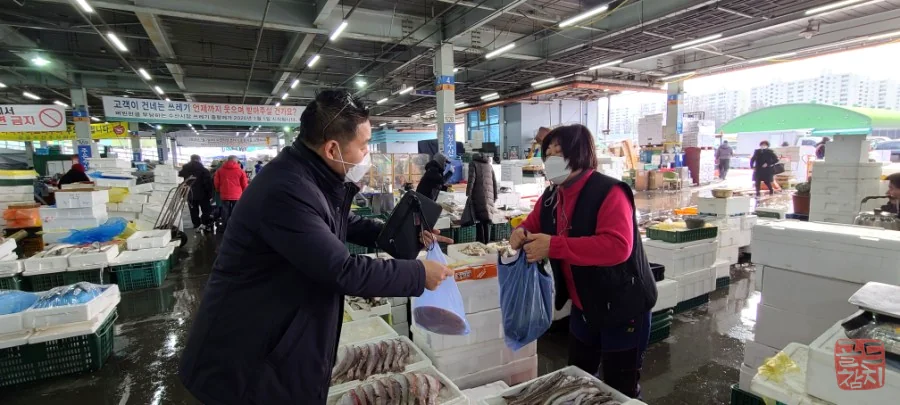
Even a simple mackerel appears alive, with firm flesh, clear eyes, and deep crimson gills.
In the cooler months of autumn and winter, domestic mackerel is at its peak. While domestic varieties are known for their subtle patterns, one must be wary of those with prominent spots, as the flesh can be crumbly. I often favor Norwegian mackerel for its larger size, distinct dark stripes, and rich fat content, which yields a superior flavor.
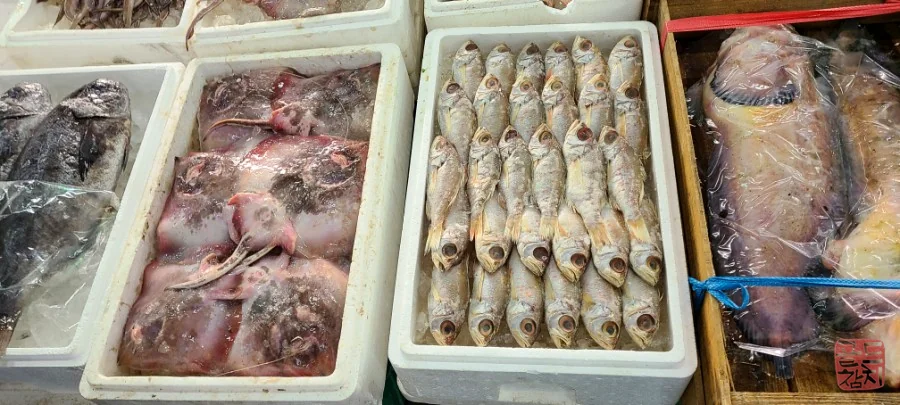
Wholesale units usually range between 30,000 and 40,000 won.
Today, I picked up some ray and ray liver for our staff meal. While authentic skate is a luxury that often exceeds 200,000 won, fresh ray offers a similar profile that is far more accessible. We enjoy it as a sashimi or a hearty stew, prepared with the quiet dedication of our head chef.
The ray liver, which I remember fondly from a stew I had a year ago, was a bargain at 20,000 won per kilogram. Prices at Garak Market exist in a different world than local supermarkets—roughly 15% lower. This economy is built on cash transactions and the unspoken understanding between merchants. For small purchases, I prefer not to trouble the vendors for formal receipts while their hands are still wet from the morning's work.
It is worth noting that the tuna we serve at our restaurant is not found in these market stalls. Professional-grade tuna requires specialized logistics: storage in -60°C industrial freezers and transport in dedicated refrigerated vehicles. Once it reaches our kitchen, it is moved immediately to our own deep-freeze storage to maintain its integrity.
I once received a concerned call from a guest who had taken tuna home. After a week in their freezer, the fish had turned dark. This is the natural result of standard home refrigeration.
At -20°C—the temperature of a household freezer—tuna begins to oxidize within a week. While still edible, the color and texture degrade significantly. This is why specialized equipment is non-negotiable in our line of work.
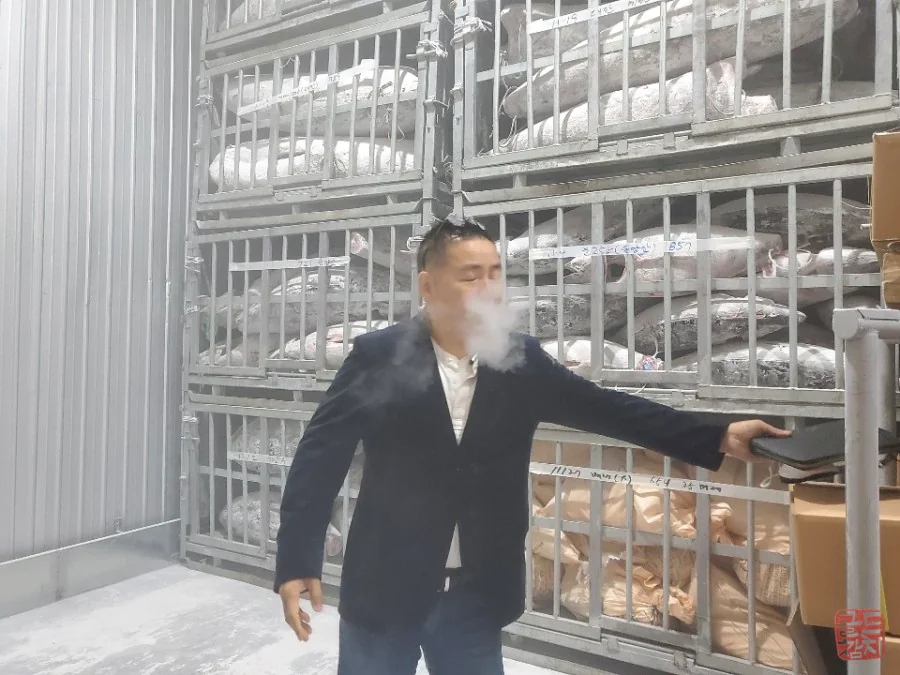
The interior of the -60°C tuna storage facility.
Because of these storage difficulties, tuna was once dismissed in the days before modern refrigeration. Without the ability to freeze the fish immediately after the catch, the high fat content would cause rapid spoilage during the long journey back to land. Today, we rely on specialized suppliers to ensure every piece meets our standards.
However, there is one specific stall at Garak Market I never miss: our salmon supplier. Every course at Goldtuna includes a salted, grilled salmon head. It is a savory accompaniment that pairs beautifully with a drink. While it often plays a secondary role to the main course, its rich flavor makes it a hidden gem on our menu.
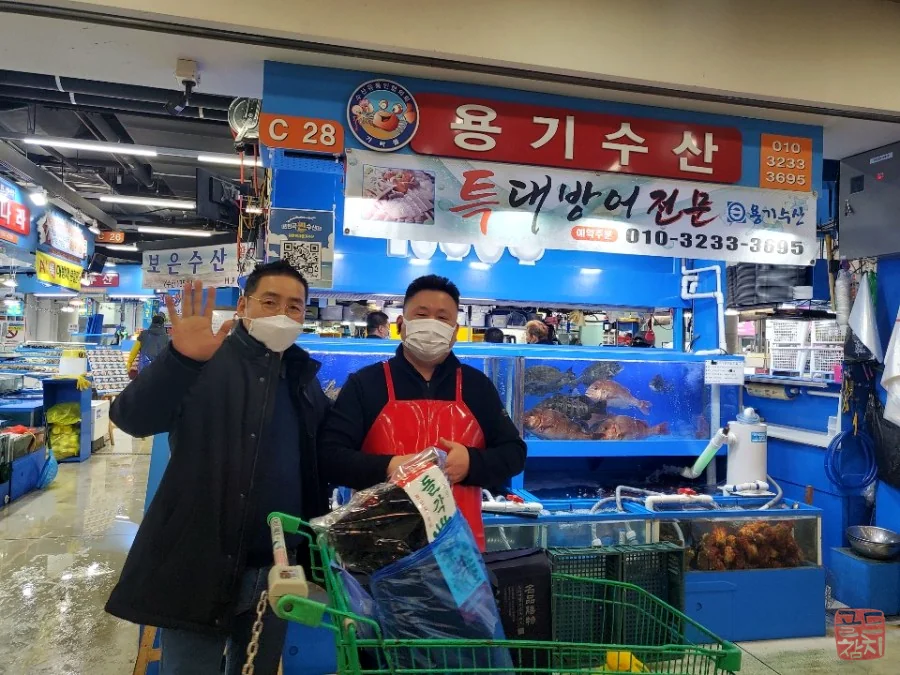
A moment with the owner of Yonggi Fisheries.
We have sourced from here for seven years, nearly since we first opened our doors. Quality in seafood often scales with size, and salmon is no exception. While others might settle for a 5kg fish, our partner provides 7kg specimens, ensuring we receive the very best. It is a partnership built on consistency and mutual trust.
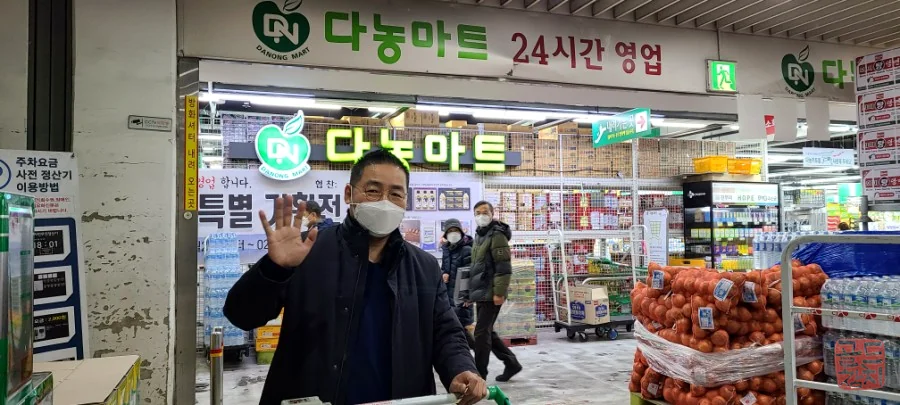
The remainder of our dry goods—ginger, miso, oils, and even edible gold—is sourced from the large wholesale marts on the second floor. These are the logistical backbones of the restaurant, where we manage the essentials that keep our kitchen running.
Sourcing takes nearly two hours, but it is time I cherish. To walk through the market is to be energized by the vitality of people working with purpose. It is a reminder of the quiet dedication required to sustain any craft.
This past Saturday was a day of two halves. The lunch rush was busy, while the evening settled into a calmer pace. I was moved to see several families dining with us. One regular guest shared a sentiment that stayed with me: "We always find ourselves at Goldtuna for our most joyful occasions."
To be the setting for a guest’s happiest moments is a profound honor. It is the very reason we do what we do. It makes the long hours and the early market runs meaningful.
I often reflect on the weight of a guest's choice. A dinner for two here easily exceeds 120,000 won—the cost of two large sacks of rice, enough to feed a family for a year. People come to us with a plan, a purpose, and their hard-earned resources.
I tell my staff often: "How often do we ourselves sit down for a 120,000 won meal? If we do not approach every plate with devoted care, we fail our guests." Every person who walks through our doors has the right to be treated with the art of sincere service.
Just as our guests labor for their livelihood, it is our duty to ensure their time at Goldtuna is a worthy reward—a moment of true hospitality and comfort.