
The Real Reason Bluefin Tuna Tastes Different at Every Restaurant
Tuna is not a dish created simply by cooking or seasoning. It is closer to an ingredient where one enjoys its inherent flavor by precisely cutting raw material that has been thawed through an appropriate process. Because of these characteristics, one fundamental question often arises.
If it is the same species of Bluefin tuna, wouldn't the
taste experience be similar no matter where you try it?
Before operating a specialty restaurant myself, I also had similar thoughts. However, what I realized after handling countless tuna in the field for a long time is that the differentiation in quality is determined at a stage long before picking up the knife.
Fundamental differences arise from the specifications of the raw material and the selection of parts. Subsequently, the thawing method, moisture management, precise cutting, and the subtle elements of the accompanying dishes and dining environment combine to create the final difference in taste.
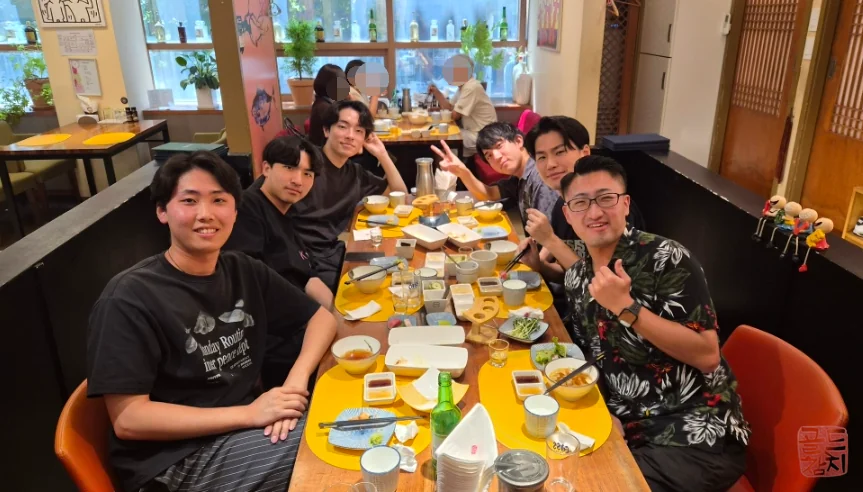
Visitors expressing their satisfaction while experiencing the Omakase Special at Goldtuna.
Even within the same species, the value of raw material is different
This gap in quality is easy to understand if you think of the cases of flatfish or yellowtail.
A standard 600g flatfish and a large flatfish that has grown to over 3kg are biologically the same species, but from a gastronomic perspective, they are treated as different grades. The same applies to yellowtail.
This is because as the fish grows over a sufficient period and the body becomes larger, the fat distribution, tissue density, and unique texture change significantly.
Goldtuna adheres to this same principle when selecting Bluefin tuna. We do not simply check whether the Bluefin species is used, but rather set what weight class the raw material has and which top-tier parts to select within it as our core criteria.
Goldtuna sets a minimum of 250kg as the baseline and primarily prioritizes 350kg-class giant Bluefin tuna at the actual supply stage.
This is not just about aiming for size; it is a strict raw material selection standard to secure the optimal fat layer and firm tissue texture that Goldtuna pursues.
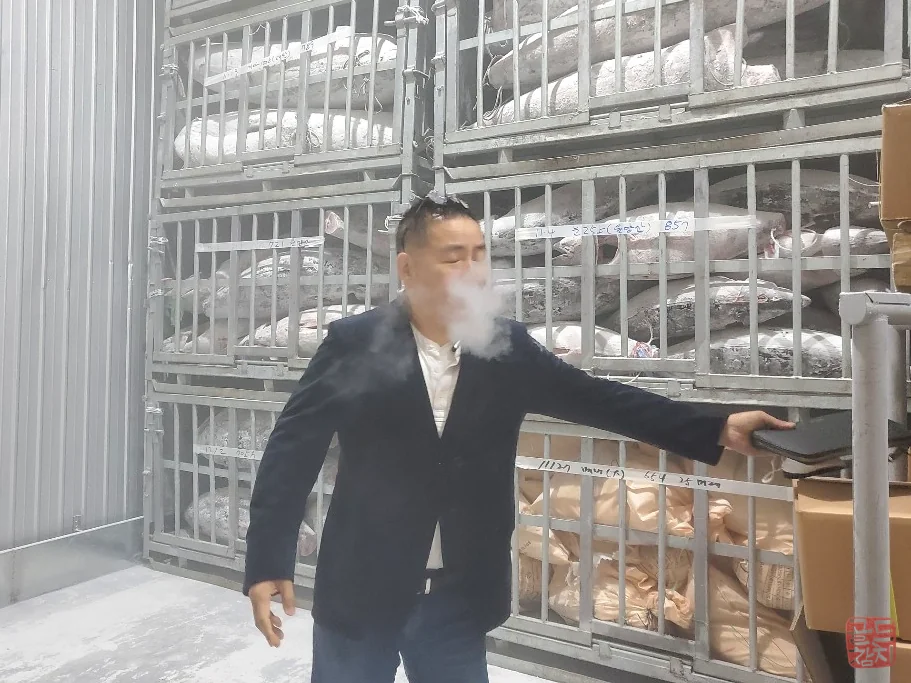
The process of precisely inspecting the raw condition and weight class of Bluefin tuna in an ultra-low temperature freezer.
Strict part selection continues even after securing large raw materials
Even within a single Bluefin tuna, the gustatory characteristics felt vary starkly depending on the part.
It consists of various parts from the rare kama-sal (neck meat) to the belly, back, and lean meat, and especially within the same belly part, the fat density and texture differ depending on the position.
Goldtuna undergoes a strict re-selection process even after securing top-grade large raw materials. We selectively use primarily the kama-sal, the top-tier No. 1 and No. 2 belly parts, and high-quality lean meat.
As a result, the taste of Goldtuna is completed through three stages. It is a series of processes: choosing the optimal species, selecting an overwhelming body size, and then picking only the peak parts within it. This is where the difference in quality, which is difficult to explain simply by the name 'Bluefin tuna,' occurs.
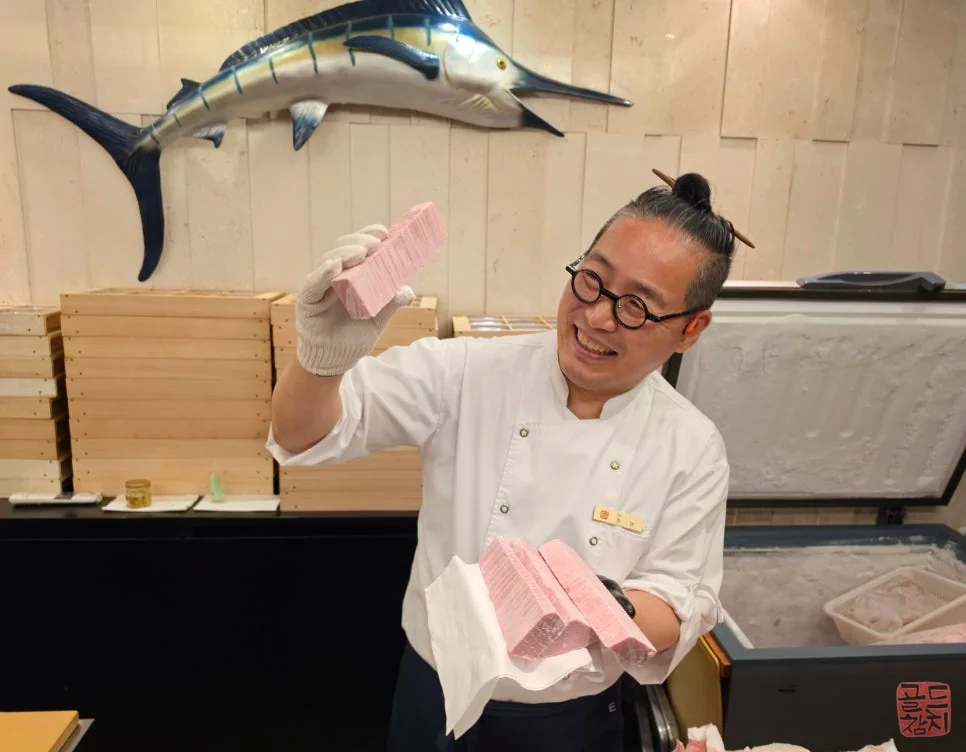
The cutting of high-quality Bluefin tuna lean meat (akami) showing a vivid color.
Values that must precede thawing technology
Thawing technology is often mentioned as the key to determining the taste of tuna. Of course, thawing, storage, and moisture control are essential processes to fully realize the potential of the raw ingredients.
However, Goldtuna's field philosophy points toward something more fundamental. For a tuna specialty restaurant with a long history, basic management capabilities, including thawing, are likely already standardized at a high level. In other words, it is difficult to discuss extreme quality differences among experts based solely on the proficiency of technology.
On the other hand, what weight class of raw material and what parts were selected at the purchasing stage fundamentally changes the starting point of the dish itself. Simply buying good raw material and presenting an emotional taste to the customer require different dimensions of effort.
If raw material selection is the foundation that defines the limits of taste, then thawing and moisture management can be said to be the process of preserving the best condition of that raw material until it reaches the customer's table.
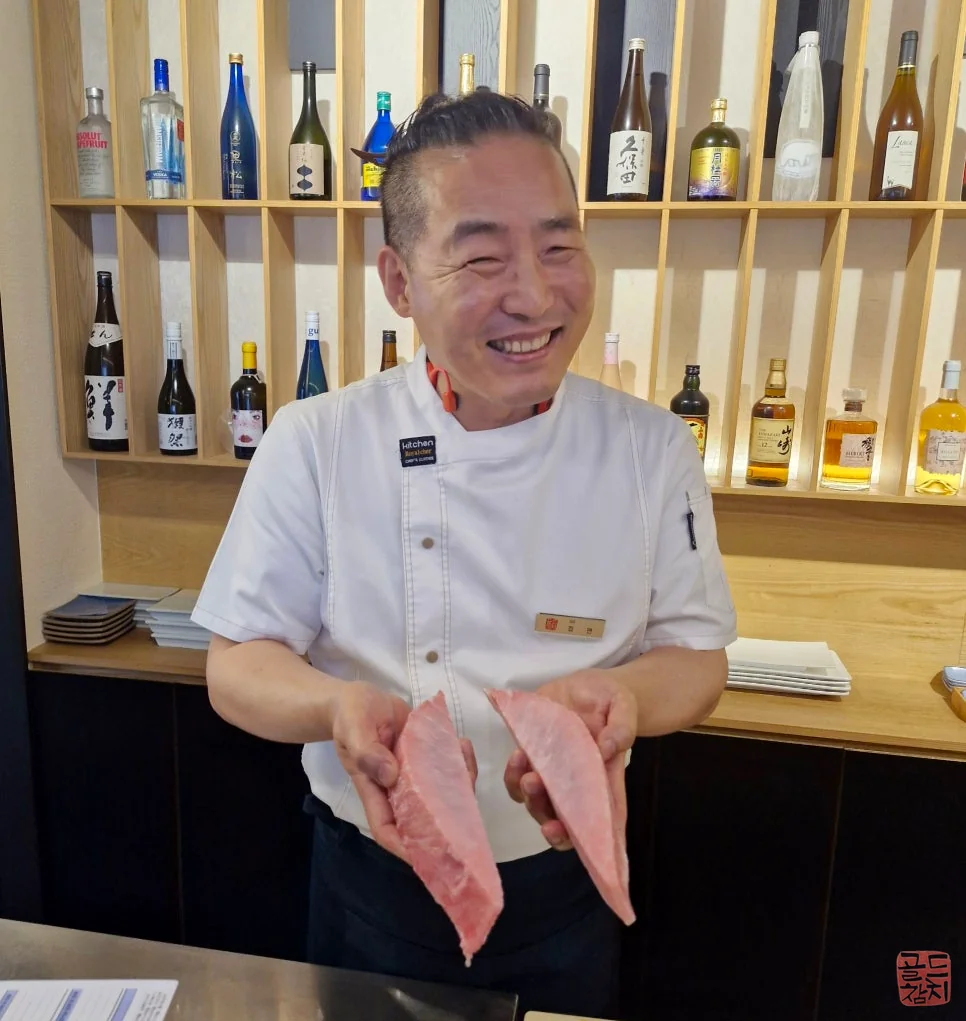
A view of Bluefin tuna kama-sal (neck meat) characterized by rich marbling.
Tuna flavor is an accumulation of small differences rather than a single secret
Just because raw material is important does not mean that the meal is completed by raw material alone.
Even for the same part, the texture felt in the mouth can change depending on how it is cut. The moisture condition of the surface and the timing of serving also have an impact.
Goldtuna follows the basic principle of cutting with thickness after full thawing and removing surface moisture.
To this, other elements are added.
The taste experience of an entire meal is not the same when eating only tuna compared to eating it alongside sushi, grilled dishes, fried dishes, and warm food.
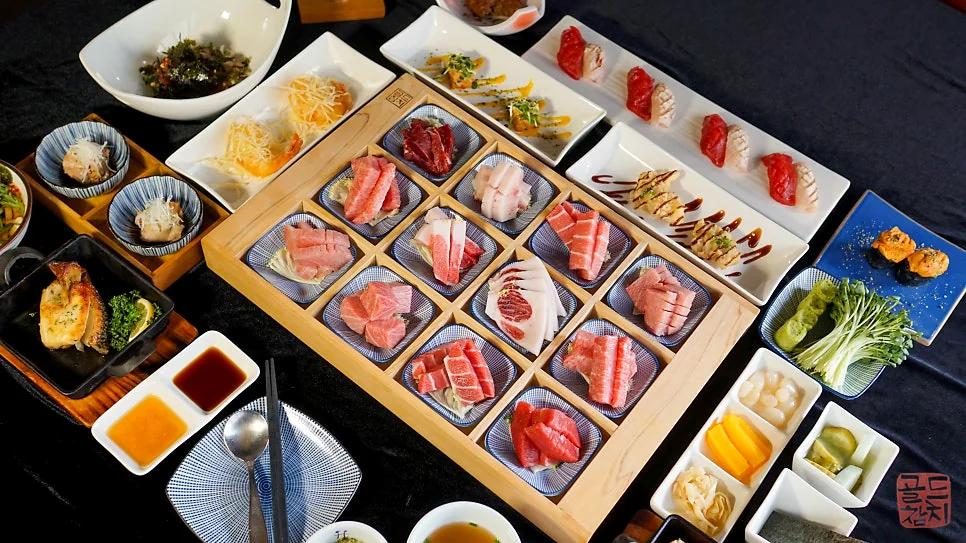
The fact that Goldtuna composes the 15-course meal with various cooking methods is also connected to this. The core of the 15-course meal is not about increasing the number of dishes, but about allowing the customer to experience tuna alongside foods of different temperatures and textures in one meal.
The space, the dishes, the interval between dishes, and the staff's service do not change the tuna raw material itself.
However, these small elements continue to accumulate throughout the entire meal.
When differentiation derived from top-tier sources is combined with detailed processes, the unique gap in taste that customers can feel is finally completed.
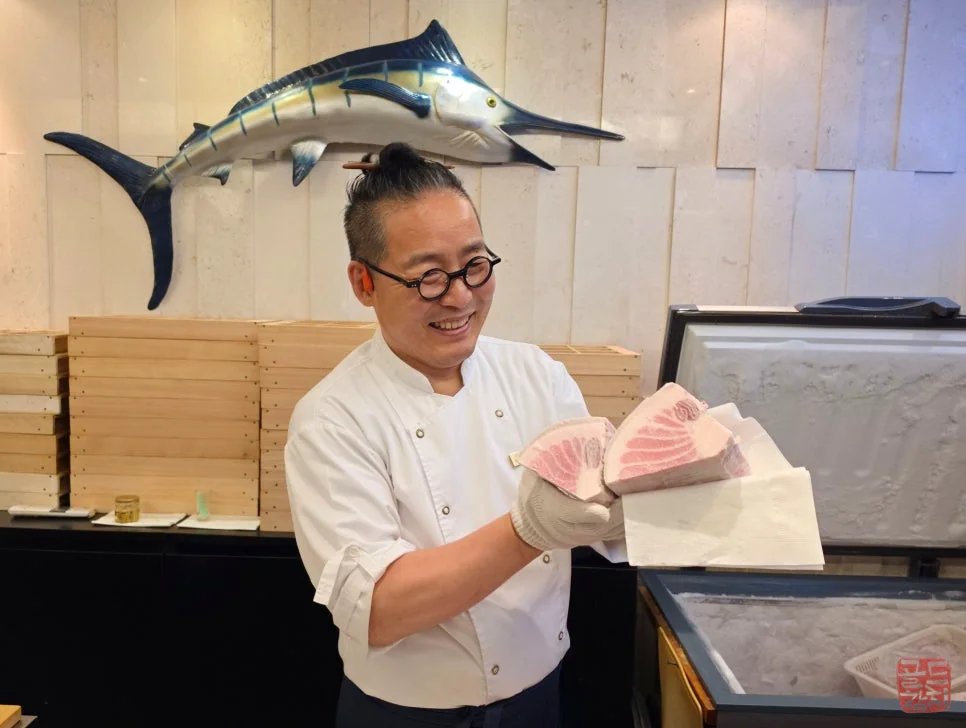
Bluefin tuna belly button (sunazuri) that provides both visual flavor and a unique texture.
A guest from Japan says “Oishii”
Recently, Japanese customers who visited Goldtuna expressed high satisfaction while experiencing the Omakase Special. In particular, they left praise saying it was a different form of gourmet experience from the tuna they commonly encountered in their home country.
A customer does not need to technically understand the purchasing specifications of the raw material or the specific thawing formula. Even before hearing detailed explanations of what principles were used for cutting, the taste of 'one piece' that touches the mouth already represents all that sincerity and philosophy.
Customers do not experience raw materials and technology individually, but rather fully enjoy the result of a single piece completed by the harmonious condensation of all processes.
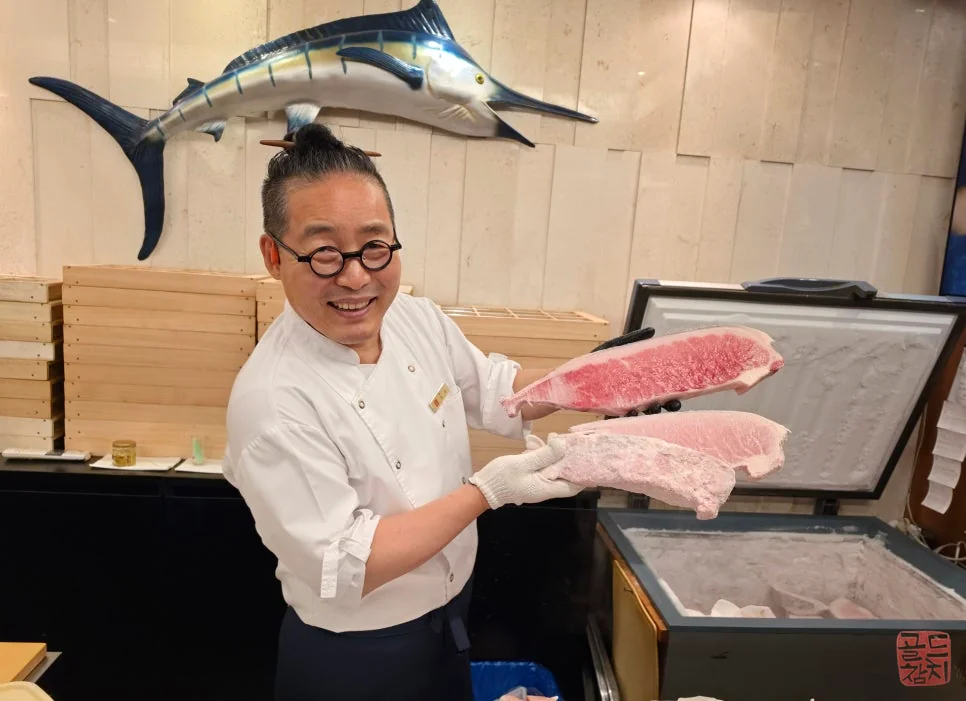
The precise cutting of No. 1 Bluefin tuna belly, which holds the highest value.
Why the taste differs at every tuna restaurant
Using the same Bluefin tuna does not mean the same taste will be produced.
The sizes of the raw materials are different, and the selected parts are different. Thawing, moisture management, and cutting methods follow. What food it is eaten with during the meal also has an impact.
Among these, what Goldtuna looks at first is the ingredients. This is because we believe it is difficult to fill that gap with technology alone without using good raw materials.
And after selecting good raw materials, small processes are needed to properly deliver those materials to the customer.
Tuna looks like a dish that is just sliced and served.
However, the actual difference in taste has already begun before the slicing.
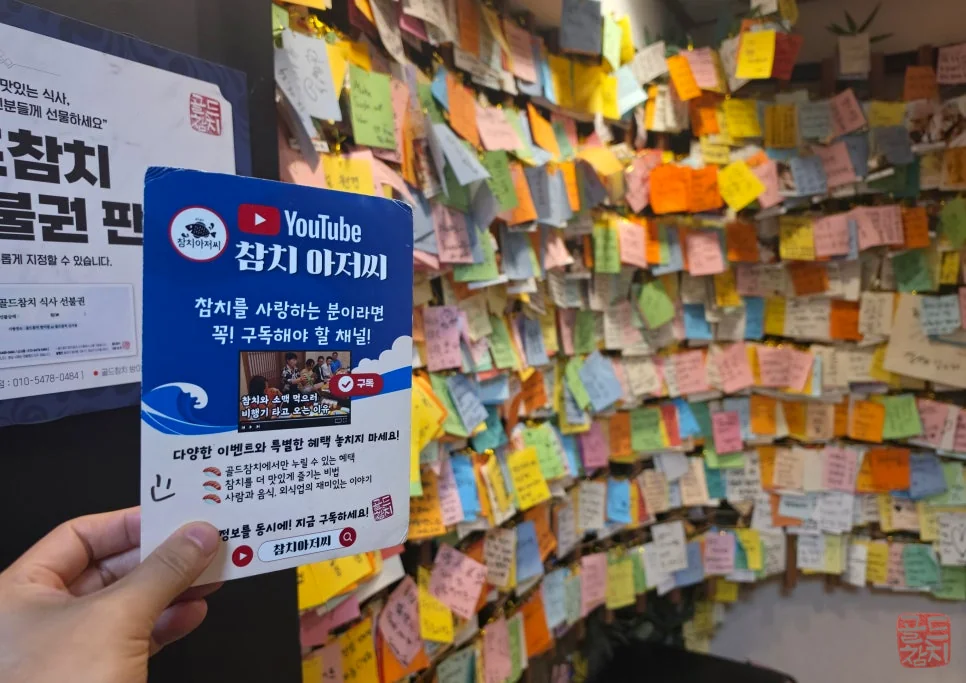
Sincere impressions left by customers who visited Goldtuna.
You can learn more about the differentiated points that complete the specialness of Goldtuna.
Check the difference in tuna quality and thawing through the vivid voices of our customers.
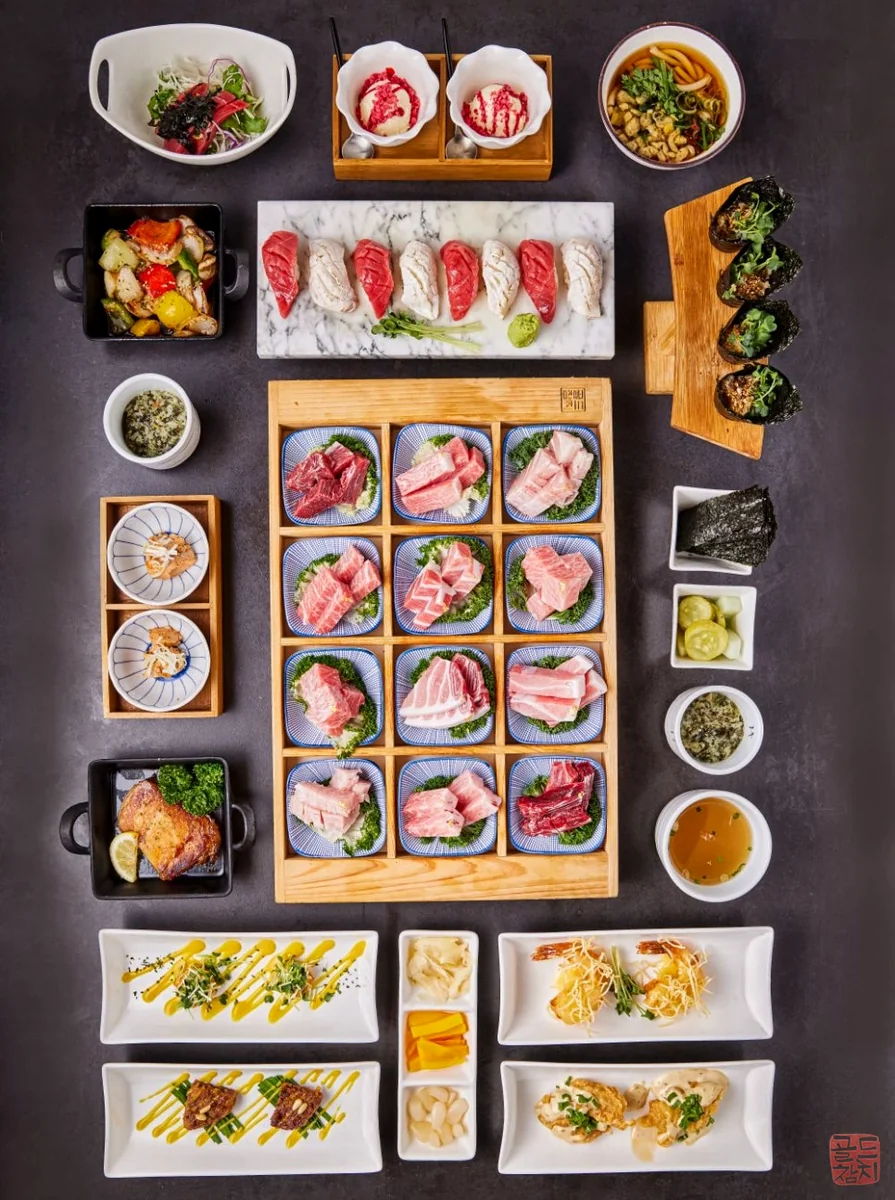
The Goldtuna 15-course table setting where rich composition and exquisite dishes harmonize.
Goldtuna is a tuna course specialty restaurant operating in Bangi-dong and Sinsa-dong, Seoul. We select Bluefin tuna of at least 250kg, primarily 350kg class, and selectively use necessary parts such as kama, and No. 1 and No. 2 belly. We operate a 15-course meal that includes tuna, sushi, grilled dishes, fried dishes, meals, and desserts.