
The Essence of Tuna: Why Color Reveals Quality Before Taste
The quality of tuna is not merely a matter of flavor. The marbling, the depth of color, the mastery of moisture, and the precise thickness of the cut define the caliber of a single piece. We explore why true tuna must first be appreciated with the eyes.
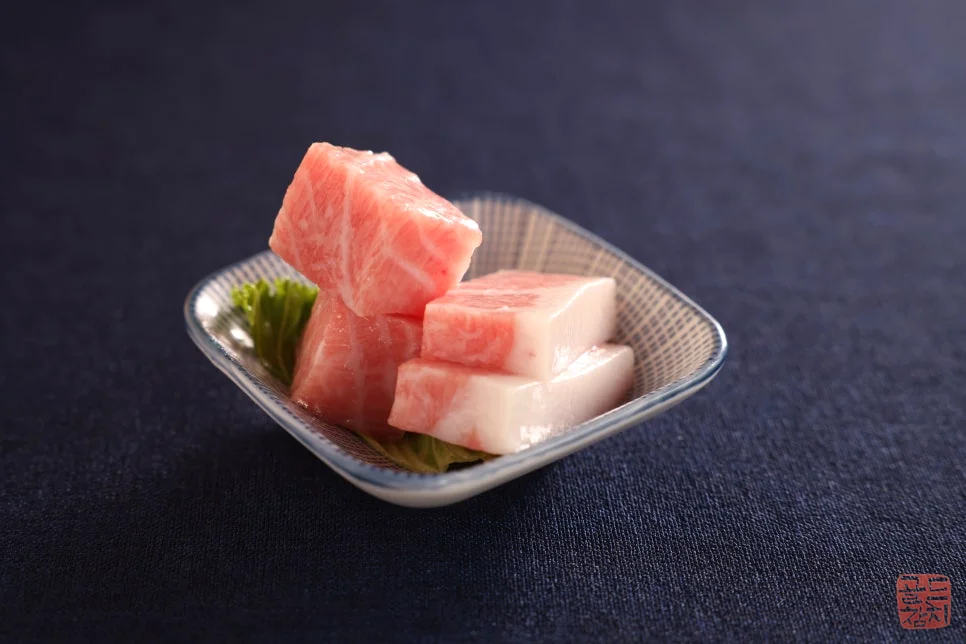
Bluefin Tuna Belly
When we speak of the taste of food,
we often think of the tongue first.
Yet tuna is different.
The experience begins long before it reaches the palate.
We observe the radiance, the marbling, the surface, and the form.
The dignity of fine tuna is revealed in its color before its taste.
“The meal begins before the first bite.
The color and form of a single piece
speak first of the tuna’s true caliber.
The Tuna Specialist
”
Tuna persuades first through its hue.
Tuna is fundamentally a red-fleshed fish.
This crimson depth is rooted in its muscle pigmentation.
When healthy fats are introduced, the color softens into something more refined and luxurious.
The shade of the meat is deeply tied to the state of its myoglobin, and as fats disperse, they create an impression of silkiness. In high-quality tuna, the grain and the radiance are unmistakable at first glance.
Just as mixing red and white yields a soft pink,
when white fats are elegantly woven into the red flesh, the result is an image of profound sophistication.
Marbling, therefore, is more than just a presence of fat.
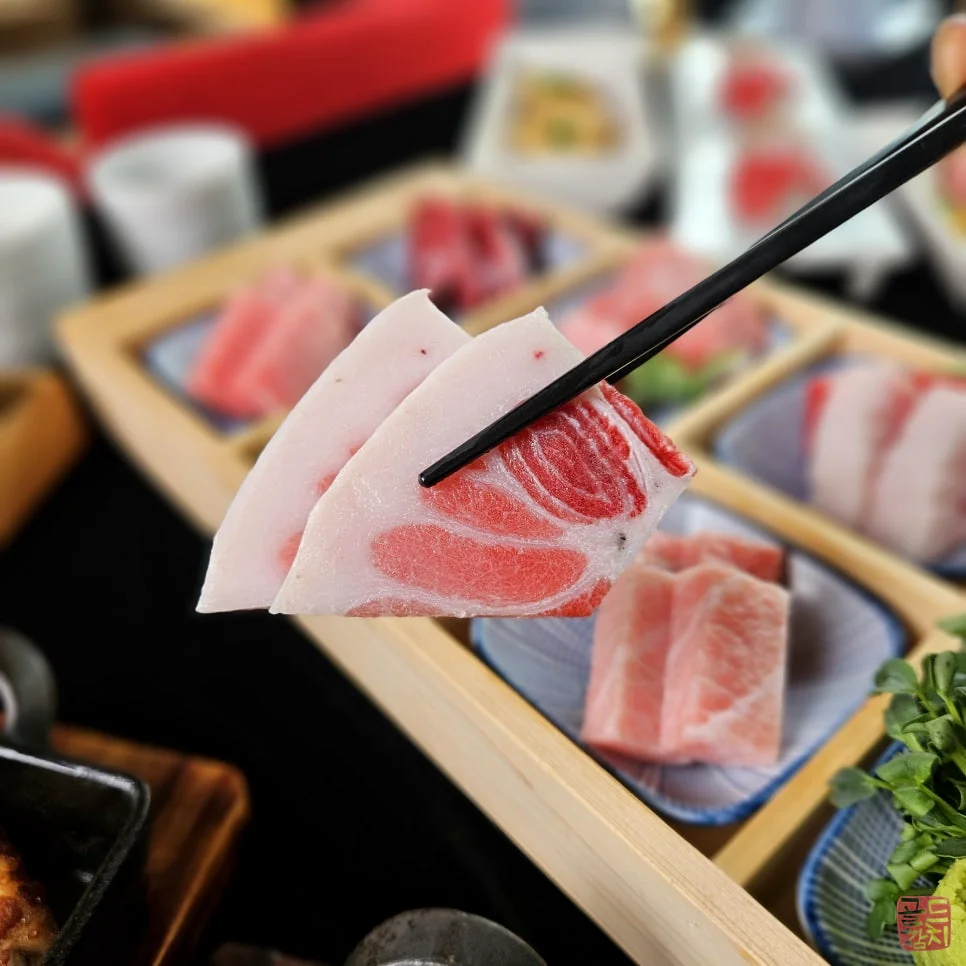
Bluefin Tuna Belly (Otoro)
It is the visual manifestation of the tuna's dignity.
The red flesh serves as the foundation.
The even distribution of fat softens the visual intensity.
Exquisite tuna reveals its living grain through its color.
Radiance emerges after a season of waiting.
Excellence does not reveal itself the moment the tuna is prepared.
It requires patience.
The light only rises when the flesh is fully relaxed and stabilized.
The color of frozen tuna transforms through thawing and oxygen exposure. Managing color stability post-thaw is the essence of quality. In this sense, thawing is not merely a process of melting; it is the art of opening the color.
If hurried, the radiance remains locked away.
Impatience leaves the light shuttered.
With the wisdom to wait, the tuna subtly comes to life.
To me, this unfolding radiance resembles a flower.
No flower can be forced to bloom.
It rises naturally, only when its time has come.
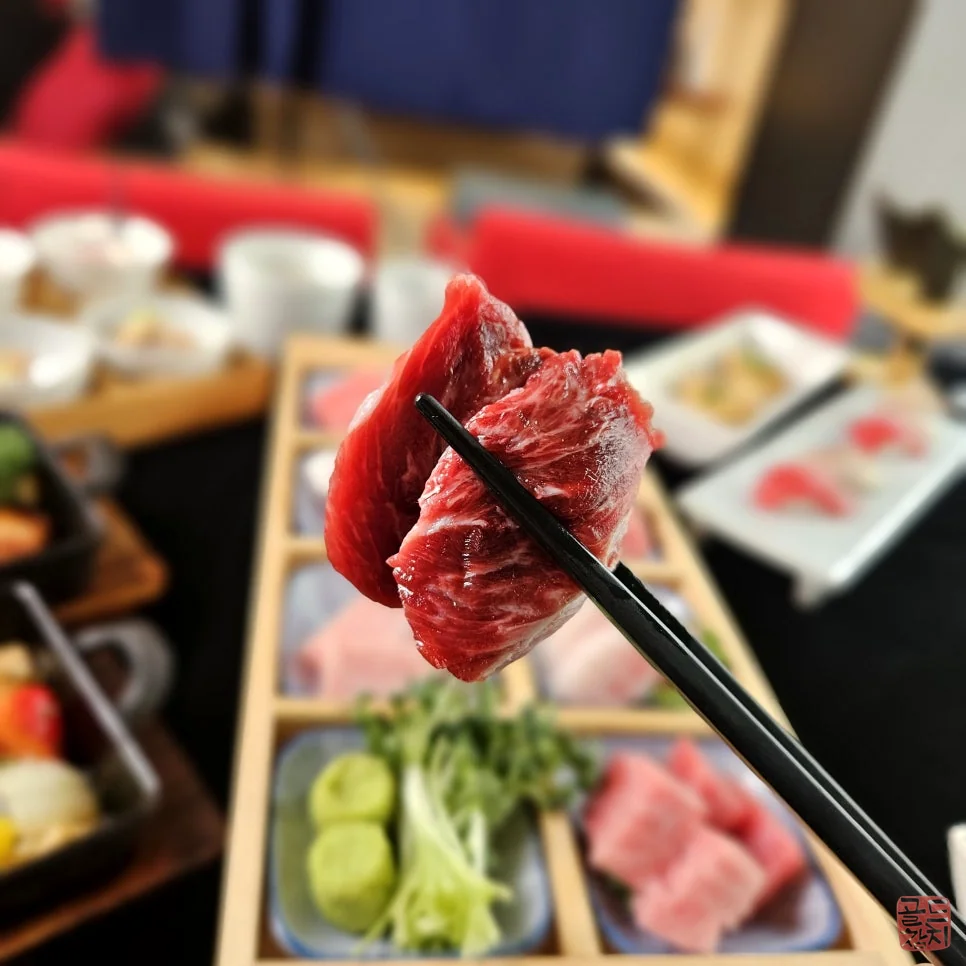
Bluefin Tuna Fin Muscle
Vibrancy is the fruit of patience.
The color lives only through proper thawing.
Fine tuna shines in composure, not in haste.
Mastering moisture brings the tuna into focus.
Just as condensation forms on a cold window,
moisture can linger on the surface of tuna.
This moisture is not merely an aesthetic concern.
It blurs the radiance and creates a greasy sheen,
dulling the visual impression of the meal.
Visual presentation is vital in evaluating tuna. If the surface integrity is lost during storage or handling, the perceived quality diminishes. Managing surface moisture is therefore an essential pillar of craftsmanship.
When moisture clings to the surface,
it later seeps and spreads, making the cut look untidy.
The tuna loses its sharp definition.
Thus, removing moisture is not a simple chore.
It is the final touch that clarifies the image,
perfecting the quality of every single piece.
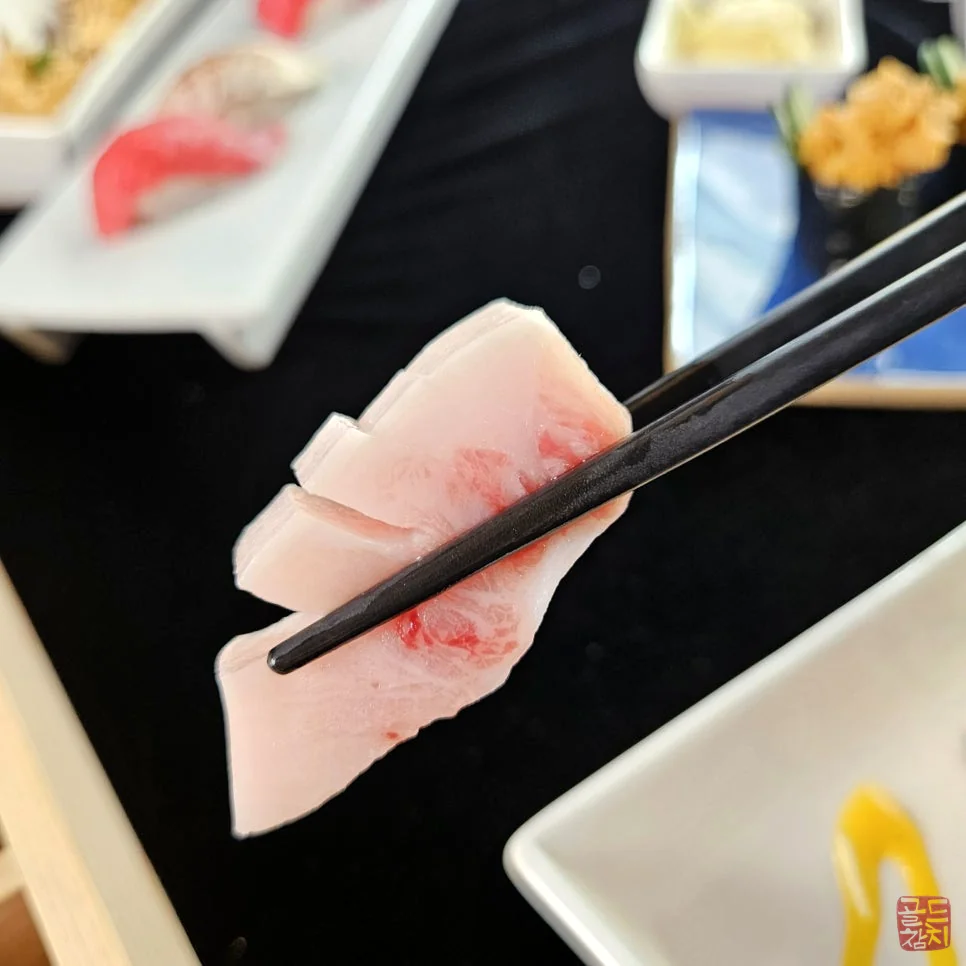
Mekajiki (Swordfish) Belly
Excess moisture clouds the tuna’s appearance.
A clean surface brings the true color into focus.
Moisture control is the soul of quality management.
The cut completes the architecture of the form.
Even the finest specimen loses its strength if the cut falters.
If sliced too thin, the form weakens.
The delicate grain begins to crumble.
Conversely, a generous thickness preserves the structure and defines the texture.
The same tuna can offer entirely different visual impressions and mouthfeels depending on the cut. This directly impacts quality. This is why Goldtuna places such emphasis on substantial, deliberate slicing.
It is about protecting the form, encasing the juices,
and fully awakening the sensation of the bite.
When I observe a masterfully executed cut,
I am sometimes reminded of Mondrian’s compositions.
The impression changes entirely based on how the space is divided. Tuna, in the end, is a piece of art.
A single movement of the knife alters the shape;
the shape alters the texture;
and the texture alters the memory.
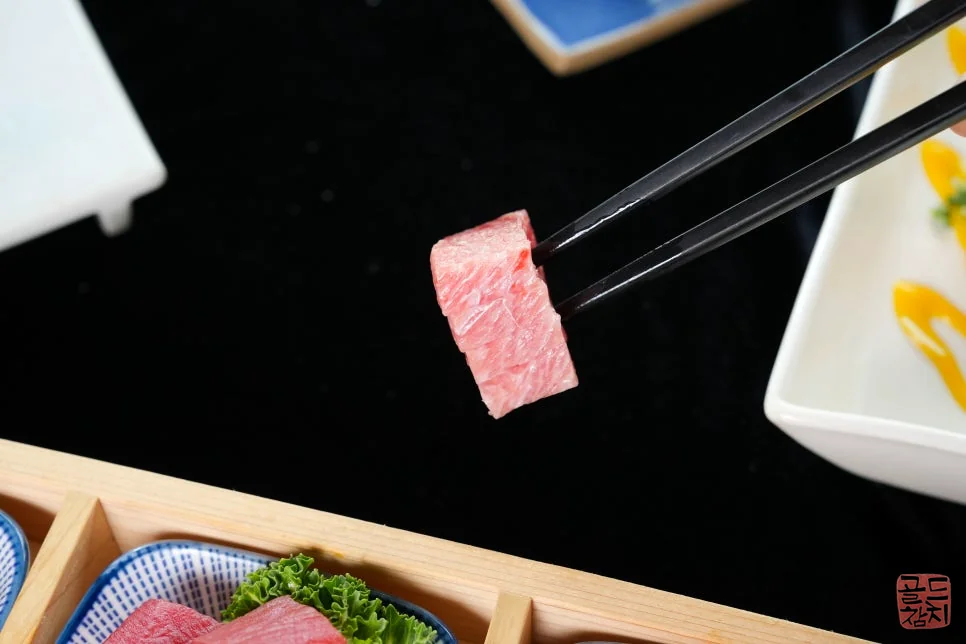
Southern Bluefin Tuna Belly
Substantial thickness keeps the form from collapsing.
Generous slicing brings the texture to life.
A fine cut harmonizes visual beauty and mouthfeel.
A culinary world akin to an elegant floral banquet.
High Japanese cuisine is often described as a "feast for the eyes."
It is food meant to be eaten first with the gaze.
The harmony of colors, the balance of arrangement, the dialogue between vessel and ingredient.
The dining experience begins long before the first taste.
Tuna, in particular,
is a dish where visual presence carries immense weight.
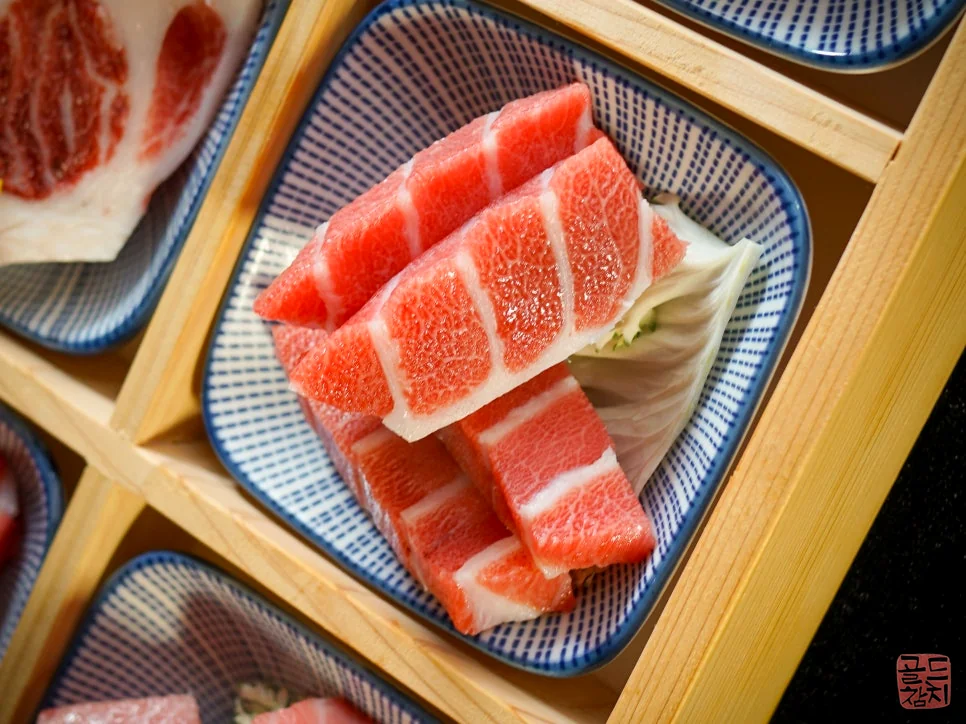
The color must be vivid,
the marbling must be exquisite,
the surface must be immaculate,
and the cut must be definitive.
Therefore, tuna is a cuisine
that must first win your trust through the eyes
before it is confirmed by the palate.
Why Goldtuna obsesses over color and form.
Exceptional tuna should persuade the eye
long before the tongue finds delight.
When I serve a piece of tuna, flavor is not my only consideration.
How that single piece appears to the guest,
how its radiance has unfolded,
whether every drop of moisture has been refined,
and if its form remains resolute.
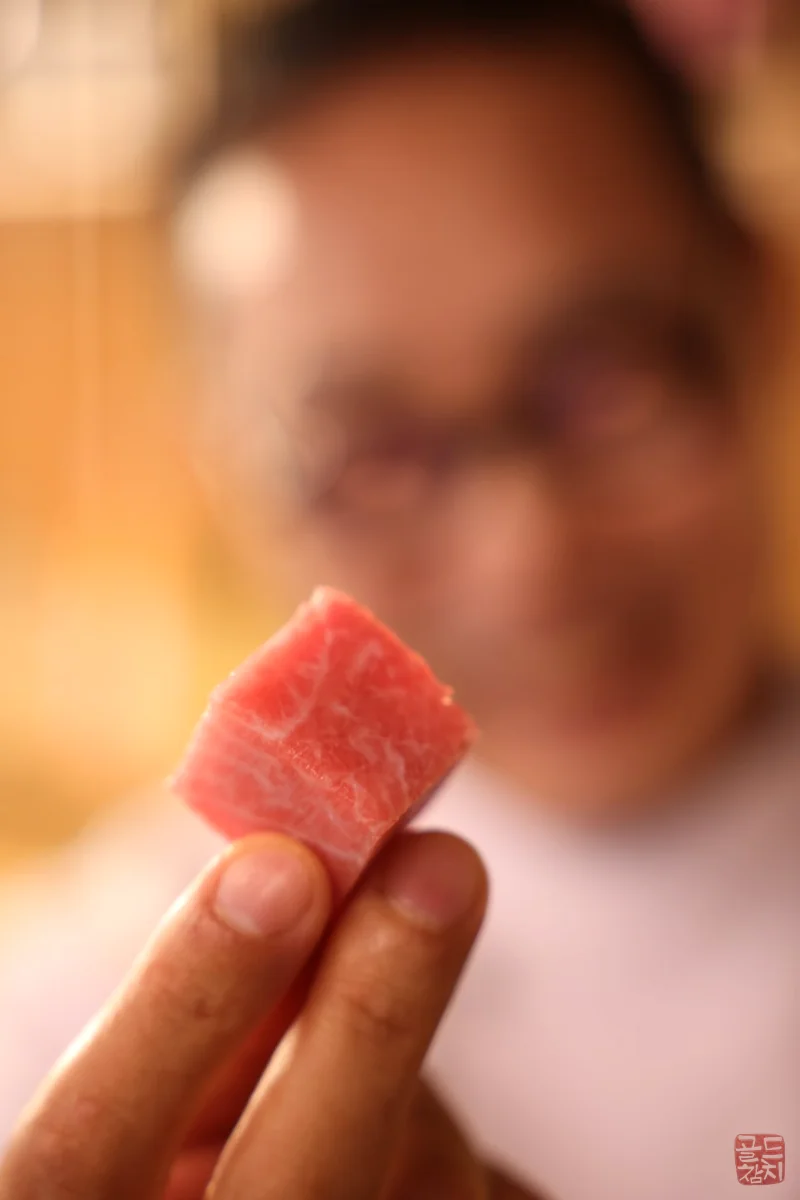
Goldtuna Signature Cut: Cube Style
To us, a piece of Goldtuna is more than just sashimi.
It is a commitment to earning trust through visual perfection.
Speaking through color, persuading with marbling, completing with form, and moving the heart with taste.
Tuna is not defined by strong seasonings or sensory overstimulation.
It is a cuisine that finds its voice through hue, its persuasion through marbling, and its completion through form.
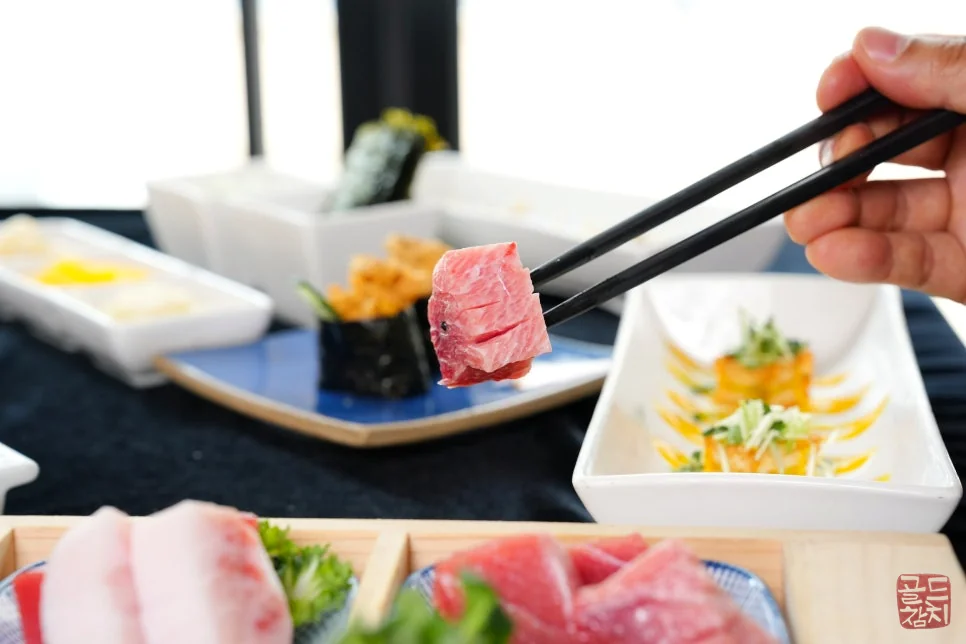
Southern Bluefin Tuna
Truly great tuna requires:
Premium sourcing,
vibrant color development,
meticulous moisture control,
and a resolute cut.
The reason Goldtuna values thawing, moisture mastery, and generous slicing is simple:
it is to make each piece appear more vivid and more refined.
Tuna is not meant for the tongue alone.
It is a journey that begins with the eyes and ends with the heart.
Menu Guide & Course Order & Information
Lunch: Lunch B Course (35,000), Lunch A Course (45,000), Lunch Special (60,000)
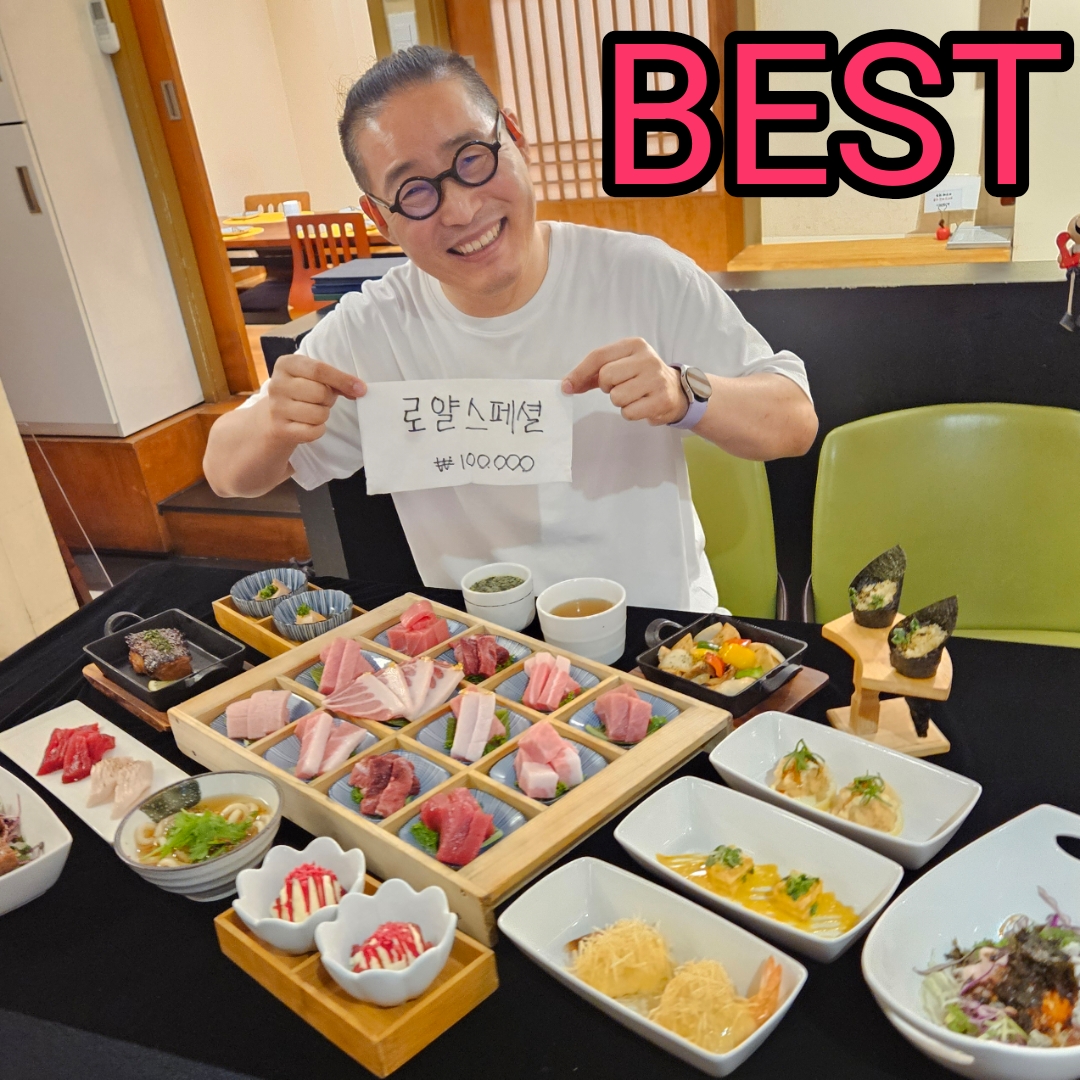
Dinner: VIP Special (80,000), Royal Special (100,000), Omakase Special (130,000)
|
① Tuna Porridge → ② Tuna Salad → ③ Fish Balls → ④ Grilled Mushrooms → ⑤ Main Tuna Sashimi → ⑥ Two-piece Sushi Set → ⑦ Complimentary Tuna Service → ⑧ Ankimo (Monkfish Liver) → ⑨ Grilled Mero (Chilean Sea Bass) → ⑩ Beef Tteok-galbi → ⑪ Tuna Karaage → ⑫ Creamy Fried Shrimp → ⑬ Udon → ⑭ Maki → ⑮ Ice Cream |
◆ Concept: Premium Tuna Specialist (15-course fusion omakase)
◆ Menu Highlights: No.9 grade tuna (250kg+ class) / Signature cube-cut / Custom-made cypress trays
◆ Recommended for: Dates in Bangi, meetings in Garosu-gil, private family gatherings, celebratory dinners, corporate events
◆ Guest Trust: 45,000 cumulative reservations / 80% return rate / Ratings: Bangi 4.7, Sinsa 4.9
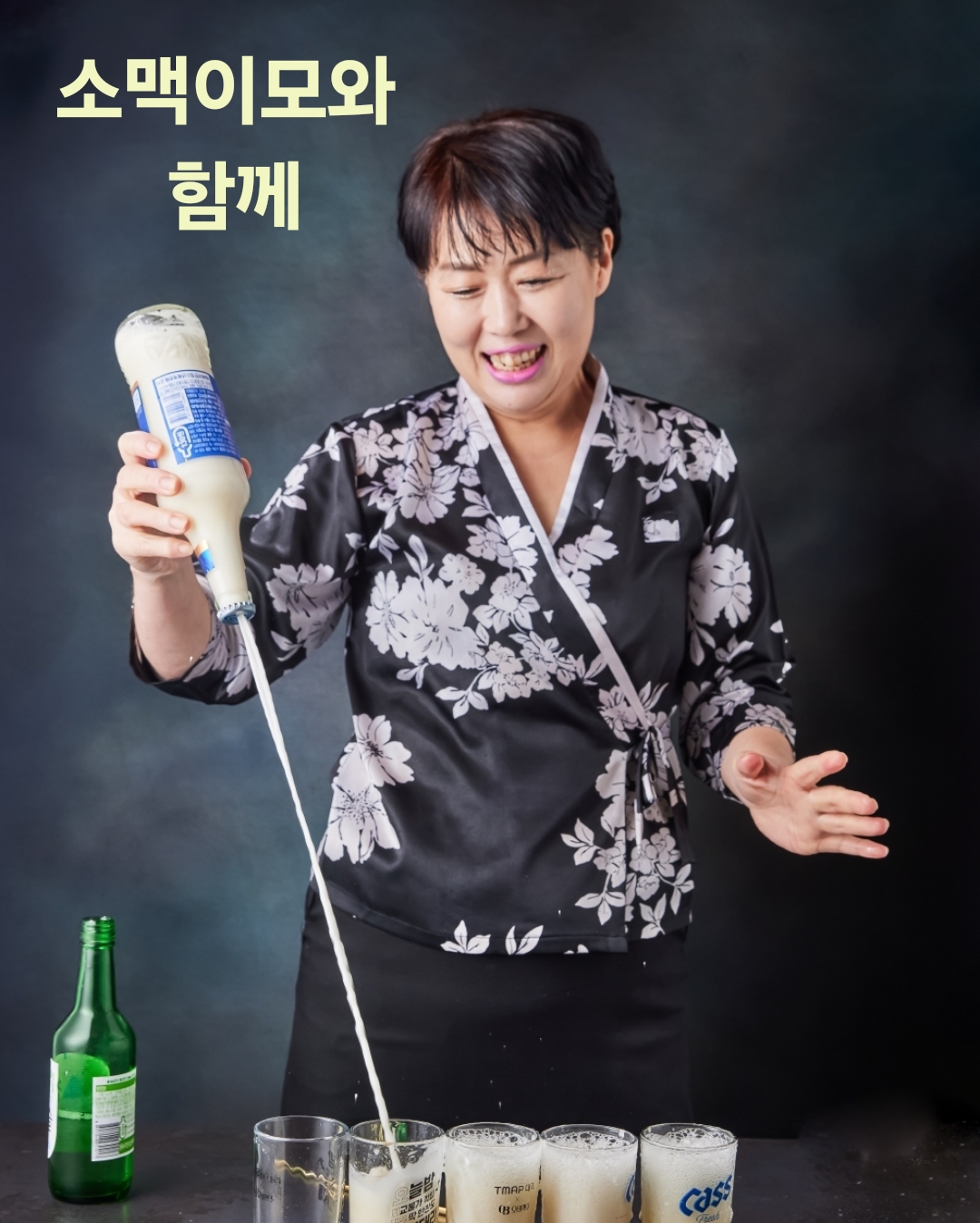
◆ Special Services: Tuna Steak alternative for non-raw eaters / Expert drink pairing service / Celebration events (Bangi) / Custom lettering service (Sinsa)
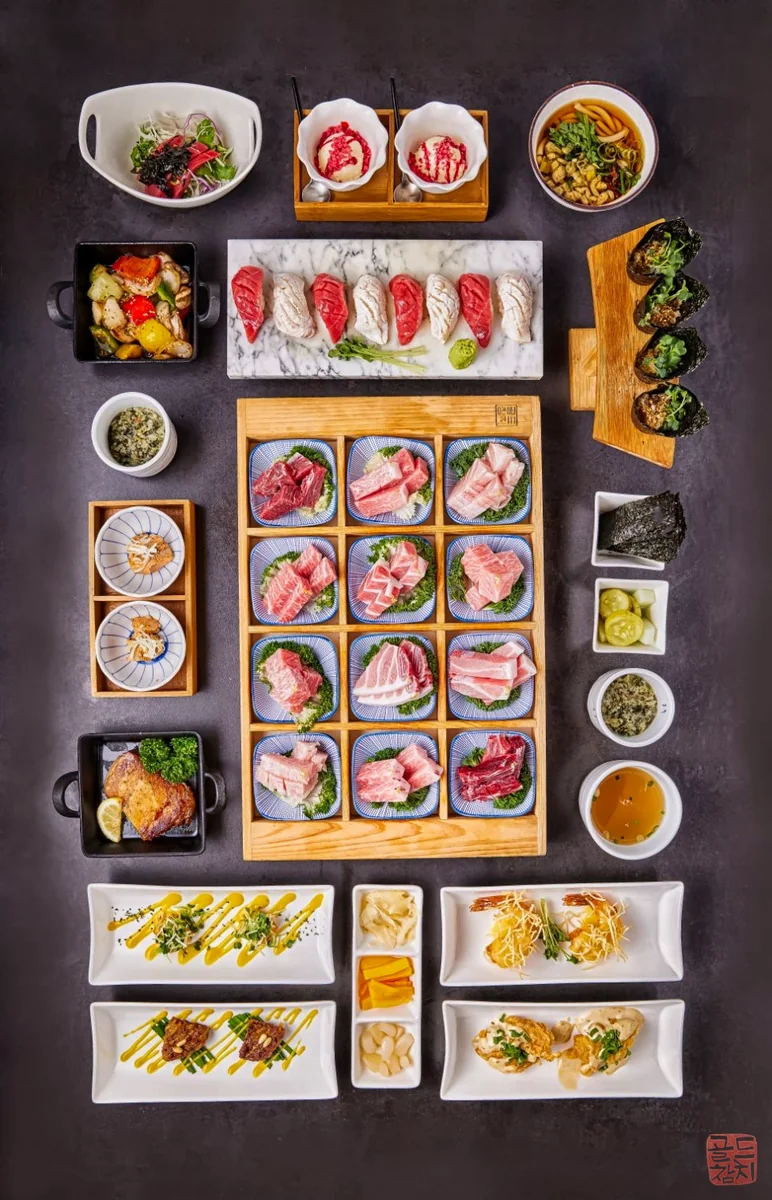
Goldtuna’s 15-Course Table Presentation
Reservations & Inquiries
Goldtuna Bangi: 109-11 Bangi-dong, Songpa-gu, Seoul
Reservations: 0507-1420-7747
Directions: Songpanaru Station - 4 mins, Jamsil Station - 10 mins
Valet: Integrated management at the Nolboo booth
Goldtuna Sinsa: 532-2 Sinsa-dong, Gangnam-gu, Seoul
Reservations: 0507-1394-0484
Directions: Sinsa Station, Apgujeong Station - 10 mins
Valet: Please call upon arrival for parking assistance.