
The Ultimate Guide to Tuna Cuts: Impress at Your Next Group Dinner
Tuna is a truly fascinating subject.
Yet, when we look closer, it remains one of the most challenging fish to truly master and understand.
Bluefin, Bigeye, Billfish...
Why are the names so varied and the cuts so complex?
Everything seems clear while the chef explains it at the counter.
We nod in understanding, thinking we have finally grasped the nuances.
But the moment we step out of the restaurant, the knowledge seems to vanish.
We find ourselves back at the beginning, curious yet confused.
This time, we have a clear intention.
We will set aside the dizzying anatomical details.
Instead, we present the essential 'Tuna Hierarchy.' This single guide will clarify your perspective.
Knowing this will change how you experience every piece of tuna in the future.
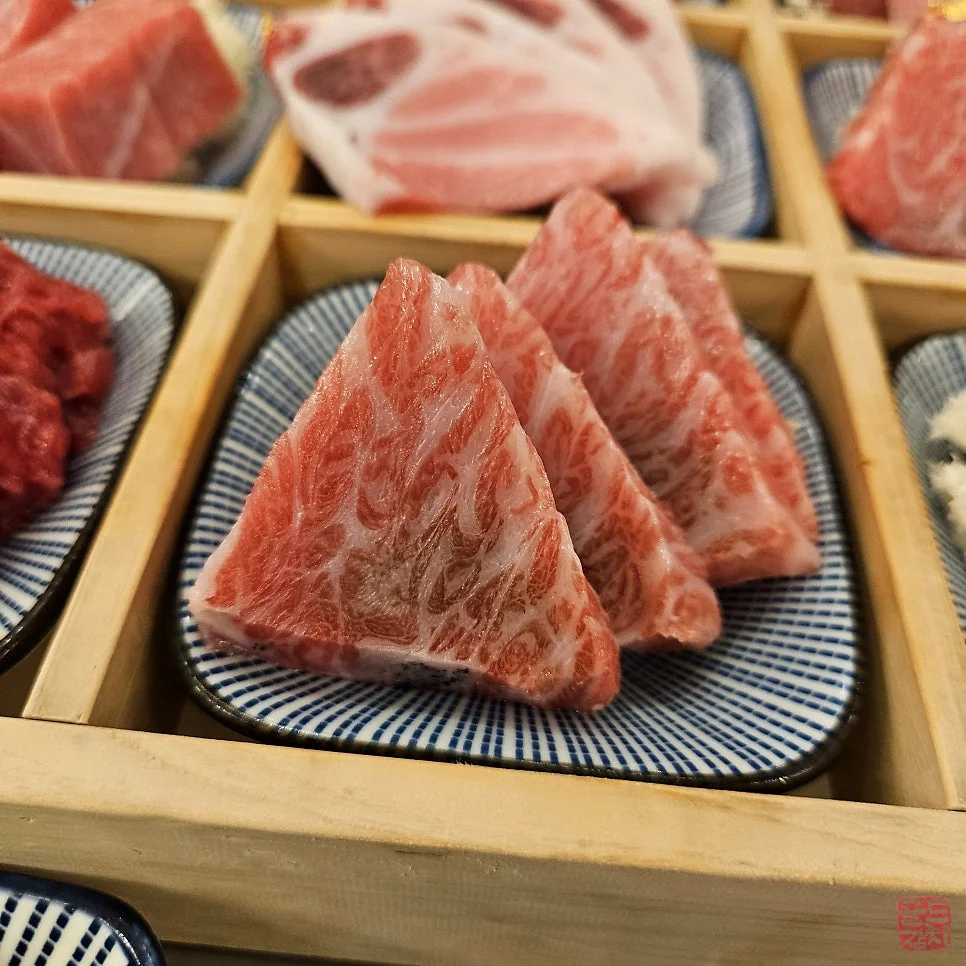
Bluefin Tuna Neck Belly
Rank 1 (The Emperor): Bluefin Tuna
"The pinnacle of quality. The most exquisite, rich, and highly valued."
1. Why is it the most premium?
To survive in the deep, freezing currents, Bluefin tuna accumulate an extraordinary amount of healthy fats.
This results in a dense, intricate marbling that often surpasses the highest grades of beef.
Furthermore, strict global fishing quotas ensure its rarity, making it a true treasure of the sea.
2. What is the flavor profile?
The moment it touches the tongue, it dissolves with a velvety texture, coating the palate in a deep, rich umami.
If you see "Bluefin" on a menu, it is a choice that honors the ingredients, well worth its distinguished reputation.
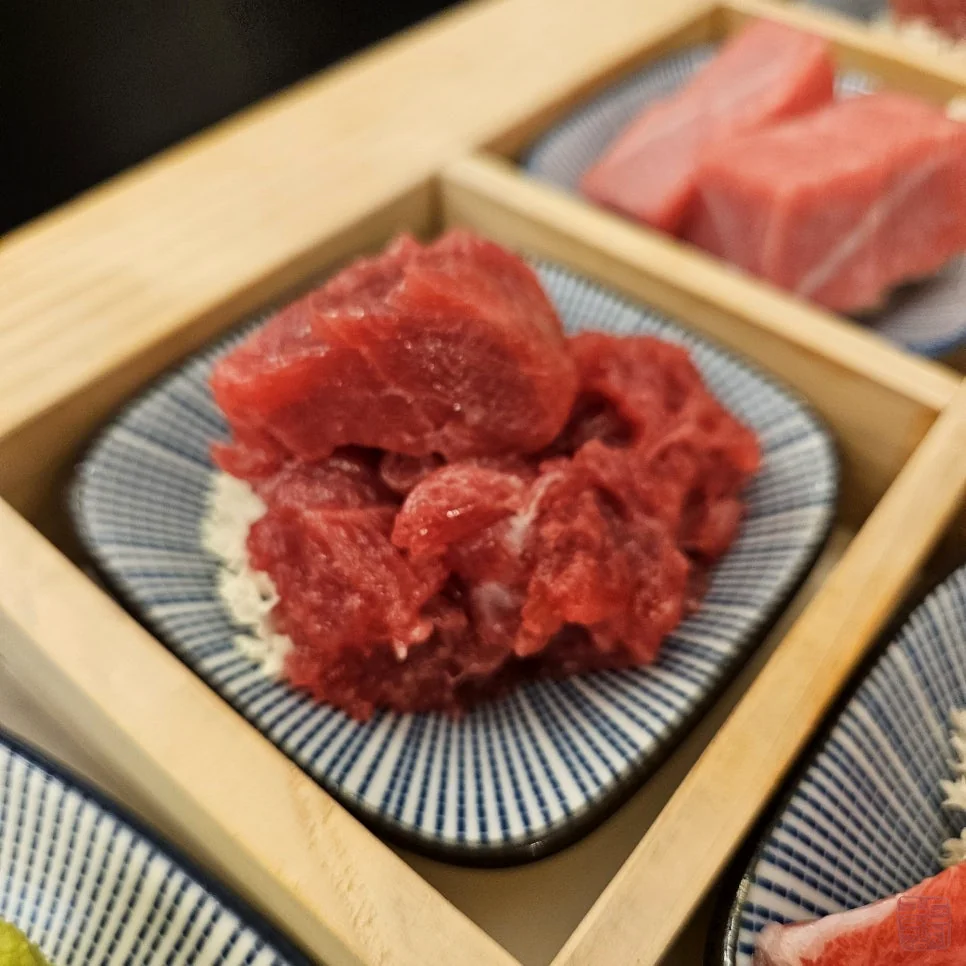
Bluefin Lean Red Meat
Rank 2 (The Nobility): Bigeye & Yellowfin Tuna
"The sophisticated standard, offering excellent character and balance."
1. Why does it occupy the middle tier?
With a relatively larger catch than Bluefin, these varieties offer high quality at a more accessible level.
While Bigeye tuna may have less fat than Bluefin, its lean red meat provides a clean, firm, and satisfying texture.
2. Its Value:
These varieties often serve as the cornerstone for high-quality tuna specialists.
In the hands of a chef who excels at the art of temperature and preparation, the lean red meat of a Bigeye can often surpass a poorly handled piece of Bluefin.
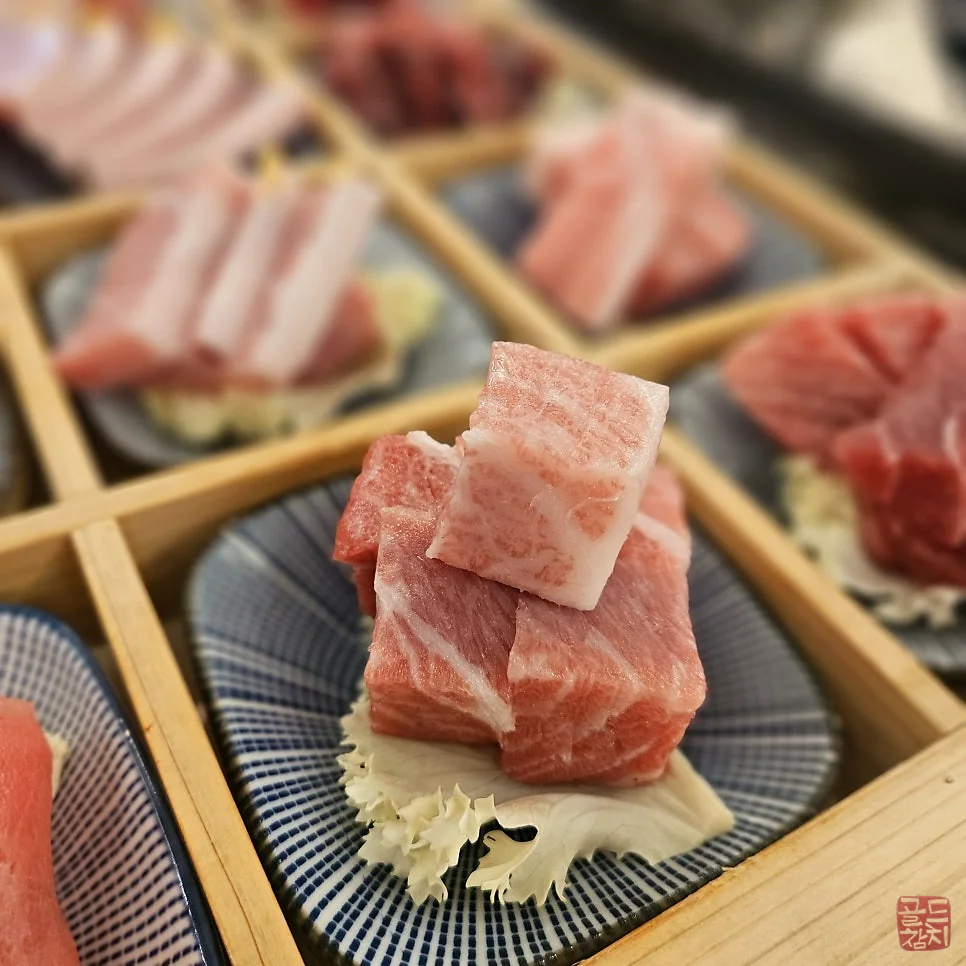
Cubed Bluefin Tuna
Rank 3 (The Essential): Skipjack & Albacore
"A practical resource mostly utilized for traditional processing."
1. Why the modest price?
These smaller fish thrive in shallower waters in vast schools, leading to high harvest volumes.
Their defining characteristic is a lack of significant fat content.
2. Its Value:
Without oiliness, they can feel dry when served raw.
As a result, they are primarily used to create pantry staples like canned tuna or the dried shavings that provide the foundation for essential broths.
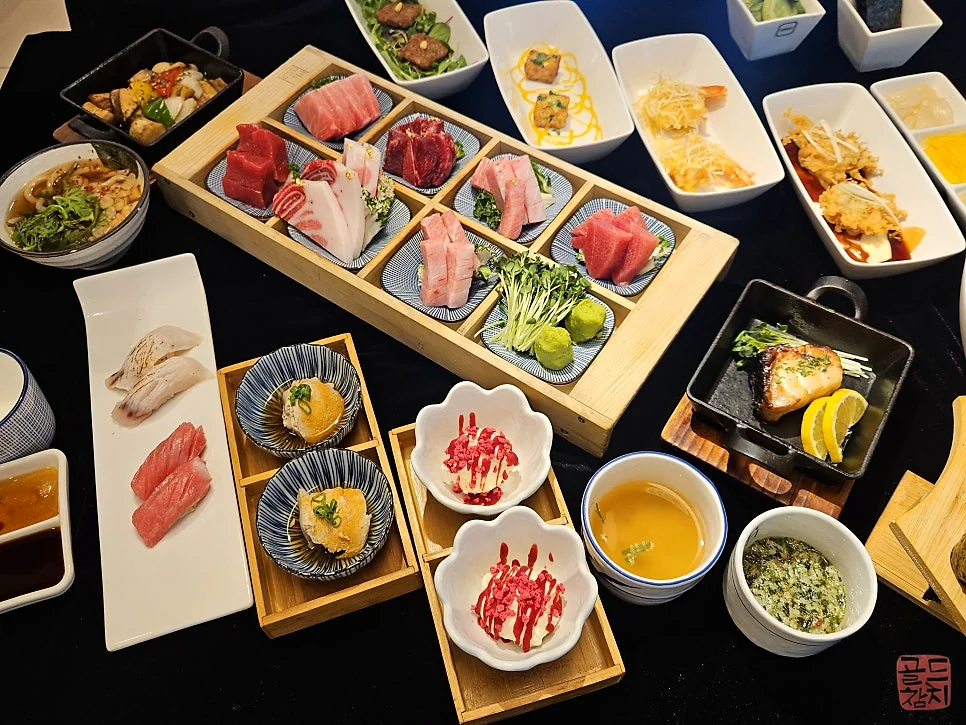
A Table Prepared with Tuna
The Outer Circle: Billfish
"Technically distinct from tuna, these are often found in casual offerings."
1. Why are they positioned differently?
Species like Marlin and Sailfish possess pointed bills and are not, strictly speaking, members of the tuna family.
In the past, they were often served frozen in high volumes, but modern refined establishments rarely use them as a primary delicacy. Instead, their mild flavor makes them a common choice for fresh fish rice bowls.
2. The Singular Exception: There is one exception—Swordfish Belly.
Recognized by its ivory color and delicate red dots, it offers a unique, crisp texture and a nutty sweetness that earns it a place on many omakase menus.
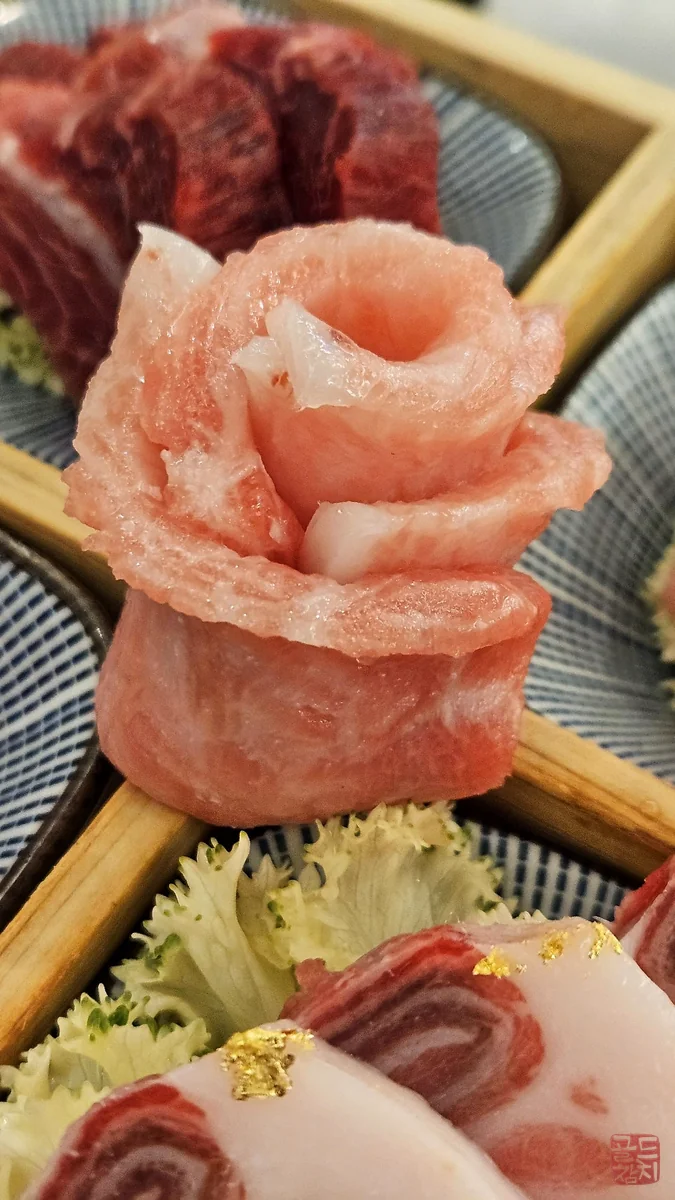
The Bloom of Tuna
In Closing:
The next time you visit a tuna specialist, observe the cuts with a discerning eye.
Dining with awareness allows for a deeper appreciation of flavor and a more meaningful conversation with the chef.