
Culinary Class Wars Season 2: Worth the Sleepless Nights
Lately, I have spent the quiet hours of the night immersed in the stories of chefs.
Watching those with remarkable backgrounds, I realized that their individual histories alone form a compelling narrative.
Their cooking transcends the realm of mere technique, appearing more like a fully realized worldview.
Fire and steel, temperature and timing, and creative interpretation.
The arena where people mastered every element to elevate food to the level of art was, quite frankly, overwhelming.
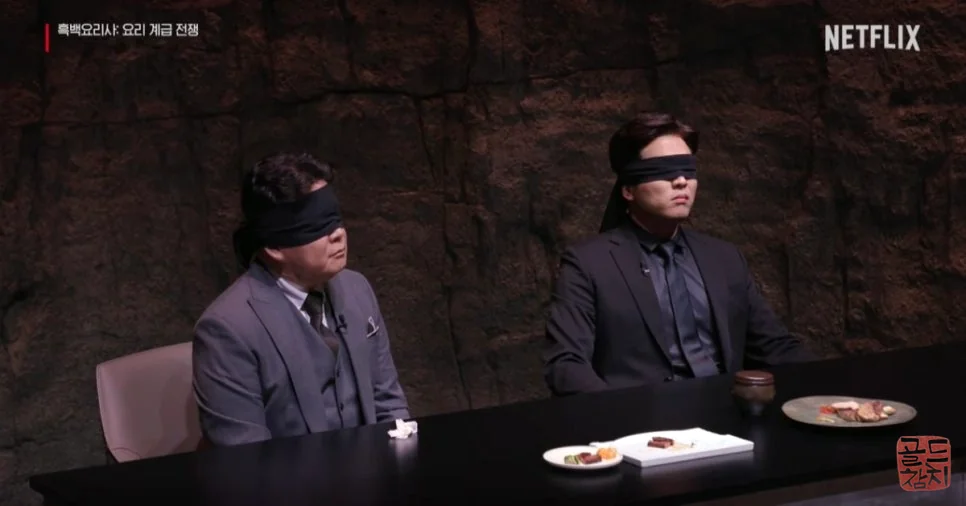
Moments from the screen
The dishes grew more sophisticated, the plating resembled sculptures, and the descriptions held deep philosophies of life.
As I watched, a single thought remained: these creators were not just making food; they were placing their very lives upon the plate.
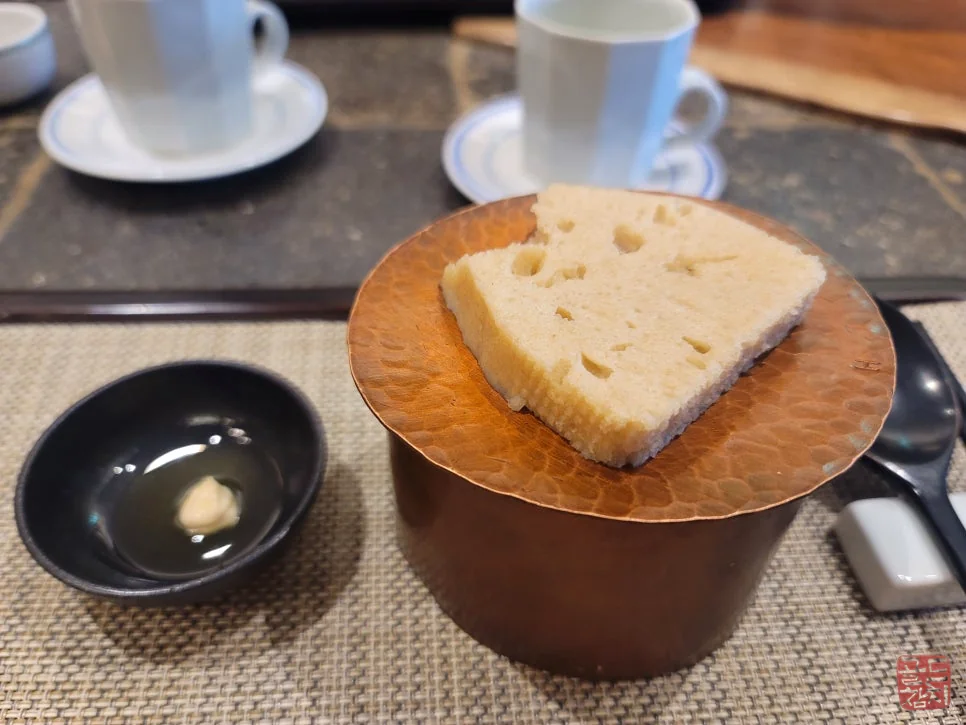
A table set by nature
Yet, there was one person who made my gaze stop.
Among the fierce competition, the presence of the monk was truly exceptional.
Amidst chefs displaying brilliant skills, I found myself personally drawn to her modest offerings.
Her food lacked what many call "impact." The visuals were restrained, and the explanation was never excessive.
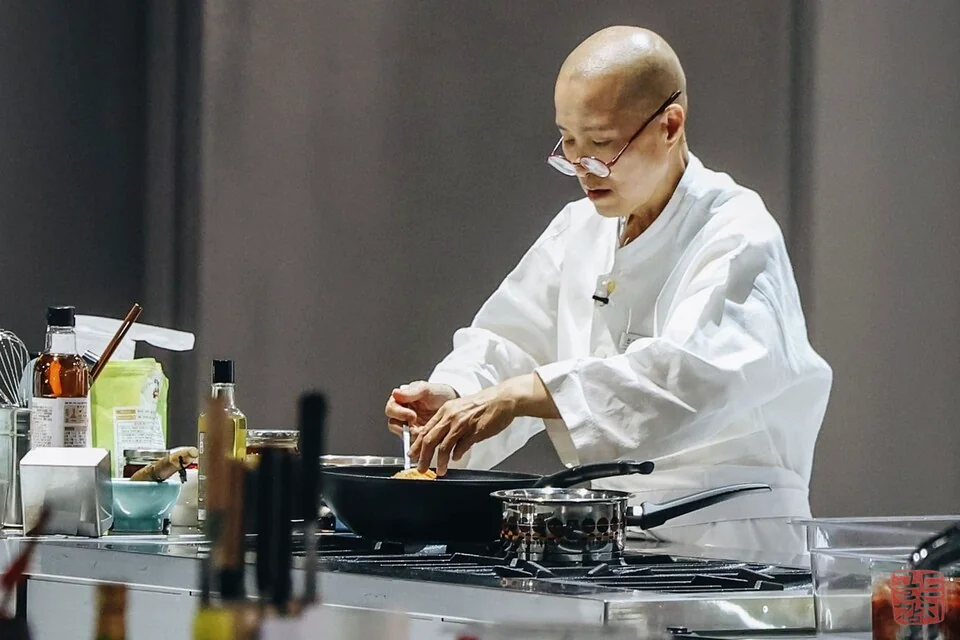
The art of a monk's table
I found myself longing to experience such a meal.
That gentle and natural flavor—a table set not by greed, but by nature itself.
Food like the wind. I find myself drawn to it.
Such cooking begins with the posture of refusing to add more.
It does not try to be powerful, it does not strive to stand out, and it never attempts to persuade.
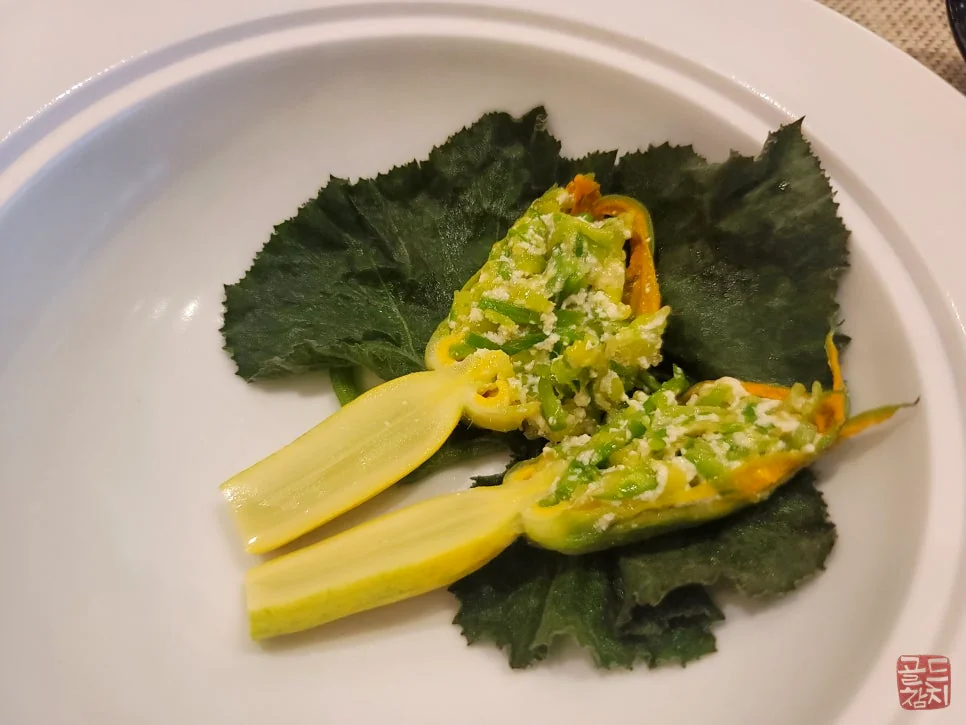
Tofu shaped with the delicate bloom of a summer squash
Today, food speaks too many words.
It must be delicious, it must be surprising, and it must be explainable through a photograph.
However, her food exists by choosing to say less.
That is why it approaches us so quietly.
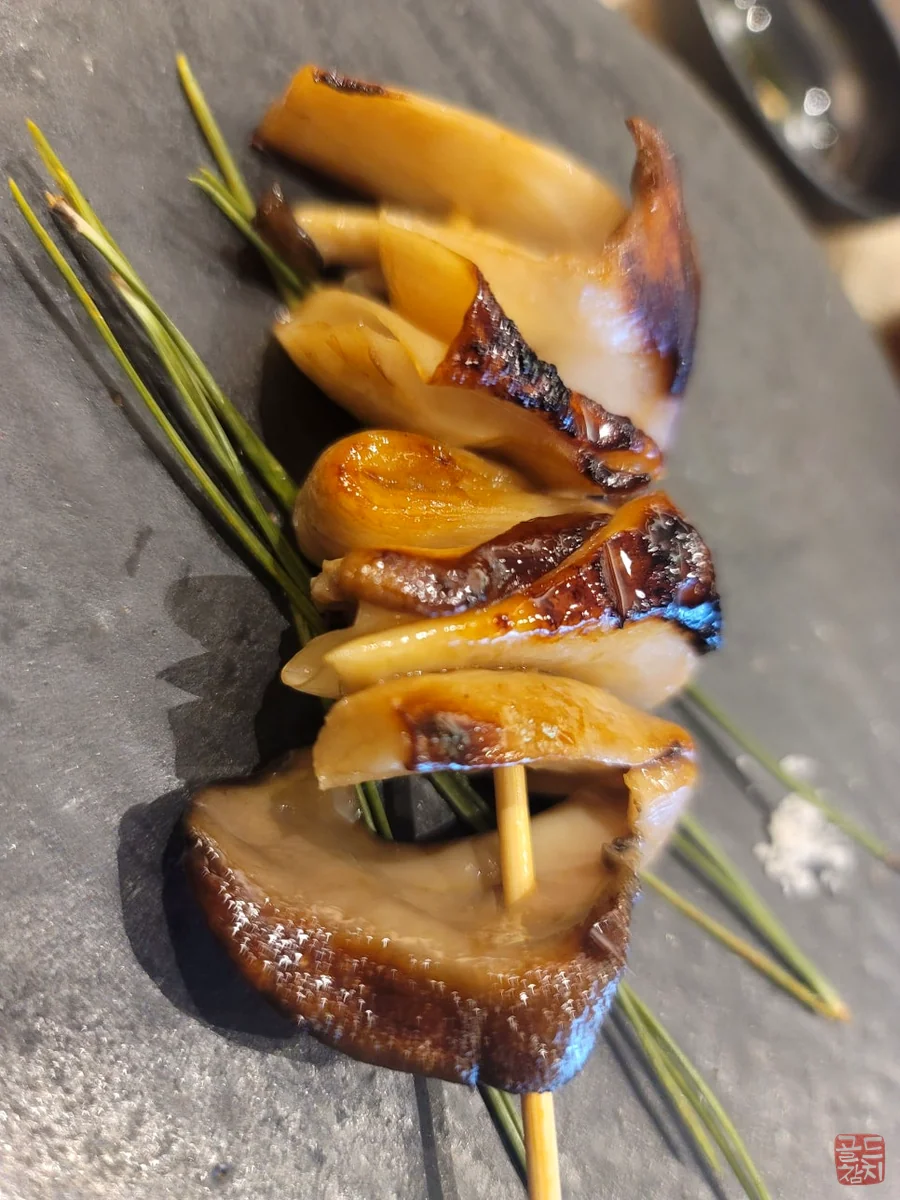
Skewered mushrooms prepared with quiet dedication
Her food brings order to the heart.
A meal is not simply a matter of filling an empty stomach.
When I think of her cooking, the feeling of "a settled mind" comes before the evaluation of "delicious."
Her dishes encourage one to set down their desires rather than just satiate them.
It does not leave you wanting more.
It allows a person to linger for a moment in the state of already having enough.
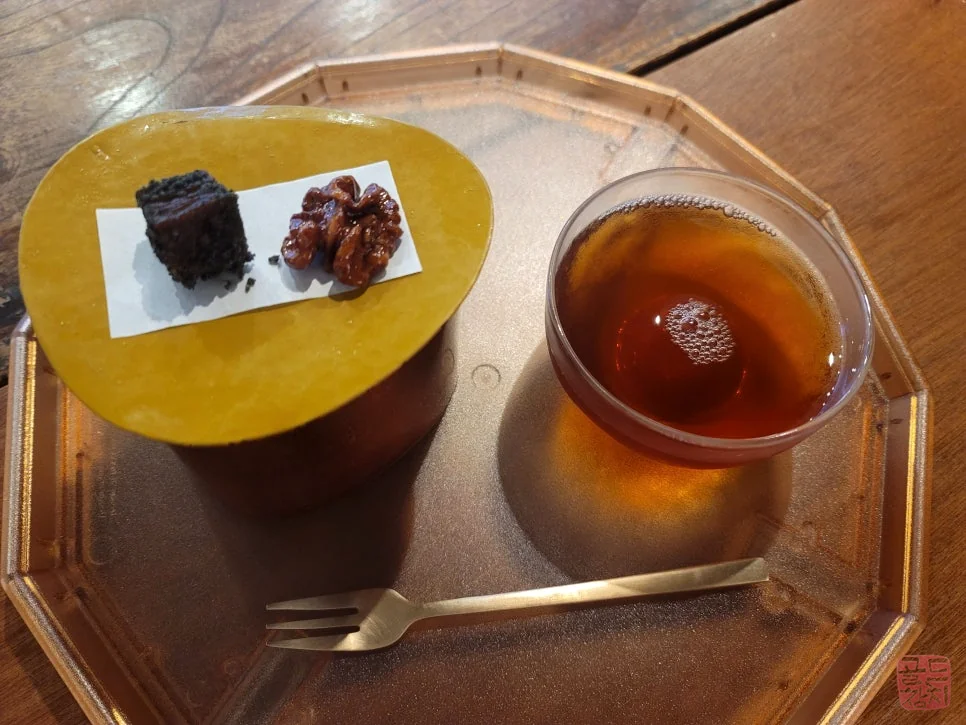
Traditional sweets and cinnamon ginger punch
The purpose of food may not be to make us possess more,
but to make us less attached.
This is not a question of culinary technique, but of one's attitude toward life.
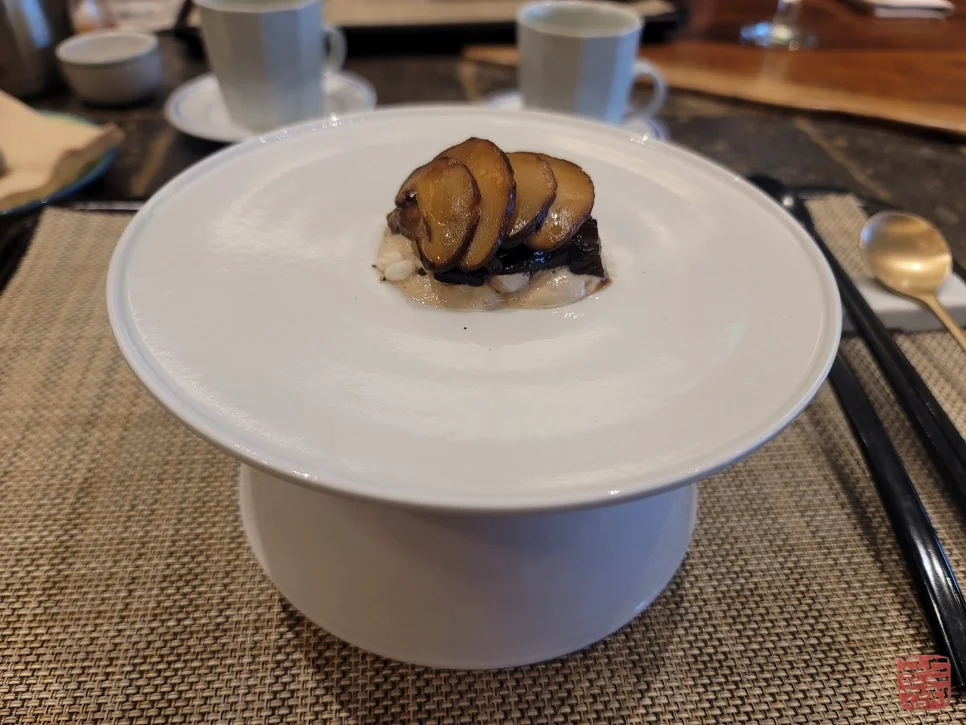
The earthy depth of mushrooms
Cooking is, in the end, a matter of posture.
There are almost no scenes of showing off skill in her work.
The hands that manage the flame and the posture toward ingredients are always humble and slow.
Yet within that slowness, there is a conviction built over a long time.
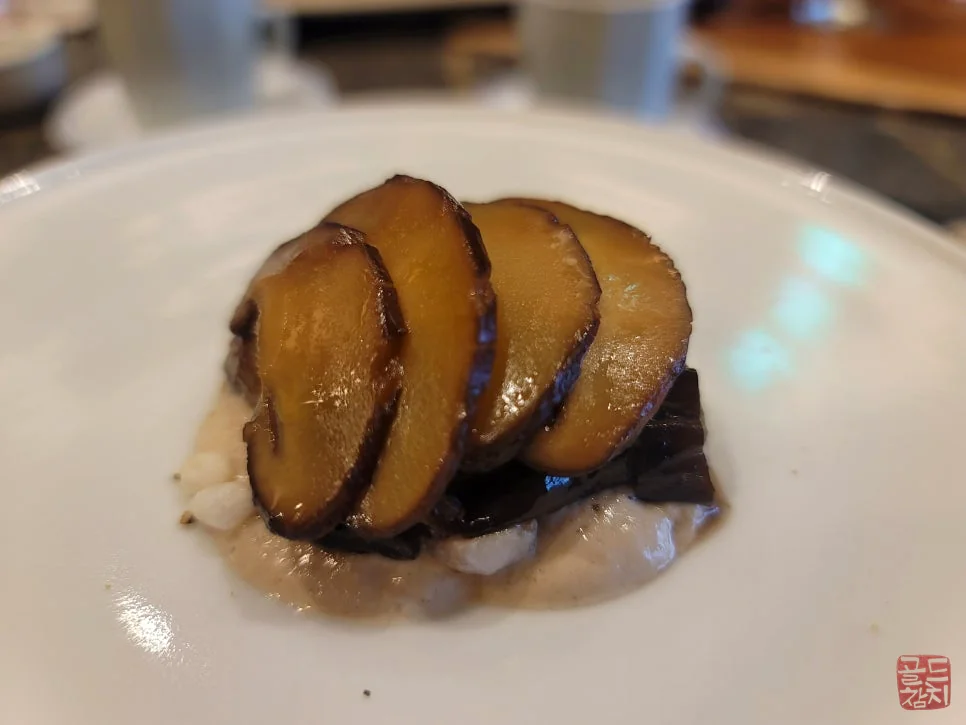
Cooking is a creative act.
And this creation is a realm that only a person can navigate.
Because cooking is not just the sum of techniques, but the accumulation of one's attitude.
Even with the same ingredients, they become entirely different dishes depending on the heart with which they are handled.
The monk does not simply manipulate the ingredients.
She pauses before them.
That single pause transforms a prepared dish into a soulful meal.
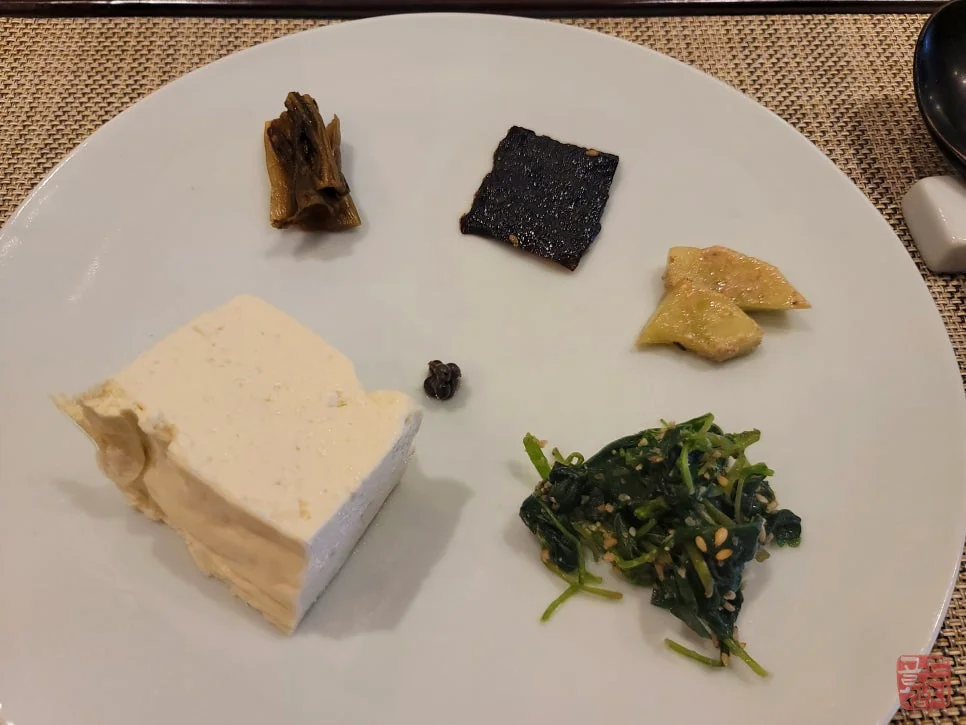
A humble dish of tofu
What food like the wind leaves behind
A breeze is not forceful. Yet it changes the air within a room.
Her food is exactly like that.
After eating, the words "Wow, incredible"
do not come to mind.
Instead, a sense of having become a bit lighter remains.
It is more like a direction for one's life than an achievement in gourmet dining.
Not stronger stimulation, but clearer senses. Not more possession, but a heart that has been emptied.
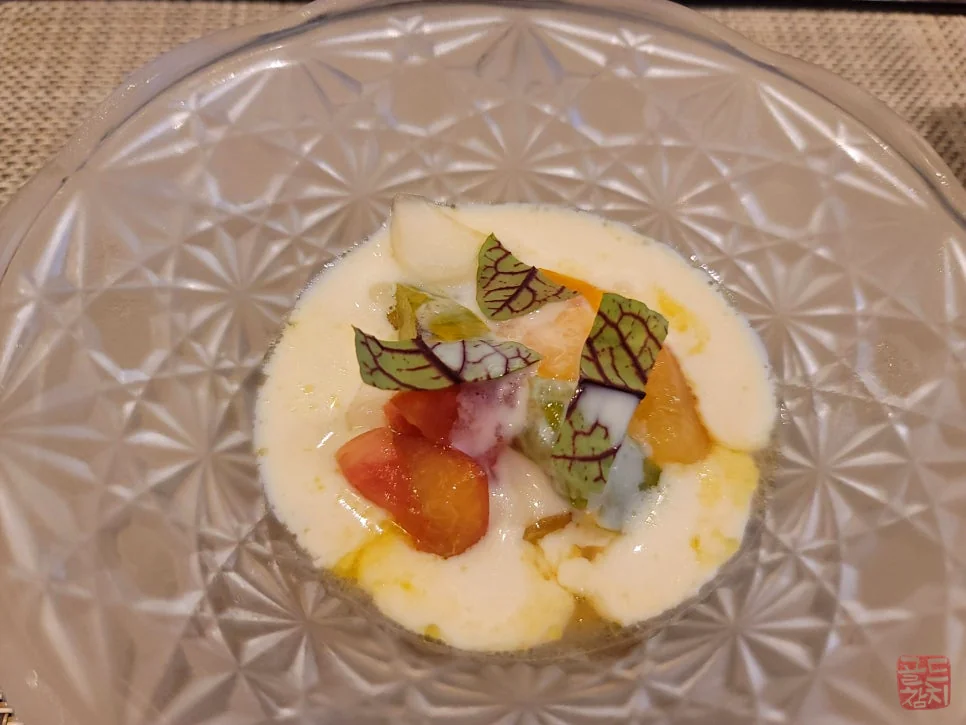
Cooling fruit punch
And so, I find myself wanting to experience that meal.
It is not because I want to know how delicious it is.
It is because I am curious about what kind of person I will become after having finished the meal.
Food is not merely a tool for excitement;
it is a medium that returns a person to their true center.
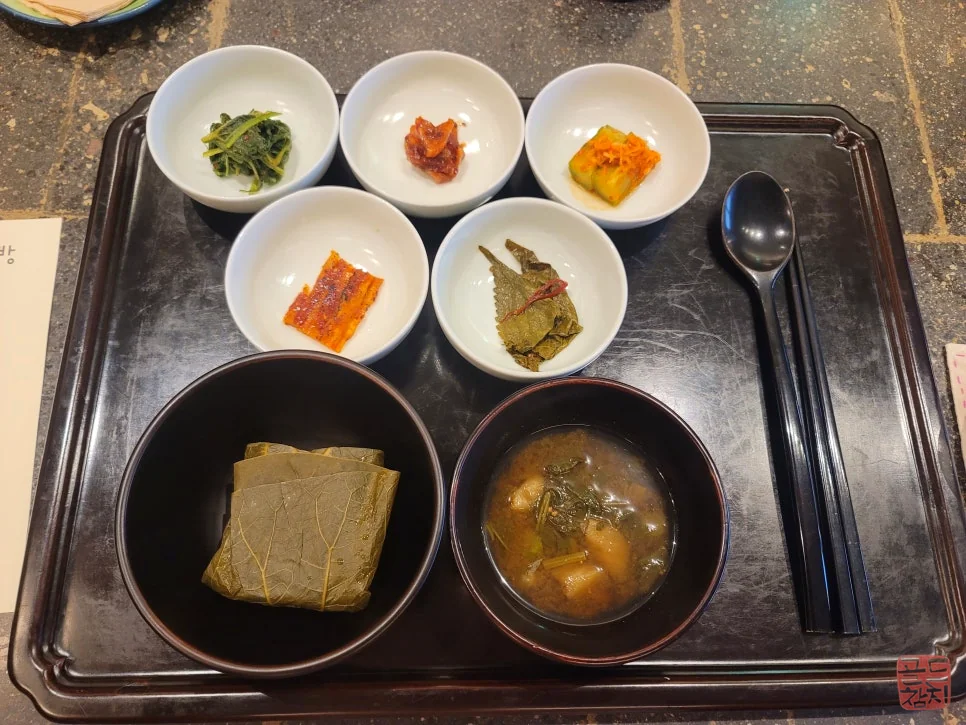
A modest tray for one
Cooking is not about technique, but posture.
And good food makes a person a little more quiet.
That is why I hope to experience that breeze-like meal at least once.