
Gourmet Over Alcohol: New Trends in Corporate Dinner Culture
Lately, I find myself observing a quiet shift in the scenery of our restaurant. In the center of the table sits a platter of premium tuna, yet the glasses remain empty of spirits. Instead, some guests choose to lead their meal slowly with carbonated water or tea. Even with the rich, marbled cuts before them, they no longer reach for the customary bottle of soju or sake.
To a generation that viewed food and alcohol as an inseparable pair, this scene felt unfamiliar at first.
However, looking around, this change seems to extend far beyond the dining table. The culture of late-night drinking rounds is fading. In its place, more people are choosing to spend their time at cafes, theaters, or exercising after a meaningful meal at a good restaurant.
Statistics confirm this transition in how we consume alcohol and gather as a society.
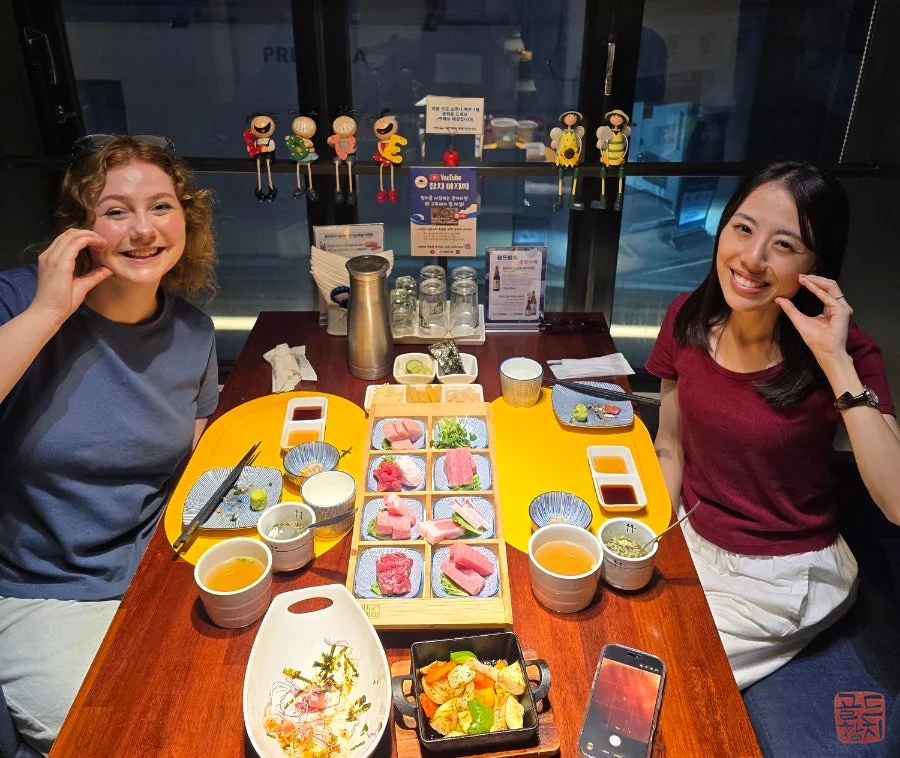
In August 2026, guests from Japan and the United States visited Goldtuna Sinsa. They enjoyed our course meal with tuna, focused entirely on the food without alcohol. We are grateful to them for allowing us to capture this moment of genuine connection over a meal.
Alcohol is not disappearing; rather, it is moving
from the center of the gathering
to becoming just one of many options.
Alcohol shipment volumes in Korea drop 21.5% over a decade
The first clear indicator is found in the numbers. According to the National Tax Statistics Portal, the domestic alcohol shipment volume in 2025 was 2.988 million kiloliters. This marks the first time in 27 years—since the 1998 financial crisis—that the volume has dipped below the 3 million kiloliter threshold.
Compared to the 3.804 million kiloliters recorded in 2015, this represents a 21.5% decrease over ten years.
This downward trend is visible across all major categories. Beer shipments in 2025 were 1.519 million kiloliters, down 7.2% from the previous year.
Diluted soju also saw its third consecutive year of decline since 2022, reaching 793,000 kiloliters. Traditional rice wine has similarly maintained a steady decline since 2020.

Of course, a decrease in shipments does not automatically mean every individual is drinking less. Factors such as a shrinking population, an aging society, economic conditions, and shifts in distribution networks all play a role.
Yet, when we look at behavioral surveys of actual drinkers, a similar movement is identified.
The frequency and volume of drinking are gradually tapering off
According to the "2025 Liquor Industry Information Survey" by the Ministry of Agriculture, Food and Rural Affairs and the Korea Agro-Fisheries & Food Trade Corporation (aT), the average monthly drinking frequency for consumers who drink at least once a month was 8.8 days. This is a slight decrease from 9.0 days in 2023.
The average amount consumed on a drinking day also fell from 6.7 glasses in 2023 to 6.6 glasses in 2025, according to a survey of 2,000 participants.
Generational differences are also noteworthy.
The monthly drinking frequency was 7.7 days for men in their 20s and 7.2 days for women in their 20s.
In contrast, men in their 40s and 50s maintained a higher frequency of 10.4 days. Notably, women in their 20s recorded the lowest frequency among all surveyed groups.
However, it would be inaccurate to simply conclude that "young people don't drink anymore."
For women, the average amount consumed on a drinking day was actually highest among those in their 20s at 6.6 glasses. This suggests that while the younger generation drinks less often, they don't necessarily drink less in volume when they do choose to partake.
The core of the change isn't a total abandonment of alcohol, but rather a conscious choice of when, with whom, and what to drink.
From "how much" to "how" we drink
The same survey by aT revealed another fascinating shift. Consumers identified the most prominent trends as purchasing from convenience stores (85.5%), drinking at home (54.2%), drinking alone (52.2%), and seeking diverse flavors (49.1%).
The report analyzed that home-drinking and solo-drinking cultures have persisted post-pandemic. It noted that the drinking culture is shifting from "drinking to get drunk" to "drinking to enjoy," which in turn diversifies the choices of beverages.
The growth of the non-alcoholic market follows the same logic. According to industry reports citing NielsenIQ Korea, a major non-alcoholic beer brand saw its 2025 sales reach 20.8 billion won, an increase of over 20% from the previous year. While these are figures from specific brands and market research firms rather than national statistics, they provide a strong signal of changing tastes.
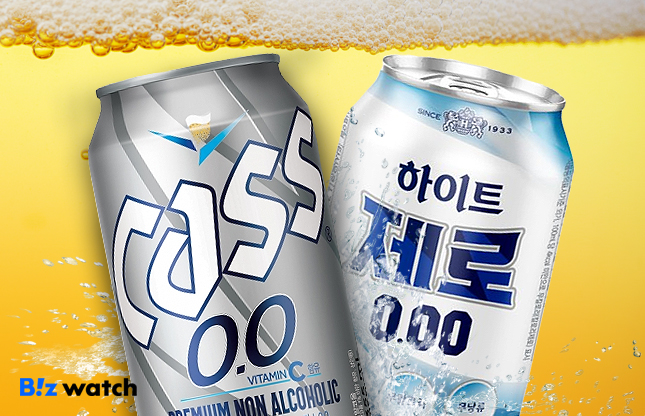
Ultimately, the more significant shift isn't a binary choice of "to drink or not to drink," but the increased freedom for consumers to define their own dining experience.
In professional gatherings, "Time" and "Quality" outweigh "Liquor"
Surveys on corporate dining culture reflect a similar direction.
In a study by Embrain Trendmonitor involving 1,000 office workers nationwide, 78% of respondents favored "a delicious lunch gathering" as their preferred form of company dinner.
Dinner gatherings involving alcohol were favored by 47%, while attending cultural performances together stood at 39%.

When asked why they evaluated their current workplace dining culture positively, the top reason was "an atmosphere where alcohol is not forced" (46.7%). Other reasons included "ending relatively early" (40.6%) and "no pressure to attend" (35.7%).

That said, older traditions have not vanished overnight.
A 2024 survey showed that 23.4% of workers still reported being pressured to drink during company events. Interestingly, the rate of those who actively resisted such pressure was highest among those in their 20s (36.7%).

Culture does not change in a day. However, the data suggests that the equation that a gathering must include alcohol to be valid is becoming weaker than ever before.
Choosing a refined meal over a second round
These cultural shifts pose a fundamental question to restaurants.
If gatherings used to prioritize large quantities of side dishes and convenient locations for a second drinking round, the focus has now shifted.
"Even without alcohol, is this meal sufficient and satisfying?"
Tuna, in particular, is a fascinating food through which to observe this change. For a long time, it was considered essential to pair the rich, fatty belly of bluefin tuna with soju or sake to balance the flavors. As a restaurant owner, I too once wondered, "How can one enjoy this richness without a drink?"
But our guests have shown us a different way.
Some tables forgo alcohol entirely, while others opt for a single bottle of premium sake or traditional spirits to accent the food, rather than focusing on the volume of alcohol consumed.
It is not that spirits have vanished; it is that their role has been redefined.
Observing the "Spirit-Free Evening" at Sinsa
The photograph at the beginning of this essay was taken at Goldtuna Sinsa. It captures a meal shared by friends from Japan and the US. Before them lay a diverse course of tuna dishes, but not a single alcoholic beverage.
It is a dining table that breaks away from the fixed notion that tuna must always be accompanied by a glass of spirits.
At Goldtuna Sinsa, we see such tables more and more often. Guests focus on the texture of the fish and the flow of the conversation, either choosing a single pairing or none at all.
We cannot claim that a few cases in one restaurant represent the entire shift of a society.
However, it is striking that the decline in shipment volumes, the shift in drinking frequency, the rise of the non-alcoholic market, and the preference for lunch gatherings are all occurring simultaneously.
Alcohol will always have its place at many dining tables. But perhaps the era where spirits were the mandatory protagonist of every meal is gently coming to a close.
Moving from a space to drink alcohol to a space to meet people and experience true food.
Goldtuna Branch Information
Goldtuna is a 15-course tuna specialty restaurant operating in Bangi (Main Branch) and Sinsa. While the quality of our tuna and the standard of our courses are identical across both locations, each branch caters to different types of gatherings.
Goldtuna Bangi (Main Branch)
Located 4 minutes by foot from Songpanaru Station Exit 2, and 10 minutes from Jamsil Station Exit 8. This branch is ideal for corporate dinners and large social gatherings, featuring our curated alcohol pairing omakase.
Reservations: 010-5468-0484
Goldtuna Sinsa
Located near Garosu-gil, 10 minutes by foot from Sinsa and Apgujeong Stations. We offer private rooms and seating designed for small groups, business dinners, and intimate conversations. The scenes from this essay were captured here.
Reservations: 010-5478-0484
From the Goldtuna Magazine / 5 Criteria for Choosing a Company Dinner Venue: The Goldtuna Reservation Guide
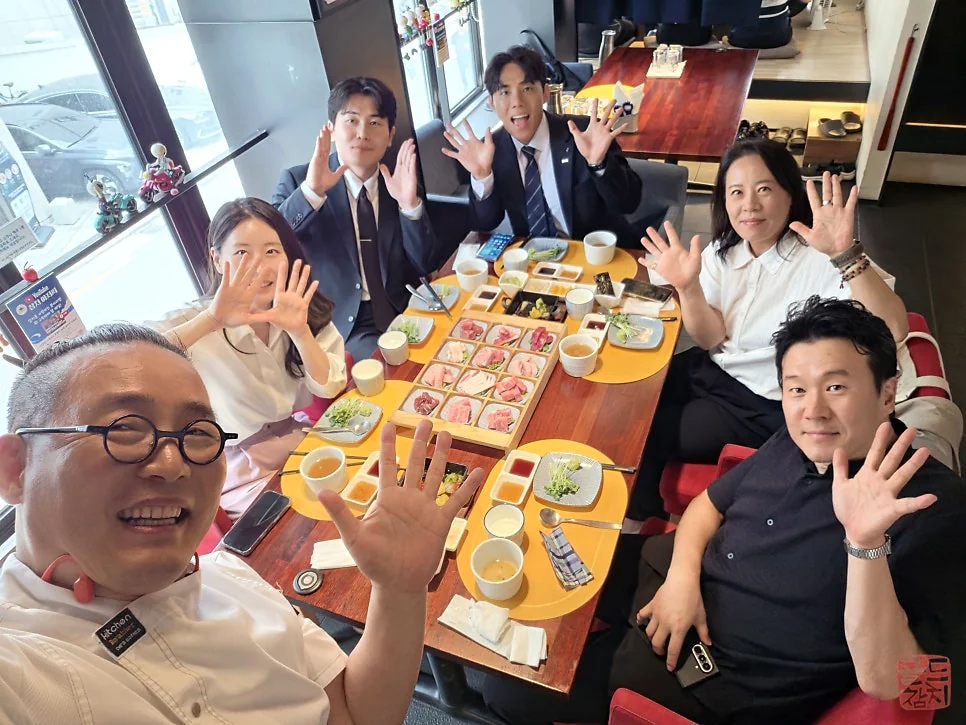
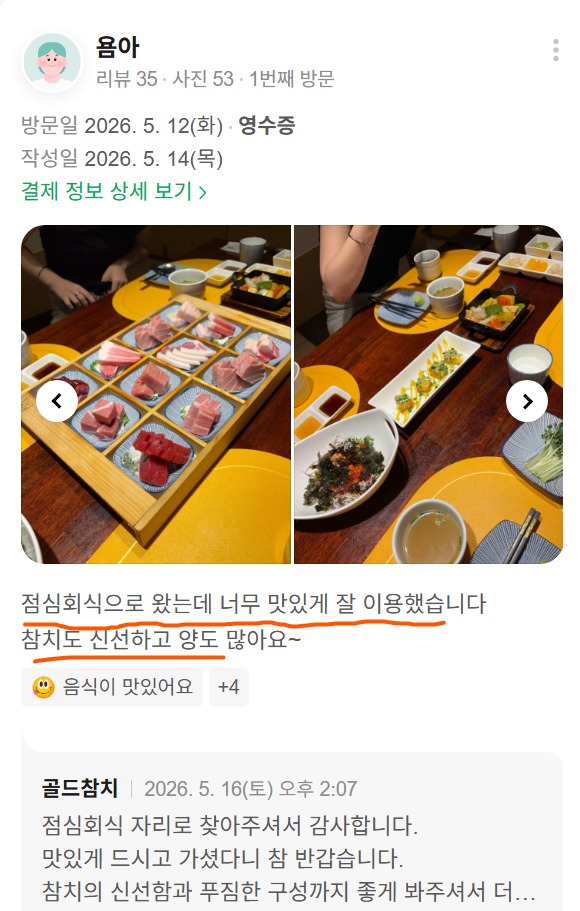
Guest Review: Gatherings centered on the meal /
A review from a guest who visited our Sinsa branch for a lunch gathering.
References
The primary data cited in this essay includes shipment volumes from the National Tax Statistics Portal, the 2025 Liquor Industry Survey by the Ministry of Agriculture and aT, corporate culture surveys by Embrain Trendmonitor and Workplace Gabjil 119, and various beverage industry reports. Each data point serves as a distinct signal of the broader changes currently occurring in our society.