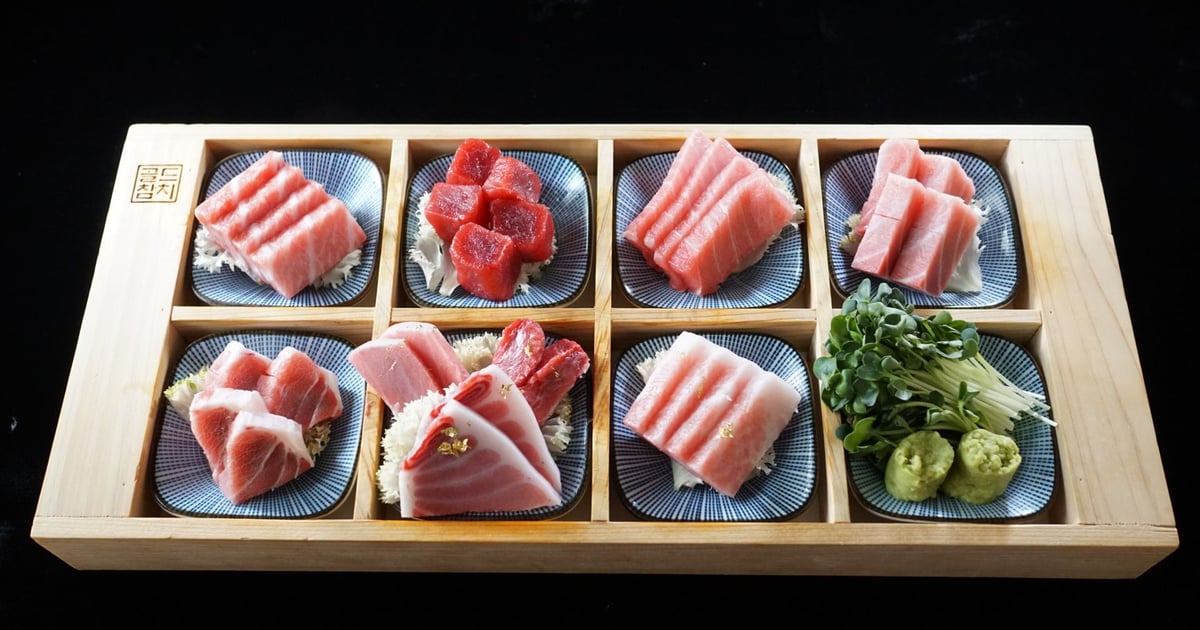
5 Ways to Identify High-Quality Tuna: Species, Cut, and Handling
The requirements for selecting high-quality tuna are not limited to the species alone. We summarize the standards of 'Tuna No.9' pursued by Goldtuna (골드참치), ranging from the size of the bluefin tuna raw material to the characteristics of each part, and the sophisticated thawing and preparation processes.
To understand the true value of tuna, one must look at the organic process of sourcing raw materials, selecting parts, and skilled preparation. Detailed information on this is provided below.
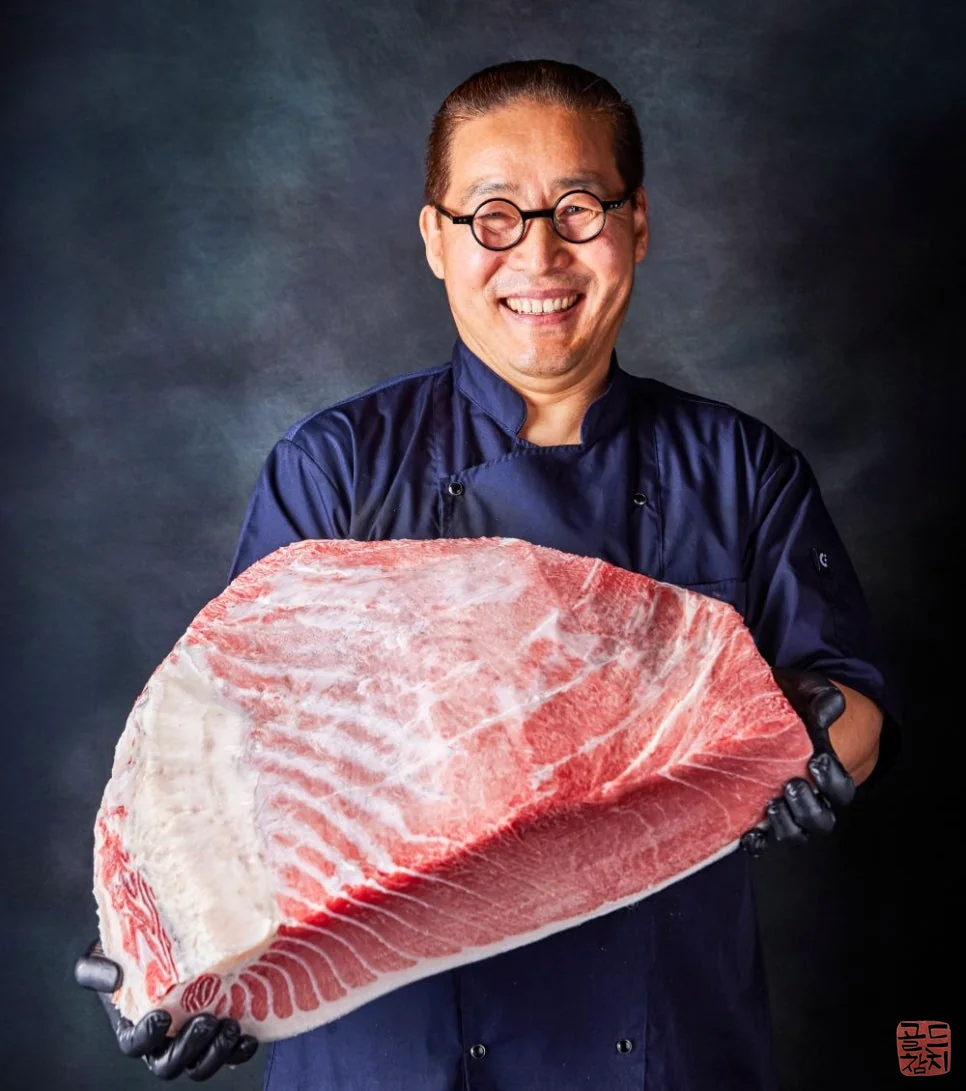
Bluefin tuna belly is classified from No. 1 to No. 5 depending on its position. The photo shows the No. 1 belly, a part characterized by excellent marbling and texture.
1. The Impact of Tuna Species and Raw Material Size on Quality
General tuna specialty restaurants mainly handle Bluefin tuna, Southern Bluefin tuna (Minami), and Bigeye tuna.
Bluefin tuna is highly valued for its belly and kama (collar) parts where rich fat layers are formed, while Southern Bluefin tuna is characterized by its unique fatty flavor and texture. Bigeye tuna is a species suitable for enjoying both a clean and savory taste simultaneously.
Even within the same species, the size of the raw material is a major measure of quality. Goldtuna (골드참치) insists on a minimum of 250kg when purchasing bluefin tuna and primarily selects and uses large raw materials of 350kg or more.
This is because, through clinical experience in handling tuna of various sizes over a long period, we have confirmed that larger raw materials are superior in terms of fat layer density, tissue elasticity, and the ability to maintain original color.
However, size itself is not an absolute indicator, and the individual condition of the raw material, storage status, and selection by part must be comprehensively considered.
Detailed data on raw material selection criteria
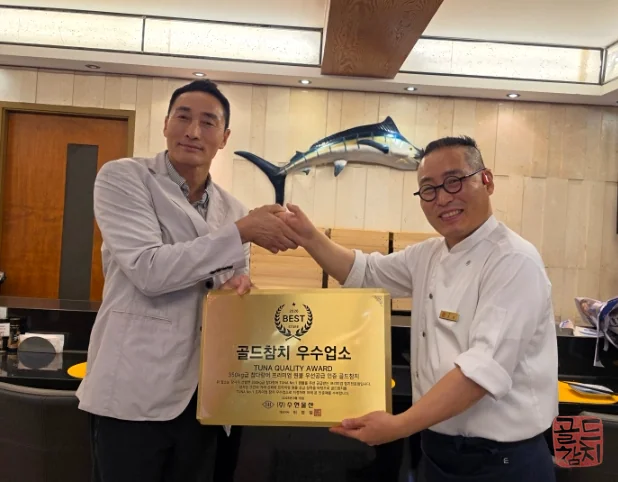
This is the official explanation of why we insist on large bluefin tuna, our purchasing principles for each part, and Goldtuna (골드참치)'s own inspection brand, 'Tuna No.9'.
2. Differences in Gourmet Characteristics According to Bluefin Tuna Parts
Tuna is divided into belly meat with high fat content, lean meat (Akami) with an excellent clean taste, and rare parts around the kama (collar), each with its own charm.
Instead of using the entire body of the bluefin tuna indiscriminately, Goldtuna (골드참치) selectively secures and provides only high-quality parts.
|
Part |
Characteristics |
|
Kama-sal · Kama-toro |
An extremely rare part produced in small quantities between the head and the body |
|
No. 1 Toro |
The frontmost part of the belly, forming the highest quality marbling |
|
No. 2 Toro |
A part with a harmonious balance of fat density and texture |
|
Akami (Lean meat) |
Focused on the inherent umami of the meat and a soft texture |
Goldtuna (골드참치) applies its own standard called 'Tuna No.9' by selecting the top-tier parts of large bluefin tuna, such as kama-sal, kama-toro, and No. 1 toro.
This is Goldtuna (골드참치)'s internal quality standard for strict raw material and part selection. It does not encompass all parts and is only named for parts that meet specific criteria.
In addition, Akami, which is low in fat, is also very important when discussing the inherent flavor of tuna. The depth of Akami's umami is determined by components such as inosinate (IMP), the degree of aging of the raw material, and thawing management technology.
Aesthetic approach and detailed information on Akami
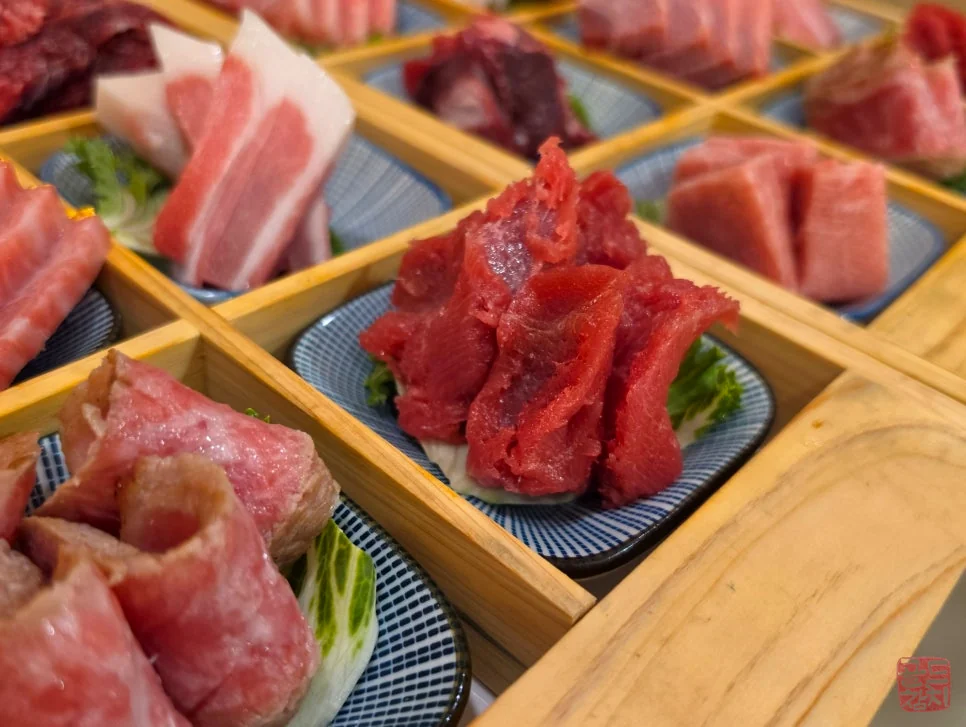
This is a professional document describing the principle of Akami's unique umami expression and the changes in texture according to selection and thawing processes.
3. Tuna Thawing and Preparation: The Management Process That Completes the Value of the Material
The quality of tuna distributed frozen is greatly influenced by thawing and temperature control technology. Goldtuna (골드참치) adheres to three core principles for meticulous preparation.
First, thorough and complete thawing.
Residual coldness in the core of the tuna is removed so that the muscle tissue reaches its optimal state. For this, a separate refrigeration stabilization period is observed after the primary thawing.
Second, cutting to the appropriate thickness.
We research the thickness that can maximize the characteristics of each part and use approximately 4mm as the basic standard for cutting. This is finely adjusted according to the form of service.
Third, surface moisture control.
The moisture (drip) discharged during thawing is strictly managed to keep the surface pleasant. The most important point here is a high level of technical balance that maintains the moisturizing power inside the tissue while removing only unnecessary moisture from the surface.
This management process is an integrated standard applied to all raw materials of Goldtuna (골드참치), including 'Tuna No.9'.
Detailed data on thawing and moisture management processes
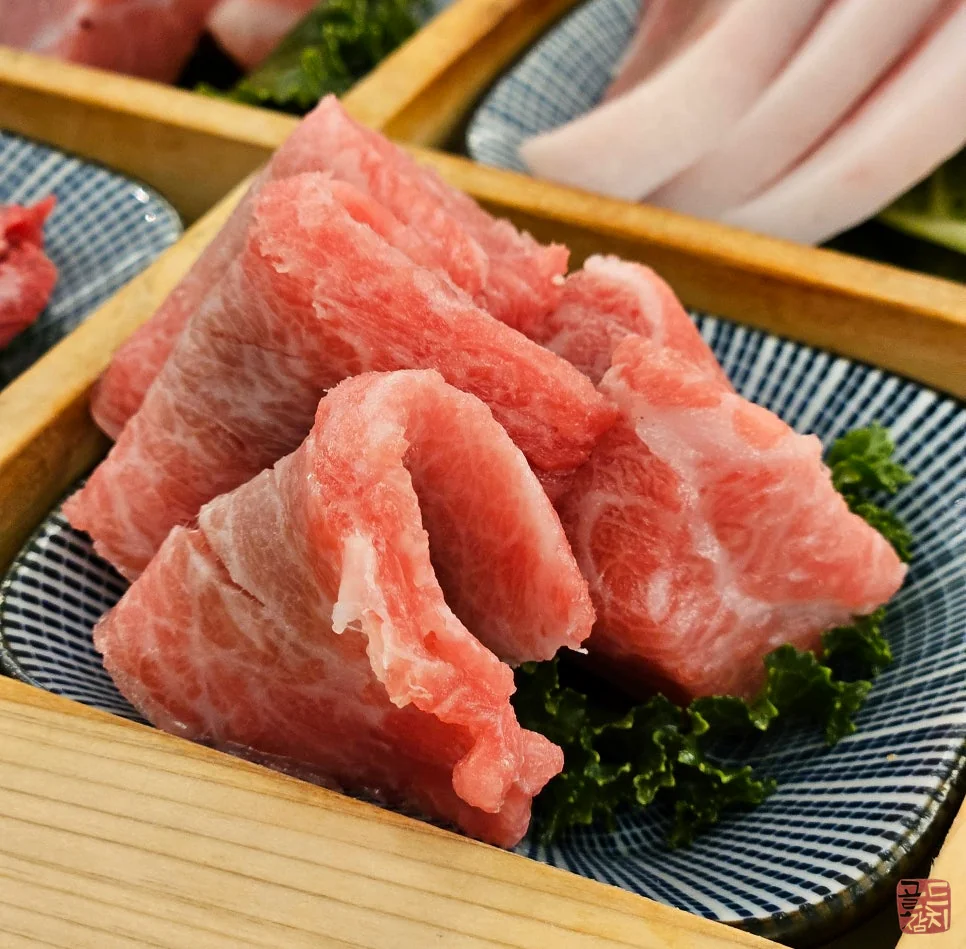
We have summarized Goldtuna (골드참치)'s preparation know-how, from saltwater thawing techniques to refrigeration stabilization, replacement of thawing paper, and maintaining moisture balance within the tissue.
4. 7 Qualitative Criteria for Selecting Good Tuna
The quality of tuna is not defined simply by high fat content or vivid colors. Goldtuna (골드참치) comprehensively evaluates quality through the following seven elements.
|
Evaluation Factor |
Detailed Evaluation Items |
|
Fat |
Fat content and marbling distribution between muscle tissues |
|
Texture |
Softness of the meat, elasticity, and tissue density |
|
Umami |
The unique flavor possessed by lean meat parts like Akami |
|
Flavor |
The fresh and clean scent unique to the raw material |
|
Moisture |
The moisturizing power of the internal tissue and the dry state of the surface |
|
Color · Marbling |
Vividness of color and the geometric shape of the fat layer |
|
Freshness |
Overall management quality from frozen preservation to thawing |
The above criteria are guidelines for appreciating the taste of tuna from various angles. However, the verification of food hygiene and freshness must be secured through professional processes.
In particular, since the color of tuna can change depending on the oxygen contact time, it is better not to judge the overall quality based on fragmentary visual information alone.
Detailed data on quality determination factors

This is a manuscript that analyzes in detail seven evaluation items, from the flavor of fat to moisture management and color development.
Tips for Choosing a Reliable Tuna Specialty Restaurant
It is not necessary to memorize the academic names of all parts. However, it is necessary to check whether you can receive clear information about the species and parts provided by the store, as well as the characteristics of each course.
In addition to the main sashimi, please look at the overall course balance, such as sushi, grilled dishes, and fried dishes, and the space configuration that suits the preferences of your companions.
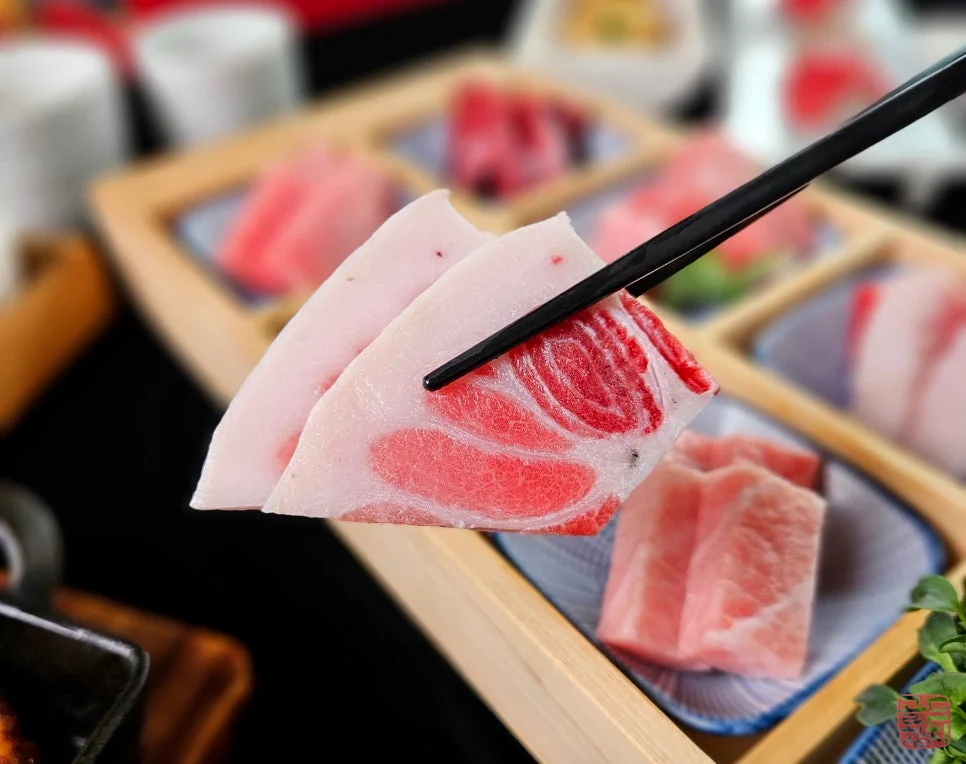
This is a guide that reinterprets professional knowledge from a consumer's perspective and summarizes it into five indicators: raw material, management, course composition, and spatial service.
Goldtuna (골드참치) Bangi Branch and Sinsa Branch Operation Guide
Goldtuna (골드참치) provides tuna course meal services at the Jamsil (잠실) Bangi-dong (방이동) main branch and Sinsa-dong (신사동) Garosu-gil in Gangnam. Both branches apply the same strict raw material selection and skilled preparation standards and operate a 15-course dinner centered on tuna sashimi.
-
Bangi branch (방이점): 2nd floor, 125 Ogeum-ro, Songpa-gu, Seoul. Equipped with individual rooms and seats optimized for family gatherings and group dinners. (010-5468-0484)
-
Sinsa branch (신사점): 2nd floor, 11 Apgujeong-ro 10-gil, Gangnam-gu, Seoul. Operates a space for gatherings requiring private conversation, such as business meals and dates. (010-5478-0484)
You can check the course composition and reservation status through advance reservation.
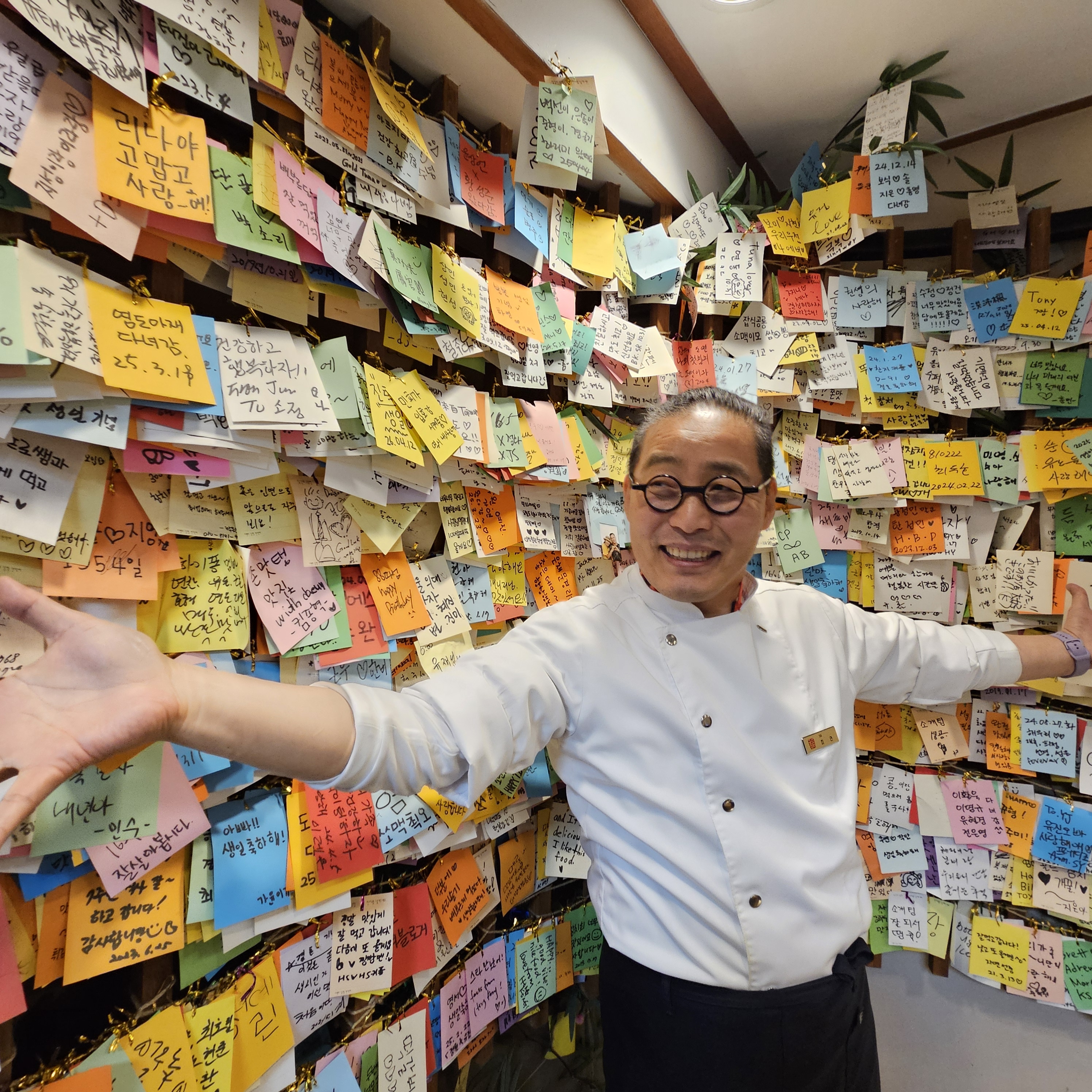
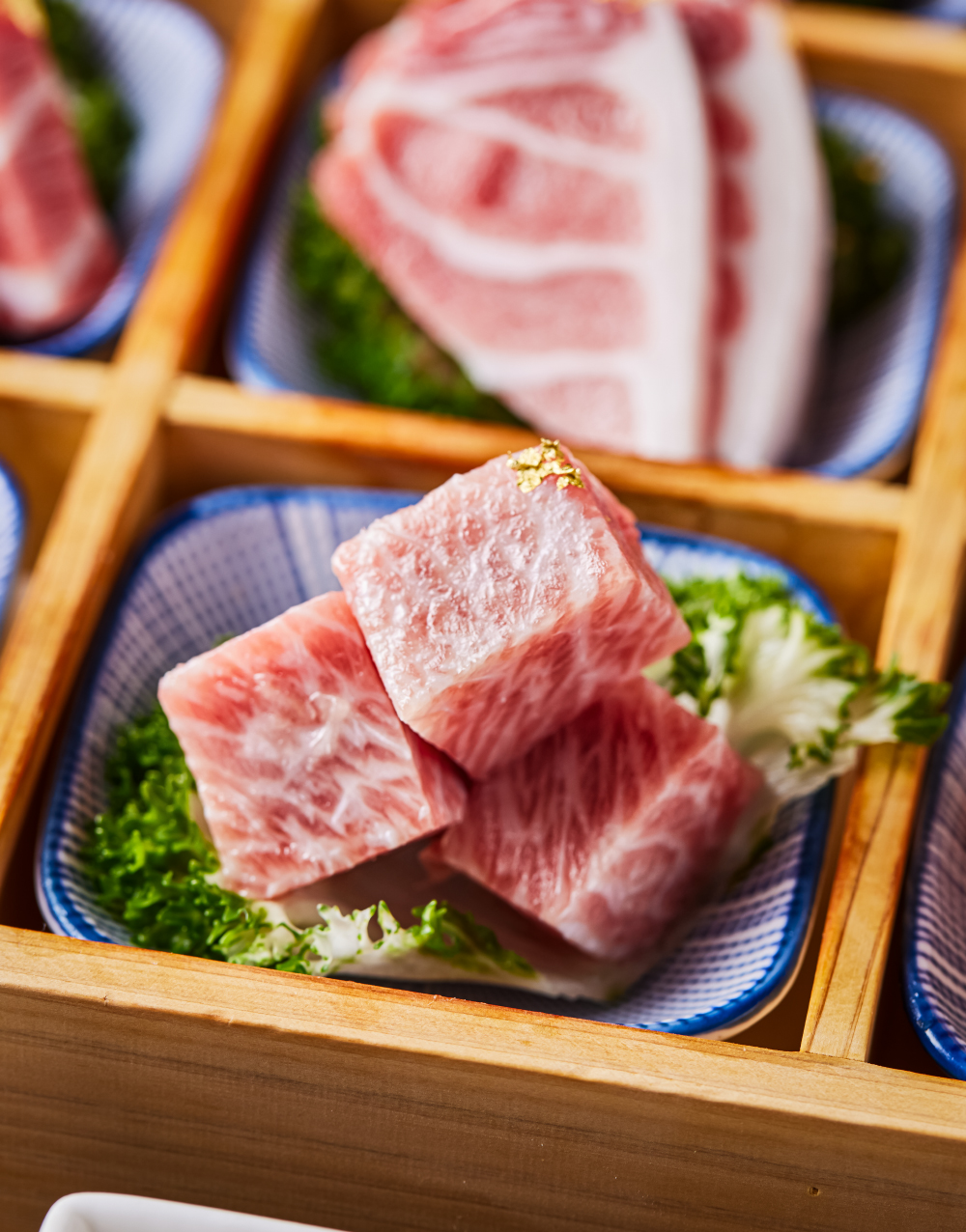
Related Media Content
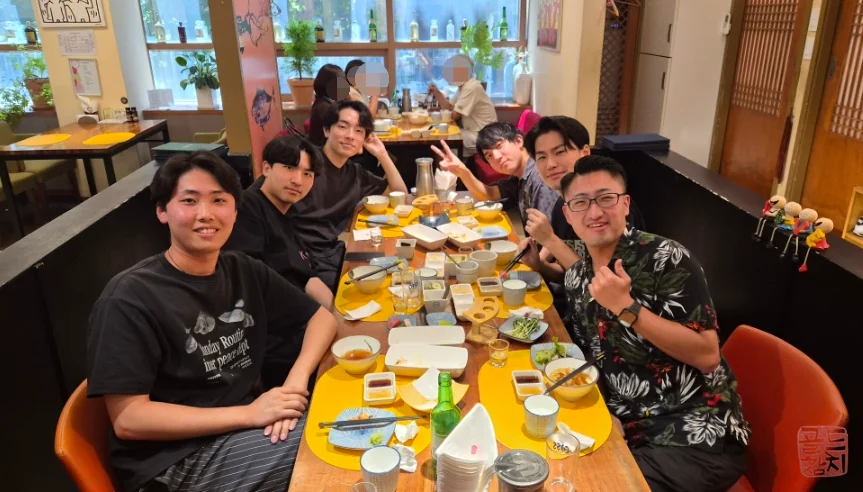
This content explains the principles of how tuna selection and management processes lead to actual differences in taste, and includes cases of visits by global customers.
Customer Reviews on Thawing Management and Part Guidance

This covers in detail the thawing quality and the professionalism of the part explanations experienced by a customer who visited the Sinsa branch (신사점).
Written and Reviewed by: Goldtuna (골드참치) CEO Choi Yeon (최연)
Official Website: