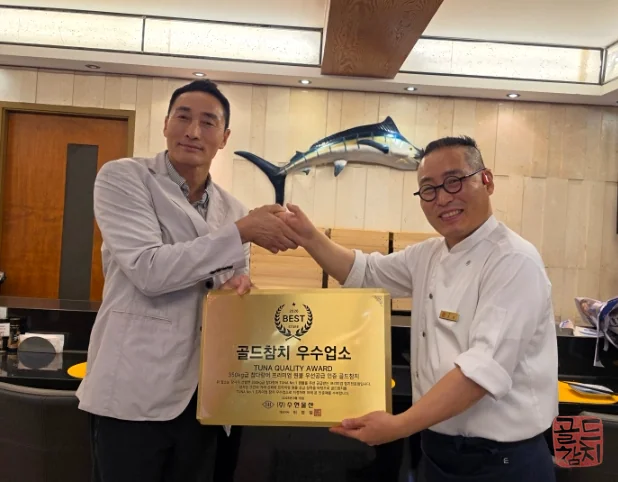
7 Key Factors of Tuna Taste: How to Choose High-Quality Tuna
The taste of tuna is not determined by fat content alone. We examine the seven core elements that determine the value of a single piece of tuna: the flavor of the fat, the elasticity of the tissue, umami, unique aroma, moisture levels, color and marbling, and freshness.
When tasting tuna, people often use expressions like "fatty," "soft," or "savory."
However, defining the inherent taste of tuna by fat alone is insufficient. The texture of the muscle, umami, unique aroma, and moisture levels all work together organically. Furthermore, the color and marbling—visually confirmed before consumption—also play a critical role in judging quality.
Goldtuna has summarized the 7 Elements of Tuna Taste that we consider most important in the field as follows.
The taste and quality of tuna are created together by fat, texture, umami, aroma, moisture, color and marbling, and freshness.

This is Bluefin Tuna No. 1 belly.
1. Flavor of Fat
The core charm of Bluefin tuna belly stems from its fat.
Fat creates a savory and rich flavor and significantly influences the texture that melts smoothly in the mouth.
However, fat is not just a matter of quantity. The taste and texture are determined by how the fat is distributed between the muscles and which specific part it originates from.
This is why we strictly distinguish between Kama (collar), No. 1 belly, and No. 2 belly even within the same Bluefin tuna.

Cube-cut - You can visually confirm the flavor of the fat.
2. Density and Elasticity of Tissue
High-quality tuna is not necessarily just soft.
It must have the density and elasticity to dissolve smoothly in the mouth while ensuring the tissue does not easily collapse when chewed.
This texture varies depending on the size of the fish, the cut, and the freezing and thawing conditions. One of the core reasons Goldtuna insists on large specimens and superior cuts is precisely this difference in texture.

This is the front section of Bigeye tuna belly. It offers a rich and crisp texture.
3. Umami
The aesthetics of tuna are not completed by fat alone.
Particularly in the Akami (red meat) section, nucleic acid components including IMP (inosinic acid) and free amino acids determine the deep umami.
Therefore, even in Akami with less fat, one can experience a sufficiently deep and vivid taste.
"If the belly possesses the rich flavor of fat, a good Akami contains the essence of deep umami."

Nucleic acids and amino acids from protein contribute to the umami.
4. Unique Aroma of Tuna
The aroma mentioned here is a completely different concept from a "fishy smell." Taste is completed as a total flavor through the combination of taste perceived by the tongue and scent perceived by the nose.
Tuna also possesses its own unique scent.
The aroma of high-quality tuna is not intense but rather a state where the inherent fragrance of the fish is delivered cleanly and clearly.

You can experience the unique aroma in fresh tuna.
5. Degree of Moisture
Moisture content is also a key factor in determining texture.
If moisture is excessively lost, the tissue can become dry and crumbly; conversely, if moisture stagnates on the surface during the thawing process, it can result in a mushy and watery texture.
What is more important than the simple amount of moisture is how stably the tissue holds that moisture.
Goldtuna meticulously manages surface moisture after thawing precisely to maintain this quality.

Moisture determines the final quality of the tuna. Careful management is required for this.
6. Color and Marbling
Tuna is an ingredient where the visual experience comes first.
The vivid red color and gloss of Akami, along with the sophisticated grain of fat in the belly sections, are key indicators representing the condition of the tuna.
In particular, a pigment protein called myoglobin, which determines the red hue, plays an important role.
It can be defined as follows:
"Color determines the impression of Akami, and marbling shows the dignity of the belly."

Tuna is a food that is eaten with the eyes first.
7. Freshness
Freshness is not so much an independent element as it is the foundation that integrates the preceding criteria.
This is because it is a comprehensive quality condition that maintains and controls umami, aroma, color, moisture, and elasticity in their best states, rather than a single measure of taste.
Changes in components continue to occur in tuna even after it is caught. Accordingly, freshness must be evaluated by encompassing the entire management system, from the catch date to frozen storage, transportation, thawing, and storage.

Freshness is the life of tuna. Well-managed tuna never produces a fishy taste under any circumstances.
Fundamental Criteria Determining the 7 Elements
In order for the above seven quality elements to manifest, more fundamental prerequisites are required.
-
The type of species selected (Bluefin, Bigeye, Yellowfin, etc.)
-
The size of the fish (100kg vs 350kg)
-
Suitability of specific cuts (Front belly, rear belly, back meat, tail meat, etc.)
Goldtuna carefully selects only extra-large Bluefin tuna weighing at least 250kg, and primarily those in the 350kg class. Furthermore, rather than using the entire fish, we select and provide only the parts in the best condition, such as Kama-toro, No. 1 and No. 2 belly, and high-quality Akami.
We recognize that quality does not stop at the raw material but extends through the entire process—from thawing and cutting to moisture removal—as a single, sophisticated quality control process.

This is Southern Bluefin tuna belly. You can almost see the umami.
Case of an Overseas Gourmet Expert Visiting Goldtuna
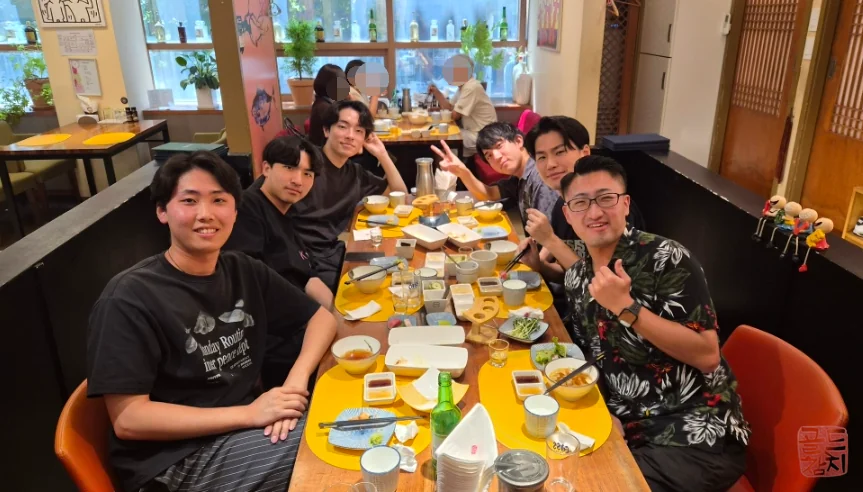
Recently, a group of Japanese buyers visited the Goldtuna Bangi main branch.
Possessing extensive gourmet experience, they shared the following opinion regarding Goldtuna's quality after finishing their meal.
“Experiencing in Korea what I could not
even experience in Japan”
While the evaluation of a specific customer cannot represent the entire quality, the sentiments left by a visitor who has experienced a high-level food culture is a meaningful example showing how the standards for material selection and preparation that Goldtuna has pursued are realized in the actual field.
This is a commemorative photo taken with the Japanese buyer group and the staff during that visit. The visitors expressed very high satisfaction with the quality of the tuna they experienced that day.

Commemorative photo after the Japanese buyer's meal at Goldtuna Bangi branch
Ultimately, what is the essence of good tuna?
Truly excellent tuna cannot be explained simply by the presence or absence of fat.
All elements—the flavor of the fat, the elasticity of the muscle, the umami of the Akami, as well as moisture management, aroma, and visual color—must achieve harmony.
Goldtuna's principles also start from these fundamental questions:
-
Which species is selected?
-
Is the size of the fish sufficient?
-
Are the provided cuts appropriate?
-
How is that peak quality maintained until it reaches the customer's table?
The value of a single piece of tuna served on the table is the result of this series of highly sophisticated processes.

This is a full photo of the Goldtuna 15-course meal.
Goldtuna Branch Information
The place visited by the Japanese buyer group mentioned in the case study is the Goldtuna main branch located in Bangi-dong, Songpa-gu, Seoul.
Goldtuna applies the same strict standards for material selection and management at both the Bangi branch and the Sinsa branch.
Related Information
The Fundamental Reason Why Tuna Taste Differs by Restaurant
While this post covered the elements of taste perceived in tuna, the following guide explains the differences in quality according to species, size, and cut in more detail.
Bluefin Tuna Size and Quality Guide by Cut, Tuna No. 9
This document specifies the concrete criteria Goldtuna uses to select large bluefin tuna, Kama-toro, and major belly sections.