
Tuna Akami: The Ultimate Umami Flavor Beyond Fatty Cuts
In the introductory stage of tuna, one's eyes usually linger on parts with brilliant marbling. Representative preferred parts include the belly meat (navel meat), otoro, and chutoro. However, among gourmets who have experienced tuna for a long time, many eventually focus on the clean, refined charm of akami (lean meat).
Akami, characterized by its deep red hue, lacks flashy marbling at first glance, but when carefully selected raw materials are handled with precision, it creates a deep flavor that is difficult to find in other parts.
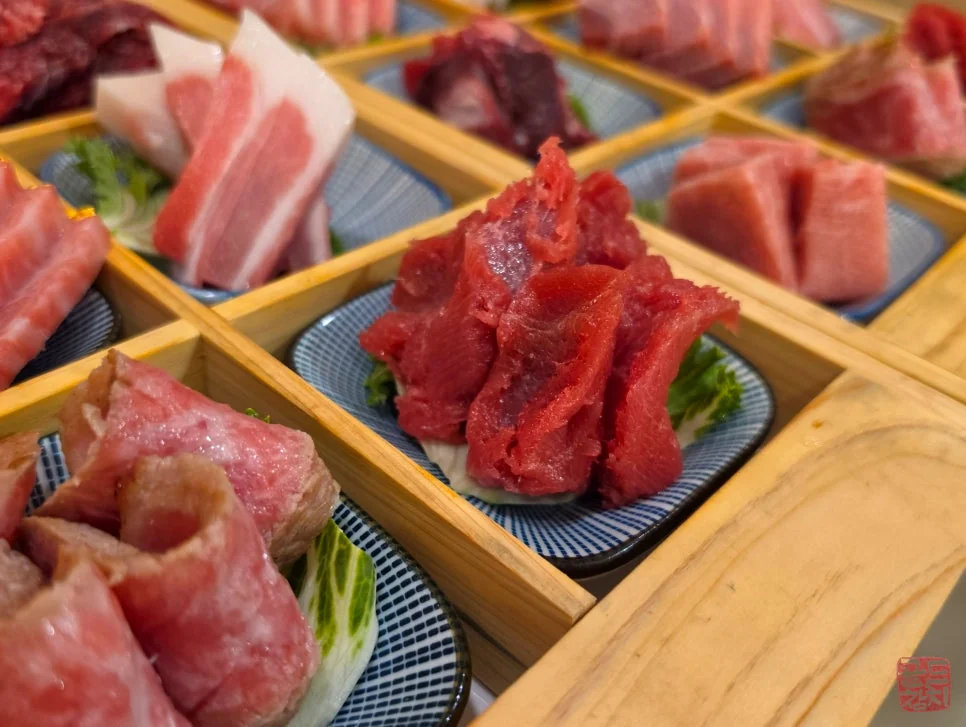
The appearance of akami with its red color
The Principle of Deep Umami Felt in Akami
The unique flavor of fish is determined by amino acids such as glutamic acid and inosinic acid (IMP). In particular, in the muscle tissue of fish, ATP is decomposed after death to produce inosinic acid, and this process becomes the key to the taste. This is why the value of tuna is not defined simply by fat content.
While otoro and chutoro symbolize the soft flavor of fat, akami is the part that most directly conveys the inherent taste of tuna muscle tissue. According to some bluefin tuna studies, there are cases where akami was rated higher in umami levels than chutoro or otoro.
Of course, this does not mean that akami is objectively superior. The richness of fat and the umami of lean meat occupy different aesthetic axes.
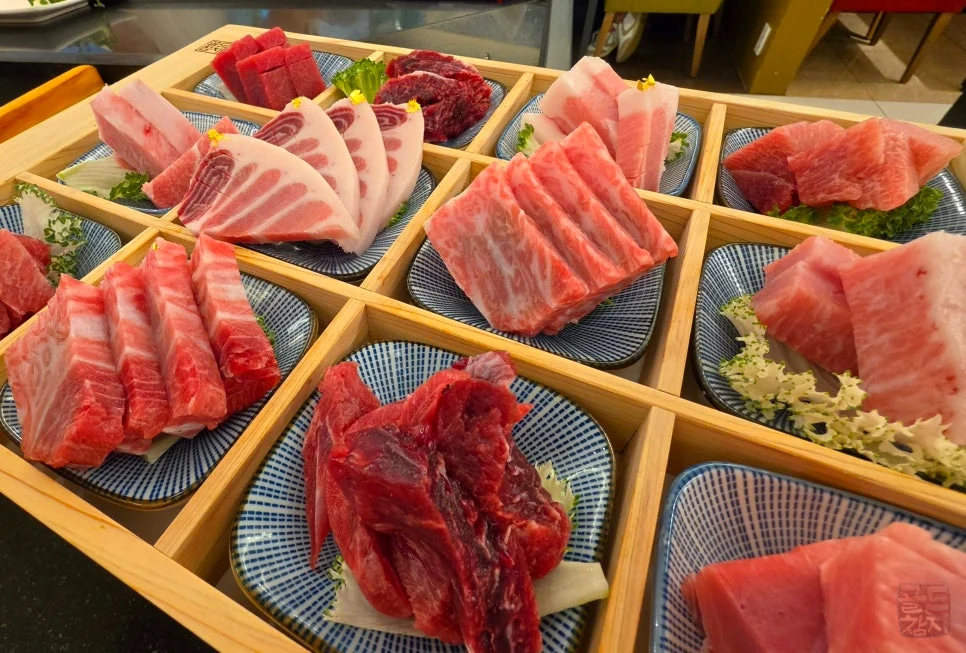
The harmony of kamasoro and akami
Conditions of Raw Materials that Determine High-Quality Akami
Goldtuna (골드참치) strictly applies three criteria to select high-quality akami.
First, verification of the species.
Not all lean meat produces the same flavor. Goldtuna carefully selects only akami with excellent raw material status among bluefin tuna.
Second, checking if it is a large fish body with excellent fat formation.
Rather than the marbling of the akami itself, we focus on whether the part comes from a large bluefin tuna that has sufficiently accumulated fat throughout its body.
Third, selection according to location.
Instead of indiscriminately using the entire bluefin tuna lean meat, we provide parts centered around the front section where quality is most stable. This is because the larger the block size of the raw material, the more precisely the harmony of texture and fat can be verified.
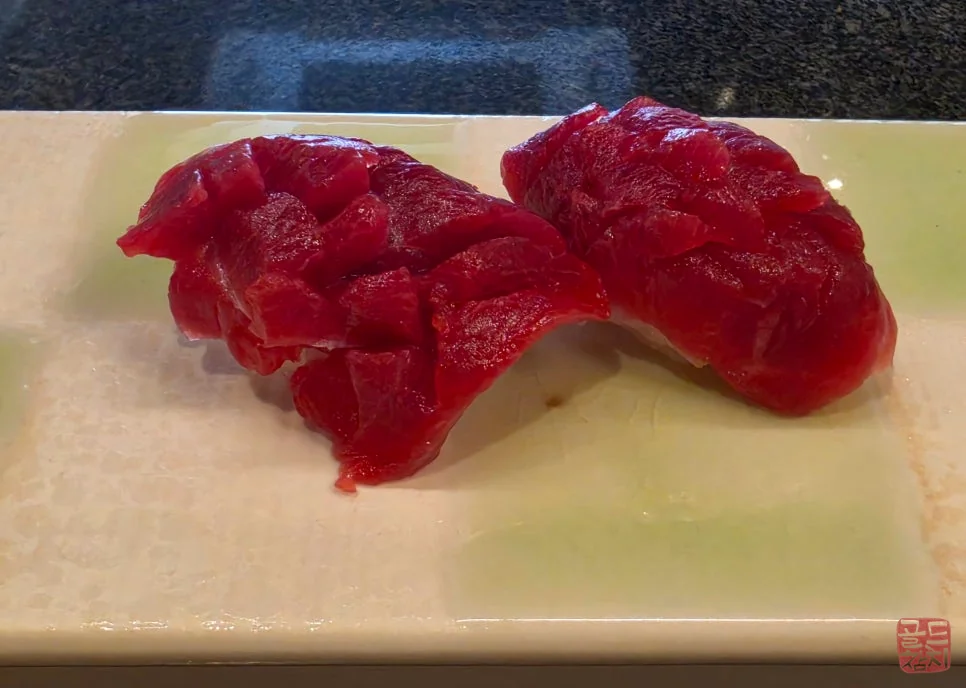
Sushi made with akami
The Optimal Timing to Complete the Value of the Raw Material
Handling techniques are just as important as excellent raw materials. The taste of akami varies greatly depending on thawing, aging, and the timing of use.
Akami prepared in the best condition at Goldtuna maintains a moist and soft texture without being dry. When cutting, a viscosity that seems to slightly adhere to the blade can be felt, and the texture is smooth like pudding while possessing a fine stickiness like well-aged dough.
This is an area judged by the on-site senses acquired through long experience, beyond numerical grades. Therefore, Goldtuna defines akami as the 'art of selection and timing.'
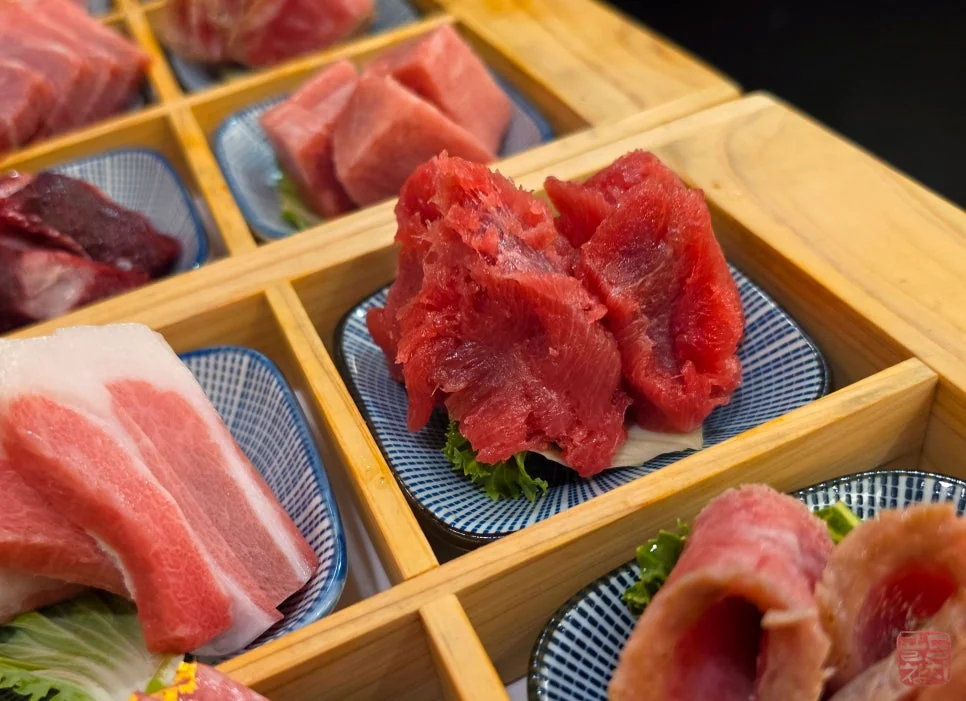
Experiencing the chewiness of akami
A Clean Harmony that Remains in the Memory of Taste
In terms of price, akami is more accessible than kamasoro or belly meat. However, after a meal, it is common to meet gourmets who unexpectedly pick akami as the most impressive part.
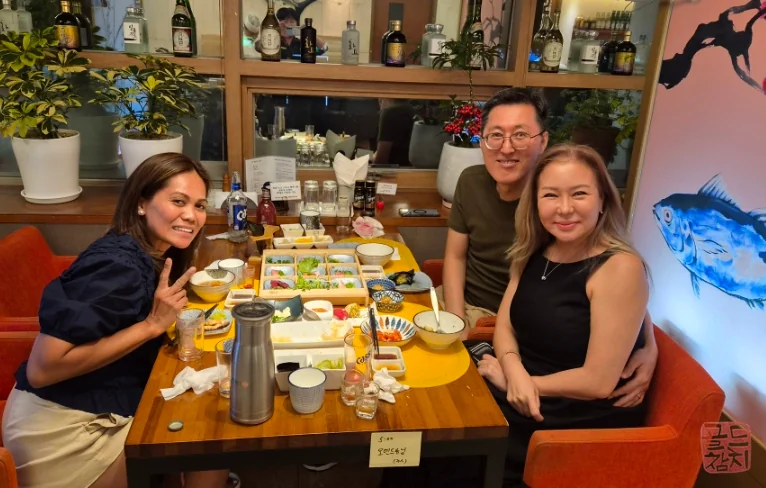
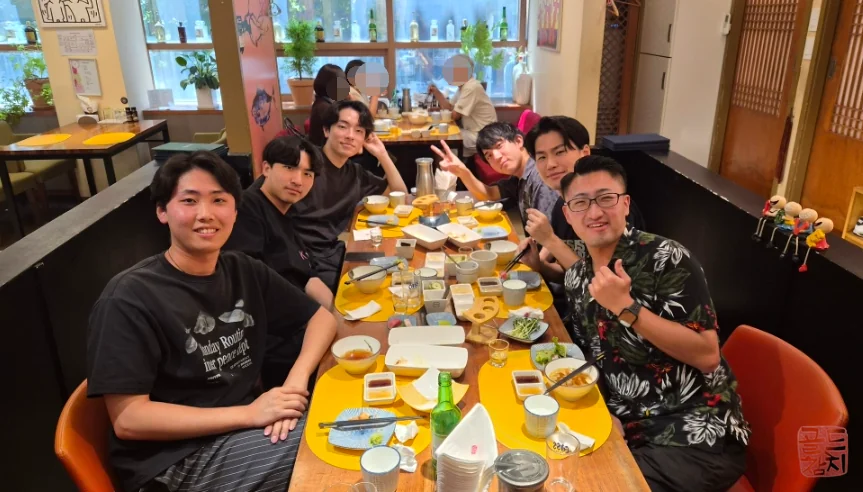
This is an actual case where akami was chosen as the most memorable part over more prominent parts like belly meat or otoro.
As a real-life example, in September 2026, Japanese tourists who visited the Goldtuna Bangi branch shared their thoughts through a translation app as follows.
“Out of everything I ate today, the akami
is the most memorable.”
Visual brilliance does not necessarily guarantee long-term sensory memory. When raw materials from carefully selected locations are provided at the optimal thawing and aging timing, akami leaves a deep impression with its unique umami.
That is why, for Goldtuna, akami is a part that holds value beyond a simple price tag.
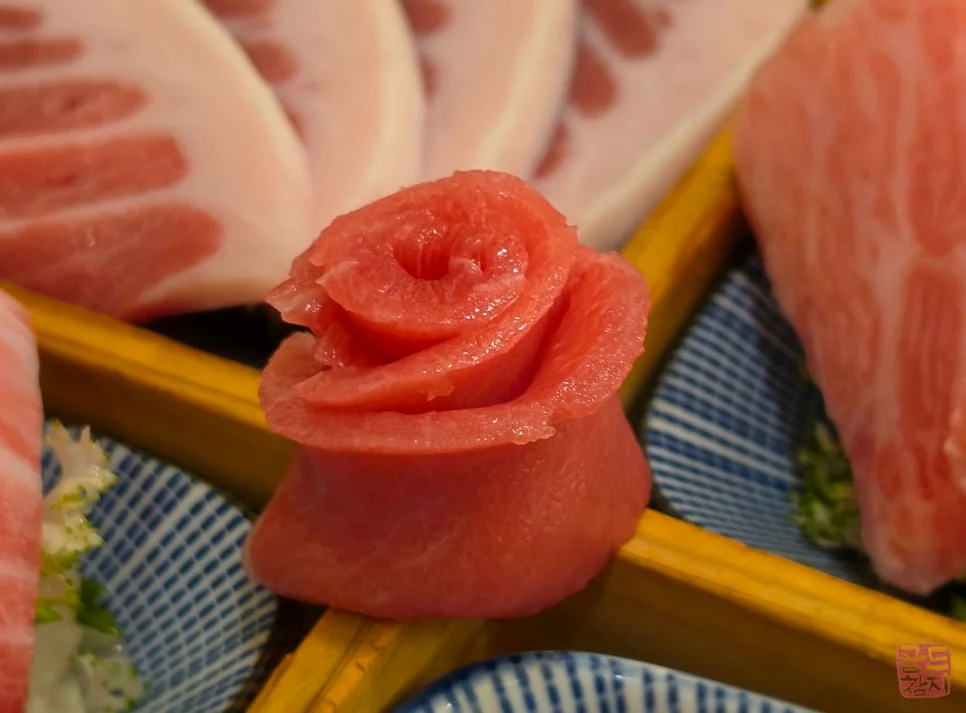
We have expressed the akami as a flower.
Related Content Information
The decisive reason why taste differences occur between tuna specialty restaurants
To deeply understand the flavor of akami, you can check the influence of species and fish body size on taste.
Bluefin Tuna Quality Guide: Body Size and Standards by Part
This section details why the weight class and part selection of the raw material are essential factors in selecting good akami.
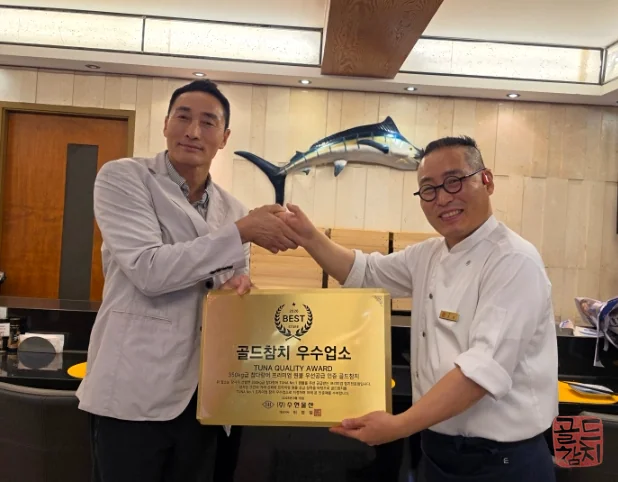
Branch Information
Goldtuna Bangi Branch
This is the main branch located in Bangi-dong, Jamsil. It is suitable for large groups such as family gatherings or business dinners, and you can experience jumakase in a vibrant atmosphere. This is the branch where the aforementioned case of Japanese tourists was recorded.
Goldtuna Sinsa Branch
Located near Garosu-gil, it is optimized for private dining such as dates or anniversaries. It provides the same high-quality bluefin tuna composition as the Bangi branch in a sophisticated 15-course format.